
Guggul (Commiphora wightii): Weight Loss and 20+ Uses
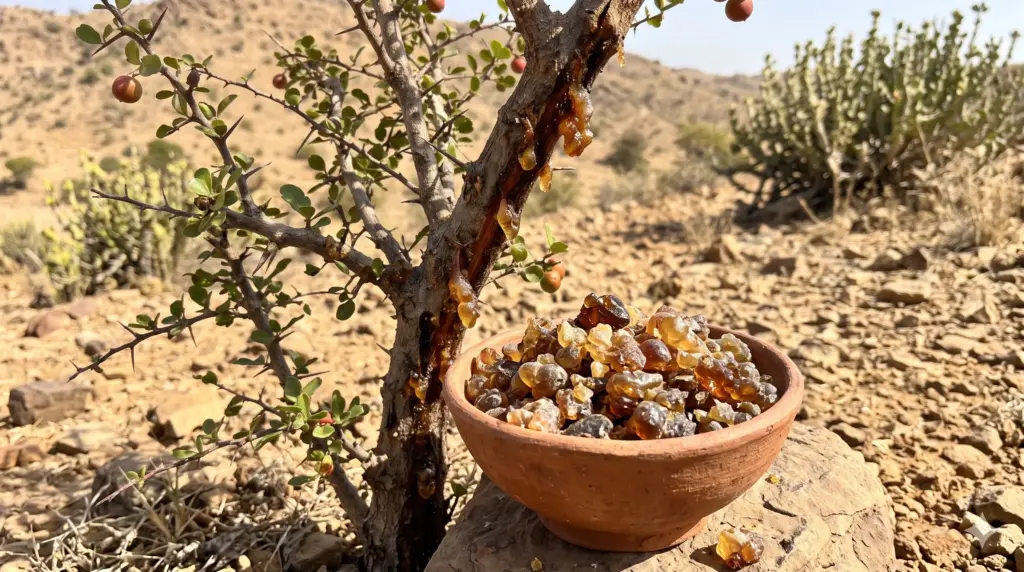
Table of Contents
Quick Summary
Commiphora wightii (Arnott) Bhandari, synonymized as Commiphora mukul and widely known as Guggul, is a critically endangered medicinal shrub of the Burseraceae family native to the arid regions of India and Pakistan. In Ayurvedic medicine, it is revered as a premier Rasayana and Medoroga (obesity-eliminating) herb, utilized for over 3,000 years to treat inflammation, gout, and lipid disorders. Modern scientific research confirms that Guggul possesses potent hypolipidaemic, anti-inflammatory, and thyroid-stimulating properties, primarily driven by its unique ketosteroids, E- and Z-guggulsterone. It effectively manages blood cholesterol, facilitates weight loss, and provides neuroprotection. Commonly available as Guggulipid (ethyl acetate extract), standardized tablets, and purified resin, it is generally recognized as safe. However, a significant safety note indicates a potential risk of rhabdomyolysis in rare cases, and it should be avoided during pregnancy due to potential uterine stimulation.
Key Therapeutic Benefits
- Potent Inhibition of Pancreatic Cancer Proliferation epi-Magnolin, a tetrahydrofurofuranoid lignan isolated from Commiphora wightii, acts as a potent inhibitor of MIA PaCa-2 pancreatic cancer cell growth. It mimics the mechanism of colchicine by binding to the tubulin polymerization site, thereby disrupting the cell cycle and inducing apoptotic death. The high binding free energy and oral bioavailability of this compound make it a promising candidate for targeted oncology. (Abd El-Razek, 2025; Yousuf, 2010; Bhatia, 2015).
- Network Pharmacology-Driven Management of Rheumatoid Arthritis Commiphora wightii active ingredients, including Guggulsterol-V and Myrrhahnone B, target critical genes like TNF, PIK3CA, and MAPK3 to suppress synovial inflammation. By modulating these signaling pathways, the herb prevents the “tumor-like” invading proliferation of arteries in arthritic joints. This multi-target mechanism provides a promising preventive and therapeutic impact on pannus formation and chronic joint pain. (Abdel-Maksoud, 2024; Singh, 2022; Goyal, 2013).
- Comprehensive Regulation of Cholesterol and Atherosclerosis Guggulsterone effectively inhibits the oxidative modification of LDL-cholesterol, which is essential for preventing atherogenesis. It acts as a specific antagonist to the nuclear farnesoid X receptor (FXR), regulating hepatic cholesterol metabolism and facilitating its conversion to bile acids. This dual action significantly lowers VLDL and triglycerides while elevating beneficial HDL-C levels. (Baldwa, 1981; Wang, 2004; Arora, 1973).
- Targeted Glycolysis Suppression in Breast Cancer Cells Bioactive triterpenoids from Commiphora wightii, such as myrrhanone B and myrrhanol B, exert potent anticancer effects by targeting the GLUT1 receptor. By inhibiting glucose uptake and lactate production, these compounds starve cancer cells of energy while elevating ROS levels and inducing caspase-3 mediated apoptosis. This makes the plant a significant source of nutraceuticals for managing estrogen receptor-positive and triple-negative breast cancer. (Zeb, 2025; Jiang, 2013; Madasu, 2020).
- Attenuation of COPD-Linked Lung Inflammation and Emphysema The standardized ethyl acetate fraction of Commiphora wightii provides robust protection against elastase-induced chronic obstructive pulmonary disease (COPD). It significantly downregulates pro-inflammatory cytokines such as IL-6 and TNF-alpha while normalizing the redox imbalance in lung tissue. Furthermore, it protects against emphysema by mitigating the activity of MMP-2 and MMP-9 enzymes. (Kaur, 2023; Xu, 2023; Ahuja, 1977).
- Prevention of Bone Resorption and Osteoporotic Loss Guggul gum extract exhibits potent anti-bone-resorptive potential by lowering the levels of tartrate-resistant acid phosphatase (TRAP) and alkaline phosphatase. It restores bone microarchitecture and significantly enhances biomechanical bone strength in estrogen-deficient models. This makes it a viable natural option for the management of postmenopausal osteoporosis and fracture healing. (Khan, 2012; Tripathi, 1984; Meselhy, 2003).
- Clinical Improvement in Glycemic and Insulin Resistance Markers Commiphora wightii treatment significantly restores insulin levels and improves insulin sensitivity by modulating glucose-metabolizing enzymes. It prevents hyperglycemia and hypertriglyceridemia induced by high-fructose diets, shielding pancreatic beta-cells from oxidative damage. The plant acts as a natural DPP-IV inhibitor, enhancing the body’s glycemic control mechanism. (Jain, 2025; Sotoudeh, 2019; Lata, 1991).
- Direct Stimulation of Thyroid Hormone Production Z-guggulsterone from Commiphora wightii exerts a direct stimulatory action on the thyroid gland, increasing triiodothyronine (T3) and thyroxine (T4) production. It enhances the activities of thyroid peroxidase and protease, thereby improving systemic oxygen consumption and metabolic rate. This “thyrogenic” effect is mediated via enzymatic mechanisms that antagonize melatonin-induced hypothyroidism. (Panda, 1999; Singh, 1982; Mathur, 2007).
- Relief of Hemorrhoidal Symptoms and Proctorrhagia In clinical trials, purified Commiphora wightii resin proved more effective than conventional laxative and suppository combinations in treating uncomplicated hemorrhoids. It significantly reduces painful defecation, proctorrhagia, and anal protrusion while improving dyspepsia and flatulence. The treatment ensures long-term recovery without the high recurrence rates seen in standard palliative therapies. (Yousefi, 2013; Kakrani, 1991; Garang, 2023).
- Antiallodynic Relief for Peripheral Neuropathic Pain Guggulipid provides significant antinociceptive effects in models of peripheral nerve injury, reducing thermal hyperalgesia and cold allodynia. It acts by modulating microglial activation and restoring the antioxidant status in the brain and sciatic nerve. This makes it a potential therapeutic option for managing the persistent pain associated with neuropathy. (Goyal, 2013; Tripathi, 1984; Mehta, 2015).
- Antileishmanial Efficacy against Clinical Isolates Commiphora wightii demonstrates effective antipromastigote activity against Leishmania donovani, causing morphological changes that lead to apoptosis-mediated cell death. Quantitative proteomics reveals that guggul modifies specific parasite proteins, disrupting its survival mechanisms. This offers a promising adjunct therapy to overcome drug resistance in endemic regions. (Bar Routaray, 2020; Sukhdeve, 2025; Haque, 2010).
- Dermal Protection and Anti-wrinkle Collagen Synthesis Standardized guggulsterone preparations significantly increase Type I collagen synthesis in skin fibroblasts while inhibiting MMP-1 (collagenase) expression. It facilitates faster wound contraction by upregulating VEGF and improving skin elasticity. These properties make it a high-value ingredient for dermatological repair and anti-aging skincare formulations. (Ramachandran, 2012; Malayeri, 2025; Fatope, 2003).
- Antihypertensive Synergy with Calcium-Channel Blockers Commiphora wightii extract effectively reduces both systolic and diastolic blood pressure in patients with essential hypertension. When used as an adjunct to nifedipine, it provides superior management of lipids, lipoproteins, and arterial pressure compared to medication alone. This vascular regulation is accompanied by a significant reduction in free fatty acids. (Panneerselvam, 2005; Ahuja, 1977; Dixit, 1980).
- Inhibition of Urinary Struvite and Calcium Phosphate Crystals Aqueous extracts of Commiphora wightii exhibit potent crystal dissolution activity against monosodium urate monohydrate and struvite calculi. It inhibits the growth and nucleation of “staghorn-calculi” components, facilitating the prevention or dissolution of urinary stones. This urological benefit is critical for reducing the morbidity associated with renal calculi. (Chauhan, 2009; Raut, 2008; Mohanty, 2021).
- Larvicidal Control of Dengue Fever Mosquitoes The hexane gum extract of Commiphora wightii is lethal to the fourth instar stage of the Aedes aegypti mosquito larvae. Volatile compounds like diterpenes and monoterpenes inhibit the larvae’s acetylcholinesterase enzyme and GABA receptors. This provides an eco-friendly and natural insecticide to overcome the limitations of synthetic pesticides in vector control. (Patel, 2023; Bhatia, 2015; Saeed, 2004).
- Inhibition of VEGF-R2-Mediated Angiogenesis in Prostate Cancer Z-guggulsterone suppresses the secretion of proangiogenic growth factors and downregulates VEGF receptor 2 protein levels. This action inhibits neovascularization (capillary-like tube formation) and restricts the migration of human prostate cancer cells. In vivo studies confirm a statistically significant decrease in tumor burden and microvessel area following treatment. (Xiao, 2008; Mallavadhani, 2015; Jain, 2025).
- Hepatoprotection Against Paracetamol-Induced Oxidative Stress Commiphora wightii extracts retrieve hepatic marker enzymes like ALT and AST to healthy levels after acute drug-induced poisoning. It functions as a strong ROS inhibitor, providing more potent antioxidant and hepatoprotective activity than standard silymarin. This prevents hepatic necrosis and maintains the structural integrity of hepatocytes. (Shah, 2023; Bellamkonda, 2011; Lata, 1991).
- Therapeutic Mechanisms for Managing Bell’s Palsy Network pharmacology and molecular docking identify Commiphora wightii as a potential cure for facial paralysis by targeting genes like AKT1, TNF, and MAPK3. Bioactive constituents stabilize these proteins to reduce the inflammation and injury to cranial nerves responsible for Bell’s palsy. This stabilizing effect also contributes to lower systemic blood pressure. (Tabassum, 2025; Banerjee, 2023; Kaur, 2023).Synergistic Anti-Glioblastoma Efficacy with Temozolomide Guggulsterone potentiates the effects of Temozolomide by downregulating the EGFR/PI3K/Akt signaling pathway and NF-kappaB activation. This synergistic action enhances growth inhibition and apoptosis in human glioblastoma cells. In vivo orthotopic xenograft models confirm that the combination therapy significantly inhibits brain tumor growth. (Xu, 2023; Abd El-Razek, 2025; Menon, 2021).Reversal of Multidrug Resistance in Chemotherapy Guggulsterone enhances the chemosensitivity of multidrug-resistant cells to drugs like doxorubicin and imatinib. It works by inhibiting the expression of P-glycoprotein and cyclooxygenase-2, thereby increasing drug accumulation within cancer cells. This reversal of resistance occurs without significant toxic side effects to the hepatic or cardiac systems. (Xu, 2014; Kumar, 2003; Ahmed, 2016)
How It Works (Phytochemistry)
- Guggulsterone (E & Z) → Antagonism of Farnesoid X Receptor (FXR) → Cholesterol Lowering
- epi-Magnolin → Tubulin polymerization site inhibition → Pancreatic Cancer Suppression
- Myrrhahnone B → Downregulation of TNF and MAPK3 signaling → Anti-Arthritic Effect
- Cembranoids → Allosteric inhibition of pancreatic phospholipase A2 (hPLA2) → Reduced Lipid Absorption
- Quinic Acid → Marker metabolite for high-yield cultivars → Nutraceutical Formulation
- Myrrhanol B → Targeted suppression of GLUT1-mediated glycolysis → Anticancer (Breast)
- Guggultetrols → Free radical scavenging and antioxidant stabilization → Hepatoprotection
Traditional Knowledge
- Ayurveda: Known as Guggulu, it is classified as a “Sarvavyadhivishara” (remedy for all diseases) and a Rasayana. It is traditionally used to treat Medoroga (obesity), Amavata (rheumatoid arthritis), and Gandamala (swollen nodes).
- Unani: Employed for its “Jali” (detergent) and “Muhallil” (resolvent) properties to treat gout, heart disease, and urinary disorders.
- Tibetan/Chinese Medicine: Used for promoting blood circulation, removing blood stasis, and treating chronic diseases including cancer.
- Ethnic Medicine: Widely used in Indian and Pakistani dry regions for skin diseases, hemorrhoids, and as a natural stimulant.
Usage and Preparations
- Purified Resin (Guggulu Shodhana): Purified in water with Neem and Turmeric (Dolayantra method) for Hemorrhoids and Arthritis.
- Guggulipid (Ethyl Acetate Extract): Standardized capsules/tablets for managing High Cholesterol and Diabetes.
- Powdered Gum (Churna): Taken orally (3-6g) for Weight Loss and Obesity.
- G-AgNPs (Silver Nanoparticles): Aqueous extract used as a reducing agent for Targeted RA Therapy.
- Standardized Gel/Ointment: 8% concentration for accelerating Skin Wound Healing.
Identity and Authentication
- Botanical Name: Commiphora wightii (Arnott) Bhandari (syn. C. mukul)
- Family: Burseraceae
- Common Names: Guggul, Guggulu, Mukul, False Myrrh, Indian Bedellium.
- Morphology: A deciduous, thorny, trifoliate shrub with silver-white bark that exudes aromatic oleo-gum resin upon injury.
- Plant Part Used: Oleo-gum resin (primary), Leaves, Stem, and Roots.
- Analytical Markers: Authenticated using HPLC and HPTLC for E- and Z-guggulsterone; GC-MS identifies 118 diverse metabolites including lignans and quinic acid.
Dosage and Safety
- Dosage: Effective clinical doses range from 100 mg to 600 mg of standardized extract daily. Purified gum is used at 3 grams daily for hemorrhoids. (Singh, 1994; Yousefi, 2013).
- Side Effects: Generally mild; includes headache, nausea, eructation, hiccup, and loose stools. (Singh, 1994).
- Toxicity: LD50 is established as > 2500 mg/kg orally; no mortality observed at therapeutic levels. (Khan, 2012).
- Drug Interactions: Enhances the efficacy of Temozolomide and Nifedipine; reverses resistance to Doxorubicin and Imatinib. (Xu, 2014; Panneerselvam, 2005).
- Classification: Caution (Rare risk of rhabdomyolysis; avoid in pregnancy).
FAQs
- Does Guggul really help with weight loss? Yes, it is traditionally used for Medoroga (obesity) and modern studies confirm its ability to manage insulin resistance and fat metabolism.
- How long does it take for Guggul to lower cholesterol? Clinical trials show significant lipid-lowering effects after 12 to 24 weeks of consistent daily use as an adjunct to diet.
- Is it safe to take Guggul with blood pressure medication? Yes, it often shows synergistic effects with calcium-channel blockers like nifedipine, but monitoring by a professional is advised.
- Can Guggul help with thyroid problems? It directly stimulates T3 and T4 production, making it beneficial for hypothyroidism, but it should be used cautiously.
- What is Guggulipid? Guggulipid is a standardized ethyl acetate extract of the gum resin containing the active guggulsterones.
- Can I use Guggul for arthritis? Yes, it is clinically proven to reduce joint swelling and regenerate cartilaginous matrix in osteoarthritis and rheumatoid arthritis.
- Why should I avoid Guggul during pregnancy? It has traditional and experimental links to uterine stimulation, which could pose a risk to the pregnancy.
- Is there any risk of muscle damage? There is a rare reported case of rhabdomyolysis associated with high-dose use; discontinue if you experience unexplained muscle pain.
- What is the best form of Guggul to use? Purified Guggulu (Shodhana) is preferred in traditional medicine for better safety and efficacy, while standardized extracts are used for clinical dosing.
- Does Guggul help with acne? Yes, it is traditionally listed for treating skin conditions and acne, likely due to its anti-inflammatory and antibacterial properties.
References
- Gujral, M. L., 1960, Indian J Physiol Pharmacol, 4, 267-273.
- Khanna, D. S., 1969, Indian J Med Res, 57(5), 900-906.
- Arora, R. B., 1971, Indian J Exp Biol, 9(3), 403-404.
- Ahuja, M. M., 1977, Indian J Exp Biol, 15(2), 143-145.
- Kuppurajan, K., 1978, J Assoc Physicians India, 26(5), 367-373.
- Dixit, V. P., 1980, Biochem Exp Biol, 16(4), 421-424.
- Singh, A. K., 1982, Anc Sci Life, 2(1), 23-28.
- Tripathi, Y. B., 1984, Planta Med, 50(1), 78-80. DOI: 10.1055/s-2007-969622
- Verma, S. K., 1988, Indian J Med Res, 87, 356-360.
- Lata, S., 1991, J Postgrad Med, 37(3), 132-135.
- Singh, R. B., 1994, Cardiovasc Drugs Ther, 8(4), 659-664.
- Mesrob, B., 1998, J Chromatogr B Biomed Sci Appl, 720(1-2), 189-196.
- Panda, S., 1999, Life Sci, 65(12), PL137-141.
- Agrawal, A. K., 2000, Indian J Exp Biol, 38(10), 994-998.
- Singh, B. B., 2001, Altern Ther Health Med, 7(2), 120-124.
- Adhirajan, N., 2003, J Ethnopharmacol, 88(2-3), 235-239.
- Bianchi, A., 2004, Ann Pharmacother, 38(7-8), 1222-1225. PubMed: 15150383
- Panneerselvam, J., 2005, J Clin Hypertens (Greenwich), 7(6), 340-345.
- Meselhy, M. R., 2003, Phytochemistry, 62(2), 213-218.
- Ahmad, R., 2011, Planta Med, 77(9), 945-950. DOI: 10.1055/s-0030-1250664
- Bhatia, A., 2015, Phytochemistry, 110, 29-36.
- Cilia, R., 2017, Neurology, 89(5), 432-438. PubMed: 28679598
- Tabassum, A., 2025, J Biomol Struct Dyn, 43(14), 7271-7288.
- Abd El-Razek, M. H., 2025, J Biomol Struct Dyn, 43(10), 5151-5163. DOI: 10.1080/07391102.2024.2343469
Jump to: Benefits | Phytochemistry | Dosage | FAQs