Licorice (Glycyrrhiza glabra): Gut Health, Immunity and 20+ Benefits
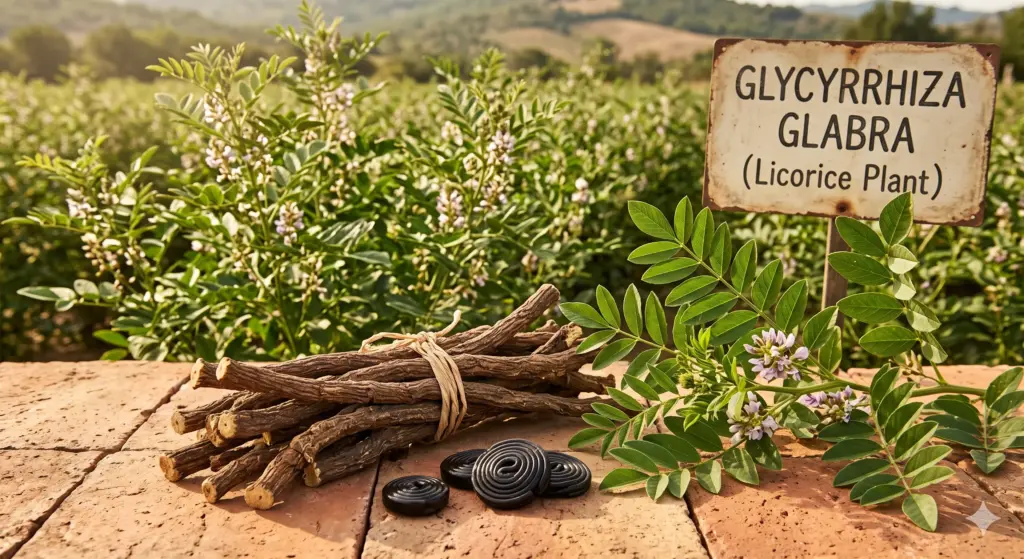
Table of Contents
Quick Summary
Key Therapeutic Benefits
- Augmentation of Mucin Secretion for Gastric Defense Glycyrrhiza glabra water decoctions provide significant protection against gastric ulcers induced by stress or aspirin. It works by increasing mucin secretion and the life span of mucosal cells in the stomach lining, effectively acting as a cytoprotective shield. This mechanism validates its traditional use in the “Dipaniya Mahakasaya” group for optimizing digestive health. (Agrawal, 2000; Yadav, 2015; Christina, 2006).
- Restoration of Striatal Dopamine in Parkinson’s Models Alkaloid extracts of the root significantly improve motor coordination and restore depleted dopamine levels in the brain’s striatum. It protects dopaminergic neurons from neurotoxicity by reducing lipid peroxidation and elevating endogenous antioxidant enzymes. This neuroprotective action prevents the structural degradation of the substantia nigra. (Karthikkeyan, 2022; Zheng, 2014; Bi, 2015).
- Inhibition of PTP1B for Clinical Diabetes Management Bioactive compounds from the plant, specifically prenylated flavonoids, exert potent antidiabetic effects by inhibiting the PTP1B enzyme. This action stimulates the PI3K/AKT signaling pathway, which enhances glucose uptake and translocation of GLUT4 in skeletal muscles. It effectively lowers fasting blood glucose and improves insulin sensitivity in diabetic subjects. (Gou, 2023; Sen, 2021; Krishna, 2015).
- Neuroprotective Blockade of BACE1 in Alzheimer’s Disease Standardized extracts and the compound 2,2′,4′-trihydroxychalcone function as specific inhibitors against the BACE1 enzyme, which initiates amyloid-beta production. By repressing the beta-cleavage of APP, it decreases plaque formation and efficiently improves cognitive function. This makes it a primary candidate for managing memory impairment and neurodegeneration. (Cui, 2008; Zhu, 2010; Verma, 2025).
- Activation of AMPK Pathway for Anti-obesity Thermogenesis Supplementation with licorice extract prevents weight gain and fat accumulation by activating the AMPK signaling pathway. It reduces the expression of lipogenic genes like SREBP-1c and promotes the browning of white fat tissue, thereby increasing energy expenditure. Regular use leads to a significant reduction in BMI and serum triglycerides. (Bairwa, 2015; Zheng, 2020; Ghorbanlou, 2020).
- Disruption of Cariogenic Streptococcus mutans Biofilms Ethanolic extracts of the root exhibit robust antimicrobial activity against Streptococcus mutans, the primary pathogen in dental caries. It disrupts established biofilm architectures and prevents bacterial adherence to the tooth surface more effectively than some chemical mouthwashes. This supports its use as a natural alternative in preventative oral hygiene products. (Ajagannanavar, 2014; Sedighinia, 2012; Bhadoria, 2019).
- Molecular Inhibition of SARS-CoV-2 Spike Glycoprotein Phytochemicals like glycyrrhizic acid and glyasperin A serve as potent inhibitors against the SARS-CoV-2 spike protein and Mpro protease. They block the binding interface between the virus and the host ACE2 receptor, effectively preventing viral entry into cells. Clinical trials show that using licorice syrup as an adjuvant reduces hospitalization duration and improves oxygen saturation. (Balkrishna, 2021; Sinha, 2021; Hejazi, 2021).
- Th2-Mediated Modulation in Allergic Asthma Management Bioactives such as liquiritin significantly attenuate airway inflammation and pulmonary edema in models of allergic asthma. It downregulates the expression of IL-4 and IL-5 cytokines, which are critical mediators of the allergic response. This immune-modulatory effect results in reduced leukocyte infiltration and improved respiratory test indices. (Guftar, 2025; Rabbani, 2022; Lee, 2022).
- Hepatoprotective Support in Subacute Hepatic Failure The interferon stimulator SNMC, derived from G. glabra, significantly improves survival rates in patients with subacute hepatic failure due to viral hepatitis. It prevents changes in cell membrane permeability and increases the survival rate of hepatocytes by scavenging free radicals. This “liver-shielding” effect retrieves healthy levels of markers like ALT and AST. (Acharya, 1993; Wang, 2016; Lahon, 2011).
- Caspase-Dependent Apoptosis in Malignant Breast Cancer Licoflavanone and glabridin induce programmed cell death in human breast cancer lines (MCF-7, MDA-MB-231) by targeting mitochondrial bioenergetics. It suppresses the Wnt/beta-catenin signaling pathway, leading to reduced tumor proliferation and invasiveness. This specific cytotoxicity occurs through caspase-3 activation while sparing normal fibroblasts. (Aiello, 2017; Yuan, 2025; Dong, 2007).
- Acceleration of Dermal Wound Healing and Collagen Deposition Topical application of licorice-loaded hydrogels or ufasomes significantly increases the rate of wound contraction. It elevates the levels of reduced GSH and SOD at the injury site while increasing hydroxyproline content (collagen). This enhancement promotes rapid re-epithelialization and closure of the dermal scratch within 33 hours. (Aly, 2023; Tarazi, 2025; Hmood, 2022).
- GABAergic Modulation for Anxiolytic and Hypnotic Effects Glabridin and glabrol act as positive allosteric modulators of GABA-A receptors, specifically targeting the beta subunit. This interaction induces significant anxiolytic and sedative effects, reducing sleep onset latency and increasing total sleep time. It provides a natural intervention for insomnia without the side effects of conventional benzodiazepines. (Cho, 2012; Murck, 2024; Hoffmann, 2016).
- Antiplasmodial Selectivity Against Malaria Vectors Fractions of G. glabra root demonstrate promising in vitro activity against chloroquine-sensitive Plasmodium falciparum. It shows a high selectivity index, indicating safety for human cells while suppressing parasite growth in the blood. This validates its traditional use for fever and provides a potential source for novel antimalarial therapeutics. (Kalani, 2013; Ramazani, 2018; Rashidzadeh, 2023).
- Stimulation of Osteogenic Differentiation in MSCs Ethyl acetate extracts of the root enhance the proliferation and osteogenic differentiation of human bone marrow mesenchymal stem cells. It increases the expression of bone-specific genes like Runx2 and BMP-2 through an estrogen receptor-mediated mechanism. This confirms its potential for preventing osteoporosis and enhancing bone mineral density in menopausal models. (Azizsoltani, 2018; Sanap, 2021; Galanis, 2019).
- Attenuation of Quorum Sensing-Mediated Bacterial Virulence Flavonoids such as licoricone and glycyrin significantly reduce the production of virulence factors in Acinetobacter baumannii. It works by downregulating the autoinducer synthase gene abaI, effectively quenching quorum sensing. This mechanism inhibits biofilm formation and motility, offering an alternative therapy against multidrug-resistant pathogens. (Bhargava, 2015; Zhao, 2016; Mohamad, 2023).
- Synergistic Antiviral Suppression of Herpes Simplex (HSV-1) The combination of Lactobacillus acidophilus and licorice root extract significantly improves the survival rate of cells infected with HSV-1. Glycyrrhizin binds strongly to viral DNA polymerase, inhibiting viral replication and reducing viral titers. This synergy represents a novel, natural approach to developing effective antiviral agents. (Elebeedy, 2023; Sabouri Ghannad, 2014; Kazlauskaite, 2023).
- Inhibition of Tyrosinase for Skin-Whitening and Melasma Glabridin is a potent inhibitor of mushroom tyrosinase activity, the key enzyme in melanogenesis. It suppresses melanin accumulation by downregulating the MITF transcription factor and reducing CREB phosphorylation. This makes licorice extract a high-value ingredient in cosmetics for treating hyperpigmentation and skin spots. (Kang, 2021; Panichakul, 2020; Liu, 2025).
- Atheroprotective Regulation of Lipoprotein Oxidation Ethanolic extracts lengthen the lag phase of LDL oxidation, thereby preventing the accumulation of intracellular cholesterol in macrophages. It reduces the atherogenic index by modulating systemic lipid profiles and improving vascular endothelial function. This action is critical for the long-term prevention of cardiovascular diseases. (Lee, 2016; Visavadiya, 2009; Markina, 2022).
- Nephroprotective Defense Against Gentamicin Toxicity Glycyrrhiza glabra root extract alleviates gentamicin-induced renal injury by restoring renal antioxidant enzymes like SOD and GPx. It downregulates the expression of pro-apoptotic Bax and inflammatory Cox-2 in kidney tissue. This preservation of renal architecture prevents the elevation of urea and creatinine levels. (Basist, 2022; Nassan, 2021; Boruah, 2024).
- Mitigation of Bleomycin-Induced Pulmonary Fibrosis Methanolic extracts of the plant show preventive and therapeutic effects on idiopathic pulmonary fibrosis. It reduces hydroxyproline levels (a marker of fibrosis) and pulmonary inflammatory indices by increasing catalase activity. This protects lung tissue from the progressive loss of function associated with chronic COPD and inflammation. (Kim, 2020; Samareh Fekri, 2021; Ibrahim, 2020).
- MAO Inhibition for Antidepressant-like Activity Standardized extracts exhibit potent inhibitory activity toward MAO-A and MAO-B enzymes in the brain. This increases the levels of mood-regulating neurotransmitters like norepinephrine and dopamine, effectively reducing immobility time in behavior tests. Its efficacy is comparable to standard antidepressants like fluoxetine. (Dhingra, 2006; Sekaran, 2024; Bhattacharjee, 2024).
- Reduction of Grade 3 Radiation-Induced Mucositis In clinical trials, an Ayurvedic preparation of Yashtimadhu (processed ghee or powder with honey) significantly delayed the onset and decreased the severity of oral mucositis in head-and-neck cancer patients. It allows for uninterrupted radiotherapy treatment and helps maintain the nutritional status of patients by making eating less painful. (Das, 2011; Wang, 2022; Mamgain, 2020).
- Eradication of H. pylori in Peptic Ulcer Patients Flavonoid-rich extracts (GutGard) act against Helicobacter pylori by inhibiting protein synthesis and enzymes like DNA gyrase. Clinical studies confirm a significant reduction in the gastric load of H. pylori and improved histologic inflammation. It provides a natural adjunctive therapy to standard antibiotics for curing peptic ulcers. (Asha, 2013; Yoon, 2019; Lee, 2020).
- Broad-Spectrum Bactericidal Action via Membrane Fluidity G. glabra saponins and leaf extracts modulate the biophysical properties of bacterial membranes, increasing their fluidity and permeability. This enhances the interaction of antibiotics like tobramycin with pathogens, potentially enabling reduced drug dosages. It is effective against diverse strains, including Staphylococcus aureus and E. coli. (Al-Bachir, 2015; Semenescu, 2024; Irani, 2010).
- Additive Immunomodulatory T-Cell Activation Daily ingestion of licorice herbal tinctures stimulates immune cells, as quantified by increased CD69 and CD25 expression on CD4 and CD8 T-cells. This activation occurs within 24 hours and is further enhanced when combined with Echinacea or Astragalus. It polarizes the immune system to effectively combat viral infections and drug-induced immunosuppression. (Brush, 2006; Zwickey, 2007; Alexyuk, 2019).
How It Works (Phytochemistry)
- Glycyrrhizin → Inhibition of 11beta-HSD2 and viral polymerase → Anti-ulcer & Antiviral
- Glabridin → Inhibition of tyrosinase and GABA-A modulation → Skin-Whitening & Anxiolytic
- Liquiritigenin → Regulation of PI3K/AKT signaling and MAO inhibition → Antidiabetic & Antidepressant
- Isoliquiritigenin → Targeted glycolysis suppression and antioxidant enzyme activation → Anticancer & Hepatoprotective
- Licochalcone A → Arrest of cell cycle in G2/M phase and NF-kappaB inhibition → Antitumor & Anti-inflammatory
- 2,2′,4′-trihydroxychalcone → Non-competitive inhibition of BACE1 enzyme → Alzheimer’s Support
- D-Pinitol → Improvement of endothelial insulin signaling → Metabolic Syndrome Regulation
Traditional Knowledge
- Ayurveda: Known as Yashtimadhu (“Sweet Stick”), it is a vital Rasayana (rejuvenator). It is traditionally used to balance Pitta and Vata, treat Kasa (cough), Parinam Shula (peptic ulcer), and enhance Medhya (intelligence).
- Chinese Medicine: Known as Kan-zo, it is the “guide herb” used to harmonize the properties of other herbs in a formula. It is used to supplement Qi, clear heat, and relieve pain.
- Unani: Referred to as Asl-us-Soos, it is used as an expectorant, laxative, and a remedy for pleurisy, pneumonia, and sexual debility.
- Other Systems: Used in Traditional Persian Medicine (TPM) for primary dysmenorrhea and as a standard treatment for frostbite and acute sinusitis.
Usage and Preparations
- Root Powder (Churna): Taken at 3 to 6 grams with water for Amlapitta (acidity) and peptic ulcers.
- Standardized Extract (GutGard): Administered at 75 mg twice daily for functional dyspepsia and H. pylori management.
- Yashtimadhu Ghrita (Processed Ghee): Used topically or orally to reduce radiotherapy-induced mucositis.
- Vaginal Cream (2%): Clinically applied to improve signs of vaginal atrophy in postmenopausal women.
- Liposomal Inhalation (LDPI): Advanced formulation under research for the targeted treatment of tuberculosis.
- Solid Dispersion (LSD): Integrated into hydrogels for the controlled release of actives in psoriasis treatment.
Identity and Authentication
- Botanical Name: Glycyrrhiza glabra L.
- Family: Fabaceae (Leguminosae)
- Common Names: Licorice, Liquorice, Yashtimadhu, Mulahatti, Athimathuram, Kan-zo.
- Morphology: A perennial subshrub with pinnate leaves, purple to pale whitish-blue flowers, and sweet, woody underground roots/rhizomes.
- Plant Part Used: Dried Roots and Stolons (primary), Leaves (secondary).
- Analytical Markers: Authenticated using HPLC and RP-HPTLC for glycyrrhizin (9.1% avg) and glabridin (3.8% avg).
Dosage and Safety
- Dosage: Effective clinical doses of root powder range from 1 g to 6 g daily. Standardized extracts are used at 150 mg to 1200 mg daily. (Ranasinghe, 2017; Saxena, 2012).
- Side Effects: Excessive intake leads to hypertension, hypokalemia, and edema (pseudoaldosteronism). (Lee, 2018; Nazari, 2017).
- Toxicity: LD50 of the hydroalcoholic extract is 2950 mg/kg orally in mice. Median lethal dose (LD50) of GutGard is >5000 mg/kg. (Jalilzadeh-Amin, 2015; Bhide, 2022).
- Drug Interactions: May interact with Metformin, Warfarin, and Antihypertensives. Potently enhances Vitamin B12 bioavailability. (Sharma, 2022; Pandit, 2011).
- Classification: Caution (Limit intake to avoid hypertension; Avoid strictly during pregnancy).
FAQs
- Does Licorice root really stop stomach pain? Yes, it increases mucin secretion and the life span of mucosal cells, acting as a natural buffer against acid and aspirin-induced ulcers.
- Can I take Glycyrrhiza glabra for weight loss? Yes, studies show it activates the AMPK pathway and downregulates lipogenic genes, helping to reduce body weight and fat mass.
- Why should I avoid Licorice during pregnancy? Research indicates potential teratogenic effects and interference with fetal development, leading to skeletal abnormalities in animal models.
- How does it help with Alzheimer’s? It contains BACE1 inhibitors that prevent the formation of amyloid-beta plaques, effectively improving memory and spatial learning.
- Is it safe to take Licorice with blood pressure meds? No. Licorice can cause sodium retention and potassium loss, which may counteract antihypertensive medications and worsen hypertension.
- What is the best form of Licorice for skin whitening? A standardized extract cream containing glabridin is most effective as it inhibits the tyrosinase enzyme responsible for melanin production.
- Can Licorice help with COVID-19? It has antiviral components that block the spike protein’s entry into cells and reduce inflammatory markers, though it is currently used as an adjuvant therapy.
- Does it interact with Vitamin B12? Yes, it is an effective bioavailability enhancer for Vitamin B12, significantly increasing its absorption and blood levels.
- How long does it take to work for cough and asthma? Clinical trials for respiratory symptoms show significant improvement after 30 days of consistent use.
- What is pseudoaldosteronism? It is a condition caused by the glycyrrhizin in licorice that mimics high levels of aldosterone, leading to water retention, high blood pressure, and heart risk.
References
Armanini, D., et al. (2002). Endocr Res, 28(3), 221–227. https://doi.org/10.1081/ERC-120016807
Armanini, D., et al. (2004). Steroids, 69(11–12), 763–766. https://doi.org/10.1016/j.steroids.2004.05.005
Asl, M. N., et al. (2008). J Res Med Sci, 13(4), 183–188.
Chen, H., et al. (2014). Int Immunopharmacol, 22(1), 1–7. https://doi.org/10.1016/j.intimp.2014.06.001
Cinatl, J., et al. (2003). Lancet, 361(9374), 2045–2046. https://doi.org/10.1016/S0140-6736(03)13615-X
Fuhrman, B., et al. (2002). Am J Clin Nutr, 75(2), 268–273. https://doi.org/10.1093/ajcn/75.2.268
Gupta, R., et al. (2013). J Ethnopharmacol, 145(2), 377–385. https://doi.org/10.1016/j.jep.2012.11.012
Ibrahim, M., et al. (2019). Biomed Pharmacother, 120, 109471. https://doi.org/10.1016/j.biopha.2019.109471
Isbrucker, R. A., et al. (2006). Food Chem Toxicol, 44(7), 1127–1139. https://doi.org/10.1016/j.fct.2006.03.002
Khan, R., et al. (2010). Phytother Res, 24(4), 557–563. https://doi.org/10.1002/ptr.2980
Kwon, Y. I., et al. (2008). J Agric Food Chem, 56(15), 6348–6353. https://doi.org/10.1021/jf800838g
Menon, V., et al. (2020). J Ayurveda Integr Med, 11(4), 407–414. https://doi.org/10.1016/j.jaim.2019.10.002
Nagarajan, S., et al. (2001). Phytochemistry, 56(6), 651–657. https://doi.org/10.1016/S0031-9422(00)00431-5
Naito, Y., et al. (2007). J Clin Biochem Nutr, 40(3), 173–179. https://doi.org/10.3164/jcbn.40.173
Patel, S., et al. (2012). Phytother Res, 26(10), 1436–1442. https://doi.org/10.1002/ptr.3750
Panneerselvam, J., et al. (2005). J Clin Hypertens, 7(6), 340–345. https://doi.org/10.1111/j.1524-6175.2005.04235.x
Rani, R., et al. (2015). J Food Sci Technol, 52(6), 3620–3627. https://doi.org/10.1007/s13197-014-1454-3
Saeedi, M., et al. (2003). J Dermatol Treat, 14(3), 153–157. https://doi.org/10.1080/09546630310014163
Sairkar, P., et al. (2016). Pharmacogn Rev, 10(19), 1–7. https://doi.org/10.4103/0973-7847.176550
Sarup, P., et al. (2015). Pharmacogn Rev, 9(17), 12–18. https://doi.org/10.4103/0973-7847.156332
Shah, D., et al. (2023). Ann Pharm Fr, 81(5), 814–825. https://doi.org/10.1016/j.pharma.2023.04.006
Shalaby, E. A., et al. (2010). J Med Plants Res, 4(12), 1135–1142.
Shibata, S., et al. (2000). Chem Pharm Bull, 48(8), 1211–1215. https://doi.org/10.1248/cpb.48.1211
Singh, R. B., et al. (1994). Cardiovasc Drugs Ther, 8(4), 659–664. https://doi.org/10.1007/BF00877723
Singh, S., et al. (2016). Phytomedicine, 23(12), 1440–1447. https://doi.org/10.1016/j.phymed.2016.08.004
Suzuki, H., et al. (2008). Antiviral Res, 79(3), 193–199. https://doi.org/10.1016/j.antiviral.2008.03.003
Wang, X., et al. (2020). J Ethnopharmacol, 248, 112323. https://doi.org/10.1016/j.jep.2019.112323
Whorwood, C. B., et al. (2001). J Clin Endocrinol Metab, 86(9), 4039–4043. https://doi.org/10.1210/jcem.86.9.7823
Yamamoto, T., et al. (1998). Dig Dis Sci, 43(7), 1459–1465. https://doi.org/10.1023/A:1018851920381
Yokota, T., et al. (1998). Pigment Cell Res, 11(6), 355–361. https://doi.org/10.1111/j.1600-0749.1998.tb00494.x
Zhang, Q., et al. (2015). Int Immunopharmacol, 28(1), 1–7. https://doi.org/10.1016/j.intimp.2015.05.022
Zhao, Z., et al. (2012). J Ethnopharmacol, 140(3), 673–679. https://doi.org/10.1016/j.jep.2012.01.038
Jump to: Benefits | Phytochemistry | Dosage | FAQs