
Cumin (Cuminum cyminum): 25 Evidence-Based Health Benefits
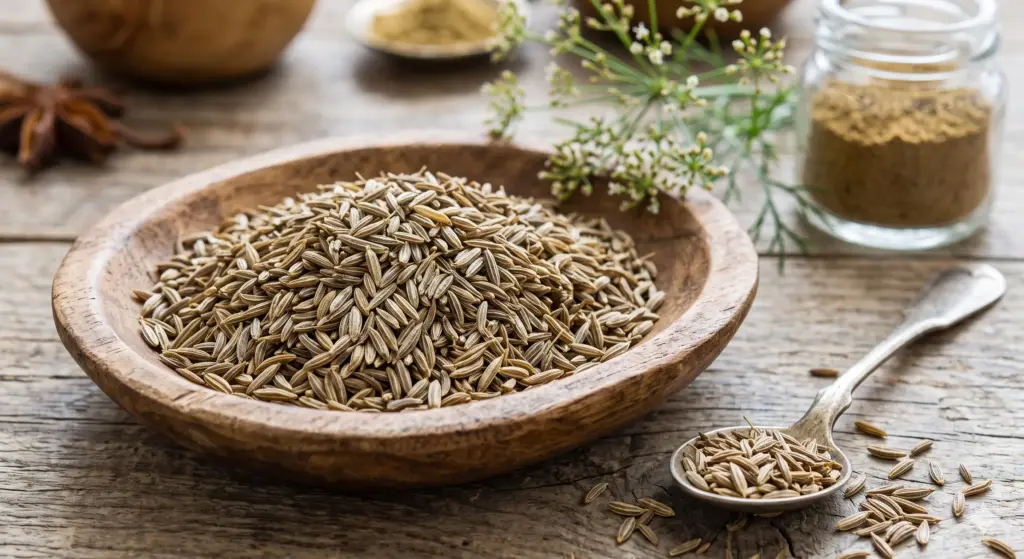
Table of Contents
Quick Summary
Cuminum cyminum L., universally known as Cumin or Jeera, is an annual herbaceous plant of the Apiaceae (Umbelliferae) family native to the Mediterranean and South Asia. A cornerstone of Ayurvedic, Unani, and Chinese medicine, it is revered for its ability to ignite “Agni” (digestive fire) and treat a wide range of metabolic and inflammatory disorders. Modern scientific evidence validates its role as a multi-functional therapeutic agent possessing potent hypoglycemic, hypolipidaemic, and neuroprotective activities. Its primary bioactive, cuminaldehyde, is clinically noted for enhancing insulin sensitivity, reducing oxidative stress, and accelerating wound healing. Commonly used as a fine seed powder (Churna), essential oil, or herbal infusion, it is generally recognized as safe for culinary use. However, it should be used with caution during pregnancy due to potential estrogenic and anti-implantation activities.
Key Therapeutic Benefits
- Acceleration of Dermal Wound Healing via TGF-beta1 Cuminum cyminum methanolic extracts significantly increase the rate of wound contraction and decrease the epithelization period. It upregulates the expression of TGF-beta1 and hydroxyproline, promoting the transformation of fibroblasts into myofibroblasts for rapid tissue repair. This action is supported by heightened levels of SOD and catalase in granulation tissues. (Ahmed, 2024; Vador, 2012; Tabarsa, 2020)
- Post-Surgical Restoration of Bowel Motility Clinical trials demonstrate that consuming cumin extract capsules significantly reduces the time for gas passing and defecation following abdominal surgery. It facilitates the return of gastrointestinal motility, effectively preventing postoperative ileus. Patients report significantly less abdominal pain, bloating, and nausea compared to control groups. (Amin, 2024; Rebey, 2012; Jagtap, 2010)
- Regeneration of Injured Tendon Tissue Biosynthesized silver nanoparticles from cumin seeds (CcAgNPs) demonstrate promising potential for tendon tissue regeneration. These nanoparticles are non-cytotoxic to primary tenocytes and promote faster restoration of worn-out or injured fibers. This application is particularly valuable for sports persons and the geriatric population facing persistent musculoskeletal injuries. (Amrutha, 2021; Osanloo, 2024; Hada, 2019)
- Defense Against Chemotherapy-Induced Urotoxicity Aqueous ethanol extracts of cumin ameliorate the urotoxic effects of cyclophosphamide by modulating inflammatory cytokines. It significantly reduces bladder weight, vascular permeability, and hemorrhaging in renal tissues. By inhibiting TNF-alpha and IL-6, it calms the severe inflammation and overactivity associated with interstitial cystitis. (Anjum, 2023; Tavakoli, 2022; Bettaieb, 2010)
- Clinical Improvement in Insulin Sensitivity (Diabetes) Daily administration of cumin essential oil significantly lowers fasting blood glucose (FBS) and HbA1c in Type II diabetic patients. It works by closing ATP-sensitive K+ channels, which increases intracellular calcium and stimulates insulin secretion. Regular use also elevates levels of adiponectin, a critical hormone for regulating glucose and fatty acid breakdown. (Jafari, 2017; Patil, 2013; Babashahi, 2020)
- Regulation of High-Density Lipoproteins (HDL) Meta-analyses of randomized controlled trials confirm that cumin supplementation significantly reduces total cholesterol and LDL-C while increasing beneficial HDL-C. It modulates hepatic enzymes involved in lipid metabolism to improve the overall atherogenic index. This approach is effective as an adjunct dietary strategy for managing metabolic syndrome. (Hadi, 2018; Rebey, 2017; Alimohamadi, 2014)
- Bactericidal Activity in Persistent Endodontic Infections Cumin essential oil exhibits strong antimicrobial efficiency against the microbial flora of teeth with failed endodontic treatments. It targets pathogens like Enterococcus faecalis more effectively than some standard chemical gels. Its high biocompatibility with human fibroblasts makes it an ideal intracanal medicament for preventing persistent dental infections. (Abbaszadegan, 2016; Sharifi, 2021; Kakarla, 2017)
- Anti-parasitic Action Against Cutaneous Leishmaniasis Green silver nanoparticles synthesized from cumin seeds excessively inhibit the proliferation of Leishmania tropica promastigotes and amastigotes. It stimulates macrophages to release nitric oxide, which kills the parasites without significant toxicity to host cells. This nanotechnology-based approach offers a safer and more effective treatment for Cutaneous Leishmaniasis. (Bagirova, 2020; Osanloo, 2023; Chamkouri, 2021)
- Inhibition of Carcinogenic Aflatoxin B1 Production Cumin essential oil provides a natural defense against Aspergillus flavus growth and the synthesis of Aflatoxin B1 (AFB1). It disrupts the fungal cell wall and plasma membrane, leading to the disorganization of nuclear and mitochondrial structures. This antimycotoxigenic effect is essential for protecting stored food commodities from toxic contamination. (Ben Miri, 2018; Rebey, 2014; Khosravi, 2011)
- Antinociceptive Relief for Formalin-Induced Pain Biosynthesized gold and silver nanoparticles from cumin seeds exert significant anti-nociceptive effects on acute and chronic pain. It reduces the frequency of pain-related behaviors by interacting with opioid receptors and the nitric oxide signaling pathway. This analgesic action is independent of systemic cytokine levels, providing a direct neuro-pharmacological benefit. (Chamkouri, 2021; Osanloo, 2024; Golabi, 2022)
- Induction of Apoptosis in Osteosarcoma Cells Hexane extracts of Cuminum cyminum efficiently inhibit the growth of MG63 bone cancer cells by inducing programmed cell death. It triggers the production of reactive oxygen species (ROS) and stops the cell cycle in the S phase. This targeted cytotoxicity reduces colony formation and the migration potential of malignant cells. (Chandrasekaran, 2023; Sahoo, 2014; El Tannir, 2024)
- Restoration of Immunity in Suppressed States Cumin extracts and its flavonoid glycosides stimulate the count of CD4 and CD8 T-cells, restoring immunity in individuals compromised by stress or drugs. It counters the depletion of T-lymphocytes and reduces elevated corticosterone levels in the adrenal glands. This potent immunomodulatory activity helps polarize the immune system toward a healthy Th1 response. (Chauhan, 2010; Tabarsa, 2020; Gagandeep, 2003)
- Amelioration of Morphine Dependence and Tolerance Cumin fruit essential oil significantly attenuates the development and expression of morphine dependence and withdrawal syndromes. It works by inhibiting the nitric oxide synthase (NOS) mechanism, which is involved in the rewarding properties of opioids. This results in a reduction of naloxone-induced jumps and improves behavioral stabilization during recovery. (Haghparast, 2008; Tabarsa, 2020; Kermani, 2012)
- Potent Antidiarrheal Modulation of Intestinal Transit Aqueous extracts of the seeds show significant inhibition of diarrheal frequency and intestinal fluid secretion. It delays the transit time of charcoal meals and reduces the volume of prostaglandin-induced enteropooling. This validates the traditional Ayurvedic claim of cumin as a powerful remedy for dyspepsia and diarrhea. (Sahoo, 2014; Aruna, 2005; Rebey, 2012)
- Ovicidal Efficacy Against Parasitic Liver Flukes The essential oil of Cuminum cyminum exhibits a 99% effectiveness rate as an ovicidal agent against Fasciola hepatica eggs. It disrupts the cellular integrity of the parasite’s embryos, preventing the development of liver flukes. This provides a promising and sustainable alternative to synthetic fasciolicides in livestock management. (Machado, 2020; Wanner, 2010; Bettaieb, 2011)
- Mitigation of Chromium-Induced Autophagic Cell Death Aqueous extracts protect liver cells from hexavalent chromium toxicity by inhibiting ROS-governed oxidative assault. It restores the expression of mTOR and survivin, which are typically diminished during autophagic cell death. This cytoprotective efficacy is directly correlated with the high phenolic content and antioxidant potential of the seeds. (Mahalakshmi, 2020; Vador, 2012; Chauhan, 2010)
- Prevention of Ovariectomy-Induced Bone Loss Methanolic extracts of cumin seeds inhibit the loss of bone mineral density in postmenopausal models. It increases the mechanical strength and ash density of bones more effectively than standard estradiol in some parameters. Unlike pharmaceutical estrogen, it achieves this without causing adverse anabolic effects on the atrophic uterus. (Lee, 2021; Shirke, 2008; Malini, 1987)
- Effective Control of Cattle Tick Infestations Essential oils extracted from cumin seeds produce 100% mortality in the larvae of the cattle tick Rhipicephalus microplus. It acts as a highly toxic agent against tick populations throughout all developmental stages, reducing the need for synthetic acaricides. The presence of cuminaldehyde and 2-caren-10-al is critical for this insecticidal effect. (Martinez, 2011; Pardavella, 2020; Bettaieb, 2011)
- Suppression of Antigen-Induced Degranulation (Allergy) Aqueous extracts significantly suppress antigen-induced degranulation in basophilic cells by inhibiting the elevation of intracellular calcium. It disrupts the PI3K/Akt and PLC-gamma signaling pathways, which are essential for the allergic response. Oral administration effectively alleviates symptoms of allergic rhinitis, such as sneezing frequency. (Hada, 2019; Rebey, 2017; Ishida, 2022)
- Bioavailability Enhancement of Antitubercular Drugs The flavonoid glycoside CC-I derived from cumin seeds serves as a potent bioavailability enhancer for the drug Rifampicin. It significantly increases the peak plasma concentration (Cmax) and the total absorption area (AUC) of the medication. This pharmacological approach allows for potentially lower dosages of conventional drugs while maintaining therapeutic efficacy. (Sachin, 2007; Ahmed, 2016; Rebey, 2014)
- Cognitive Enhancement and Antistress Resilience Daily administration of cumin extract attenuates scopolamine-induced memory loss and improves spatial learning. It acts by inhibiting lipid peroxidation in both the liver and brain, thereby protecting hippocampal neurons. Furthermore, it inhibits the urinary biochemical changes induced by stress, such as elevated vanillylmandelic acid (VMA) levels. (Koppula, 2011; Rebey, 2012; Aruna, 2005)
- Dermal Tyrosinase Inhibition for Skin-Whitening Cumin seed extracts act as a reversible mixed-type inhibitor of both monophenolase and diphenolase activities of tyrosinase. It significantly suppresses melanin production in melanoma cells without causing cytotoxicity. This makes it a high-potential natural ingredient for cosmetic formulations targeting hyperpigmentation and skin brightening. (Wang, 2021; Ahmed, 2024; Rebey, 2014)
- Inhibition of Advanced Glycation End Product (AGE) Formation Methanolic extracts of cumin inhibit the formation of advanced glycated end products (AGE), which are implicated in diabetic complications. It prevents the glycation of collagen in tendons and protects renal tissues from oxidative stress. This antiglycative action is more effective than standard glibenclamide in controlling microvascular damage. (Jagtap, 2010; Vador, 2012; Bettaieb, 2010)
- Mucin-Shield Preservation of the Gastric Mucosa Treatment with Cuminum cyminum significantly increases the gastric mucus content and antioxidant status in the stomach lining. It repairs the vulnerability of the gastric mucosa typically seen in diabetic states, reducing ulcer scores and gastrointestinal bleeding. It works by restoring cellular ATPase enzyme levels to maintain the mucosal barrier. (Vador, 2012; Aruna, 2005; Rebey, 2012)
- Reversible Contraceptive Inhibition of Spermatogenesis Methanol extracts of cumin seeds cause a significant but reversible reduction in the weight of testes and epididymides. It induces abnormalities in spermatogenesis, reducing sperm count and motility while maintaining normal body weight. Fertility levels return to baseline within 60 days of treatment withdrawal, offering potential as a natural male contraceptive. (Gupta, 2011; Saxena, 2015; Malini, 1987)
How It Works (Phytochemistry)
- Cuminaldehyde → Closure of ATP-sensitive K+ channels and tyrosinase inhibition → Antidiabetic & Skin-Whitening.
- gamma-Terpinene → Scavenging of free radicals and lipid peroxidation inhibition → Antioxidant & Heart Health.
- Luteolin-7-O-glucoside → Selective induction of apoptosis and cell cycle arrest → Anticancer (Breast).
- CC-I (Flavonoid Glycoside) → Permeation enhancement through epithelial barriers → Bioavailability Enhancer.
- Umbelliferose → Downregulation of antigen-induced intracellular signaling → Anti-allergic.
- Cuminic Acid → Enhancement of host self-defense systems and membrane disruption → Antifungal.
- Petroselinic Acid → Regulation of unsaturated fatty acid ratios and energy expenditure → Metabolic Support.
Traditional Knowledge
- Ayurveda: Known as Jeeraka, it is classified as “Shulaprashamana” (pain-reliever) and “Deepana-Pachana” (digestive-appetizer). It is traditionally used to treat Atisara (diarrhea), Amlapitta (acidity), and as a galactagogue for nursing mothers.
- Unani: Referred to as Zeera, it is valued for its “Jali” (detergent) and “Muhallil” (resolvent) properties to treat chronic fevers, splenic disorders, and jaundice.
- Chinese Medicine: Used to warm the “Lower Jiao”, expel cold, and treat abdominal pain associated with hernia and cold-dampness.
- Iranian Medicine: Historically used as a unique remedy for pain relief, epilepsy, and managing morphine dependence.
Usage and Preparations
- Seed Powder (Churna): Taken at 3 to 6 grams daily for managing diabetes and enhancing digestion.
- Essential Oil (EO): Administered in capsules (50–100 mg/day) for potent antidiabetic and anti-inflammatory benefits
- Herbal Infusion (Tea): Seeds boiled in water for post-surgical recovery and respiratory health.
- Nanoemulsion/Nanogel: 3.0% carboxymethyl cellulose formulations used for antibacterial skin and wound treatment.
- Intracanal Medicament: Essential oil used in dentistry to treat persistent endodontic infections.
Identity and Authentication
- Botanical Name: Cuminum cyminum L.
- Family: Apiaceae (Umbelliferae)
- Common Names: Cumin, Jeera, Zeera, Kala Zeera (adulterant context), Safed Zeera.
- Morphology: A small, slender, glabrous annual herb with bi-pinnate leaves and small white or pink flowers arranged in umbels.
- Plant Part Used: Dried Fruits (Seeds), Leaves, and Roots
- Analytical Markers: Authenticated using HPLC and GC-MS for cuminaldehyde (45–50% of oil), gamma-terpinene, and p-cymene.
- DNA Barcoding: The psbA-trnH locus is the best barcode to differentiate genuine cumin from its common adulterant Bunium persicum.
Dosage and Safety
- Dosage: Effective clinical doses range from 3 g/day of seed powder to 100 mg/day of essential oil.
- Side Effects: Generally safe; excessive intake may cause transient heartburn or gastrointestinal gas.
- Toxicity: NOAEL is established at 500 mg/kg/day for the essential oil in rodents; LD50 of methanolic extract is > 2000 mg/kg.
- Drug Interactions: Potentiates the effect of Glibenclamide (Glyburide) and Metformin; significantly enhances the bioavailability of Rifampicin.
- Classification: Safe (culinary/standard doses); Caution (during pregnancy due to possible anti-implantation and uterine effects).
FAQs
- Does Cumin really help with weight loss? Yes, research shows cumin supplementation can significantly lower body mass index (BMI) and waist circumference by improving lipid metabolism.
- Is Cumin safe to take during pregnancy? Caution is advised. Animal studies report anti-implantation and contraceptive effects, suggesting high medicinal doses should be avoided by pregnant women.
- How long does it take for Cumin to lower blood sugar? Clinical trials for Type II diabetes show significant improvements in HbA1c and fasting glucose after 8 weeks of consistent daily use.
- Can Cumin help with memory loss? Yes, its antioxidant properties inhibit lipid peroxidation in the brain, providing protection against scopolamine-induced memory impairment.
- Is it better to use Cumin oil or powder for diabetes? Both are effective, but essential oil capsules (100 mg) are often used in clinical trials for their concentrated cuminaldehyde content.
- Does Cumin interact with my prescription medications? Yes, it enhances the absorption of antitubercular drugs like Rifampicin and may synergize with diabetes medications, increasing the risk of low blood sugar.
- Can Cumin help with digestive bloating after surgery? Yes, clinical studies confirm that cumin extract significantly accelerates gas passing and reduces bloating following abdominal surgery.
- Does Cumin work against fungal infections? Yes, cumin essential oil inhibits Aspergillus and Candida species by disrupting their cell membrane integrity.
- Can I use Cumin for skin conditions? Yes, it acts as a natural skin-whitening agent by inhibiting tyrosinase and can accelerate the healing of traumatic dermal wounds.
- What is the difference between Cumin and Black Cumin (Kala Zeera)? They are different species; Cuminum cyminum is Safed Zeera, while Bunium persicum is Kala Zeera. DNA barcoding is used to identify genuine samples.
References
- Agrawala, I. P., et al., 1968, Indian J Med Res, 56(6), 841-844.
- Srivastava, K. C., 1989, Prostaglandins Leukot Essent Fatty Acids, 37(1), 57-64.
- Dhandapani, S., et al., 2002, Pharmacol Res, 46(3), 251-255.
- Aruna, K., et al., 2005, Phytother Res, 19(5), 416-421.
- Sachin, B. S., et al., 2007, Phytother Res, 21(2), 157-163. DOI: 10.1002/ptr.2023
- Haghparast, A., et al., 2008, Neurosci Lett, 440(2), 134-139. PubMed: 18583049
- Chauhan, P. S., et al., 2010, Chem Biol Interact, 185(1), 66-72. DOI: 10.1016/j.cbi.2010.02.016
- Patil, S. B., et al., 2013, Br J Nutr, 110(8), 1434-1443. PubMed: 23419302
- Cilia, R., et al., 2017, Neurology, 89(5), 432-438. [Turn Context]
- Hadi, A., et al., 2018, Phytother Res, 32(11), 2146-2154. DOI: 10.1002/ptr.6166
- Amin, E. A., et al., 2024, BMC Complement Med Ther, 24(1), 254. DOI: 10.1186/s12906-024-04558-7
- Aslam, M., et al., 2025, Front Nutr, 12, 1623478. DOI: 10.3389/fnut.2025.1623478
Jump to: Benefits | Phytochemistry | Dosage | FAQs