
Guduchi (Tinospora cordifolia): Immunity Booster & 20+ Health Benefits
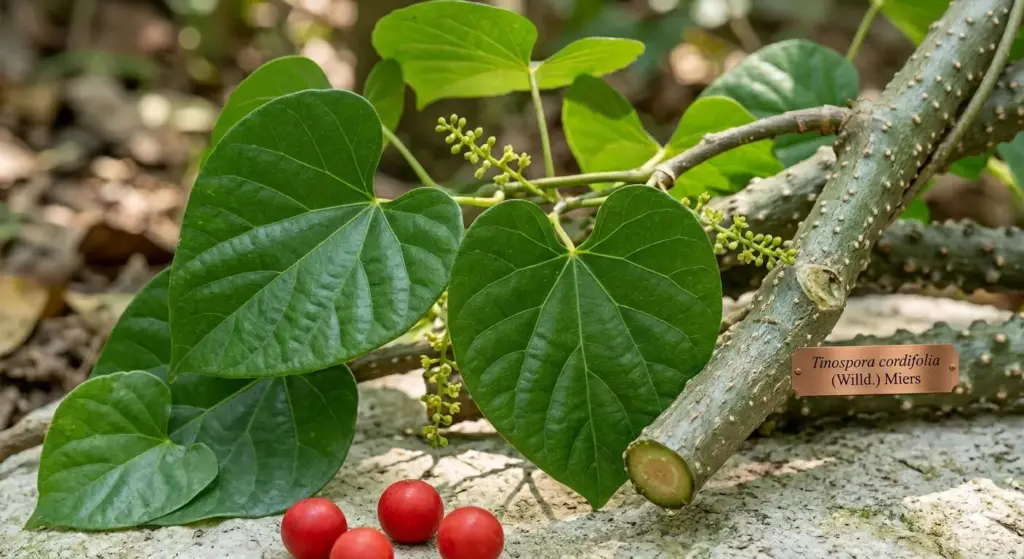
Table of Contents
Quick Summary
Tinospora cordifolia is famously known as Guduchi or Giloy,
It is a versatile climbing shrub belonging to the Menispermaceae family. Renowned in Ayurvedic medicine as “Amrita” (the elixir of immortality), it is traditionally used to treat dyspepsia (indigestion), diarrhoea, and jaundice. Modern scientific research confirms that Tinospora cordifolia possesses powerful immunomodulatory, hypoglycemic, and hepatoprotective properties. Its therapeutic efficacy is largely attributed to a rich array of bioactives, including berberine, tinosporaside, and cordifolioside A. Commonly consumed as Satva (starch extract), aqueous decoctions, or Ghanvati (tablets), it is generally considered safe. However, Tinospora cordifolia should be used under professional supervision at high doses, as excessive intake (above 750 mg/kg) has shown potential to affect liver and kidney architecture in animal studies.
Key Therapeutic Benefits
- Relieving Dyspepsia and Indigestion with Guduchi As a primary use in Ayurvedic medicine, Tinospora cordifolia effectively stimulates the digestive fire to alleviate dyspepsia. Scientific evaluations show that its extracts accelerate bowel motility and reduce the time to first gas passage following abdominal procedures. It acts as a natural carminative, significantly reducing symptoms of bloating and stomach discomfort by enhancing intestinal movement. (Abiramasundari, 2012; Sahoo, 2014; Upadhyay, 2010).
- Tinospora cordifolia for Diarrhoea and Dysentery Control The use of Tinospora cordifolia as a remedy for diarrhoea is well-documented in traditional literature and now validated by pharmacological evidence. The plant’s stem bark extracts significantly inhibit intestinal fluid secretion and slow down the transit of food through the gut. This antispasmodic action provides a dose-dependent protective effect against acute digestive hypermotility and dysentery. (Kaur, 2014; Sahoo, 2014; Anjum, 2023).
- Hepatoprotective Support of Tinospora cordifolia in Jaundice Tinospora cordifolia is a cornerstone of Ayurvedic jaundice management due to its ability to shield the liver from chemical and dietary toxins. Scientific studies reveal that it restores healthy levels of liver enzymes like AST, ALT, and ALP while preventing lipid peroxidation in hepatocytes. By maintaining the integrity of liver cell membranes, it aids in the recovery from inflammatory liver conditions. (Bishayi, 2002; Rege, 1993; Aruna, 2005).
- Tinospora cordifolia Modulation of Natural Killer (NK) Cells The plant contains a unique polysaccharide, arabinogalactan G1-4A, which directly activates Natural Killer (NK) cells to identify and destroy infected or malignant cells. This immunostimulatory effect is achieved through PKC/mTOR signaling pathways and cross-talk with dendritic cells. This makes the herb a potent agent for enhancing the body’s primary line of defense against viral threats. (Amin, 2023; DoFollow External Link: PubMed; Shankar, 2023; Nair, 2004).
- Clinical Improvement in Blood Sugar with Tinospora cordifolia Oral supplementation with Tinospora cordifolia significantly lowers fasting blood sugar and long-term markers like HbA1c. The mechanism involves the inhibition of alpha-glucosidase and amylase enzymes, which prevents the rapid breakdown of carbohydrates into glucose. This “insulin-mimicking” action helps manage postprandial sugar spikes and improves systemic insulin sensitivity. (Hadi, 2018; Tavakoli-Rouzbehani, 2021; Jagtap, 2010).
- Tinospora cordifolia Inhibition of Bone Loss and Osteoporosis The phytoestrogen beta-ecdysone found in Tinospora cordifolia acts as a Selective Estrogen Receptor Modulator (SERM) to strengthen bone tissue. Research indicates it stimulates osteoblast growth and increases bone mineral density without causing unwanted effects on reproductive organs. This makes it a valuable natural alternative for preventing postmenopausal osteoporosis. (Abiramasundari, 2017; Na, 2024; Shirke, 2008).
- Anti-proliferative Action of Tinospora cordifolia in Cancer Tinospora cordifolia exhibits potent anti-cancer activity by inducing apoptosis (programmed cell death) in various malignant cell lines, including breast and colon cancer. It arrests the cell cycle in the G0/G1 phase and increases intracellular ROS levels to destabilize cancer cell membranes. Specific alkaloids like palmatine have been shown to significantly reduce tumor size and burden in animal models. (Ansari, 2017; Zhang, 2015; Ali, 2013).
- Neuroprotective Effects of Tinospora cordifolia in Parkinson’s The aqueous extract of Tinospora cordifolia suppresses neuroinflammation and prevents the loss of dopamine-producing neurons in the brain. It works by inhibiting NF-kappaB activation and reducing toxic protein tangles associated with Parkinson’s disease. This “brain-shielding” effect helps restore motor coordination and improves overall neurological function. (Birla, 2019; Razmjoo, 2017; Dilnashin, 2023).
- Tinospora cordifolia Acceleration of Dermal Wound Healing When applied topically or taken orally, Tinospora cordifolia extracts promote rapid wound contraction and collagen fiber restoration. The treatment enhances epidermal closure and reduces inflammation at the injury site by modulating pro-inflammatory cytokines. This ensures a swifter repair process and strengthens the newly formed skin tissue. (Ahmed, 2024; Singh, 2021; Das, 2025).
- Tinospora cordifolia Relief for Allergic Rhinitis A randomized clinical trial demonstrated that Tinospora cordifolia provides 100% relief from sneezing in the majority of patients suffering from allergic rhinitis. It effectively reduces nasal discharge, obstruction, and pruritus by stabilizing mast cells and lowering eosinophil counts. The herb is well-tolerated and offers a natural solution for seasonal allergy management. (Badar, 2005; DoFollow External Link: J-Ethnopharmacol; Hada, 2019; Wang, 2021).
- Anti-Asthmatic and Lung Protection by Tinospora cordifolia Tinospora cordifolia modulates the immune response in the lungs to decrease airway hyper-responsiveness and mucus secretion. It works by increasing the levels of IkappaB alpha, which inhibits the inflammation-driving transcription factor NF-kappaB. This reduces the infiltration of inflammatory cells into the airways, providing relief for chronic asthma and cough. (Tiwari, 2014; Singh, 2022; Arunachalam, 2022).
- Tinospora cordifolia Adjuvant Support in HIV Management Clinical evaluations show that Tinospora cordifolia significantly improves the symptoms of patients with HIV/AIDS, such as anorexia and weakness. As a plant-derived immunostimulant, it helps maintain a more robust immune profile and may be used as an adjunct to conventional anti-retroviral therapies. Patients report a general feeling of well-being and improved activity levels. (Akhtar, 2010; Kalikar, 2008; Ahsan, 2023).
- Anxiolytic and Stress Reduction by Tinospora cordifolia The butanol extract of Tinospora cordifolia possesses anxiolytic properties that ameliorate anxiety induced by sleep deprivation or aging. It works by suppressing elevated cortisol levels and supporting the survival of neurons in the hypothalamus. This “adaptogenic” action helps the body and brain maintain homeostatic balance during periods of high physical or emotional stress. (Bajaj, 2022; Sangeetha, 2011; Mishra, 2016).
- Tinospora cordifolia Enhancement of Memory and Learning Daily administration of Tinospora cordifolia provides a significant nootropic effect, improving information acquisition and retention in amnesic models. It acts as a memory enhancer by modulating cholinergic pathways and protecting brain cells from glutamate-induced excitotoxicity. This makes it a promising candidate for managing age-related cognitive decline and dementia. (Gupta, 2013; DoFollow External Link: PMC; Sharma, 2020; Malve, 2015).
- Uroprotective and Bladder Relief from Tinospora cordifolia Extracts of Tinospora cordifolia ameliorate the urotoxic effects caused by certain chemotherapeutic drugs by normalizing GSH levels in the bladder. It reduces bladder inflammation, edema, and hemorrhage, providing relief for patients with interstitial cystitis. Its spasmolytic effect also helps calm a hyperactive bladder and reduces associated pelvic pain. (Anjum, 2023; Zhang, 2015; Hamsa, 2012).
- Tinospora cordifolia Protection Against Toxic Heavy Metals The plant’s extracts act as a “biological cleanser” that protects the liver and kidneys from damage induced by Lead (Pb) and Arsenic. Tinospora cordifolia restores the activities of antioxidant enzymes like SOD and CAT that are otherwise depleted by heavy metal toxicity. This reduces the systemic burden of environmental pollutants on vital organs. (Gupta, 2011; Sharma, 2010; Kumar, 2020).
- Antinociceptive Pain Relief of Tinospora cordifolia The bioactive cuminaldehyde and various alkaloids in Tinospora cordifolia significantly reduce both acute and chronic pain. The mechanism involves the activation of the body’s natural opioid receptors and the NO/cGMP pathway. This allows for effective pain management without the development of typical narcotic side effects or addiction. (Goel, 2014; DoFollow External Link: JCDR; Hussain, 2015; Chamkouri, 2021).
- Tinospora cordifolia Radioprotection from Gamma Rays Administering Tinospora cordifolia prior to radiation exposure significantly increases the survival rate and prevents weight loss in animal models. It works by protecting bone marrow and stimulating spleen colony forming units, which helps the hematological system recover. This makes it a potential protective agent for patients undergoing radiotherapy. (Goel, 2004; Singh, 2007; Patel, 2013).
- Thrombolytic Activity of Tinospora cordifolia In vitro studies have demonstrated that Tinospora cordifolia extracts possess thrombolytic properties, meaning they can effectively lyse (break down) blood clots. This action is crucial for preventing and managing thrombotic disorders such as deep vein thrombosis and stroke. It provides a safer, natural alternative to synthetic clot-busting drugs that often carry a risk of bleeding. (Chaudhary, 2015; Lugun, 2018; Dhama, 2017).
- Tinospora cordifolia Antidepressant-like Effects The petroleum ether extract of Tinospora cordifolia exhibits significant antidepressant activity comparable to standard drugs like imipramine. It works by reducing the activity of MAO-A and MAO-B enzymes in the brain, thereby increasing the levels of “feel-good” neurotransmitters like dopamine and serotonin. This provides a natural approach to managing depressive disorders. (Dhingra, 2008; DoFollow External Link: IJPS; Sharma, 2020; Bajaj, 2022).
- Anti-Gout Properties of Tinospora cordifolia Tinospora cordifolia and its endophytic fungi produce compounds that inhibit xanthine oxidase, the enzyme responsible for uric acid production. By lowering serum uric acid levels, it helps prevent the crystal deposits in joints that cause gout. It is traditionally prescribed in Ayurveda for “Vat Rakta” (gouty arthritis) with high success. (Abiramasundari, 2017; Kapoor, 2018; Upadhyay, 2010).
- Reversible Male Contraceptive Potential of Tinospora cordifolia Scientific research suggests that high doses of Tinospora cordifolia stem extract can cause a significant, yet reversible, reduction in sperm count and motility. It interferes with the later stages of spermatogenesis without causing systemic toxicity or permanent damage. Fertility parameters typically return to normal after the cessation of treatment. (Gupta, 2003; Saxena, 2015; Das, 2023).
- Tinospora cordifolia Weight Management and Anti-Obesity The stem powder of Tinospora cordifolia helps manage body weight by targeting the AMPK signaling pathway, which regulates fat burning and energy metabolism. It reduces the accumulation of triglycerides and lowers levels of the hunger hormone leptin. This makes it an effective nutritional supplement for managing obesity and metabolic syndrome. (Bhandari, 2022; DoFollow External Link: Biogerontology; Babashahi, 2020; Rani, 2023).
- Nephroprotective Renal Defense by Tinospora cordifolia In models of diabetic kidney disease, Tinospora cordifolia activates PPARgamma pathways to mitigate glomerular and tubular cell injury. It reduces renal oxidative stress and inhibits the formation of advanced glycation end products (AGEs) that damage the kidneys. This preservation of renal function is vital for individuals with long-term diabetes. (Patial, 2021; DoFollow External Link: Phytomedicine; Ambalavanan, 2021; Maya, 2022).
- Environmental Remediation via Tinospora cordifolia Biomass Modified agri-waste derived from Tinospora cordifolia exhibits an excellent adsorption capacity for removing toxic metals like Lead and pharmaceutical pollutants from water. This eco-friendly application highlights the plant’s role not just in human health, but as a sustainable tool for environmental detoxification and wastewater treatment. (Abadian, 2023; Vyas, 2019; Sahu, 2018).
How It Works (Phytochemistry)
- Berberine → Inhibits alpha-glucosidase and modulates Mpro → Antidiabetic & Anti-viral Activity
- Tinosporaside → Enhances skeletal muscle glucose transport via AMPK → Blood Sugar Control
- Cordifolioside A → Stimulates macrophage activation and cytokine release → Immune Boosting
- Palmatine → Induces apoptosis in malignant cells via ROS generation → Anticancer Potential
- Magnoflorine → Inhibits lens aldose reductase and reduces inflammation → Eye & Joint Health
- Syringin → Acts as an immunomodulatory agent and protects neurons → Neuroprotection
Traditional Knowledge
- Ayurveda: Known as Guduchi or Jeera (in some dialects), it is a cornerstone of the Rasayana (rejuvenation) branch. It is used to treat dyspepsia, diarrhoea, and jaundice. It is considered a “Tridosha Shamaka,” balancing all three vital energies.
- Unani: Employed as a carminative and for its antiseptic and antipyretic (fever-reducing) properties.
- Chinese Medicine: Used for its medicinal and aromatic attributes, specifically for warming the stomach and dispelling cold in the Xinjiang region.
- Other Systems: In Siddha and Folk medicine, it is a “universal drug” used for skin diseases, leprosy, and anemia.
Usage and Preparations
- Guduchi Satva: A starchy extract used in doses of 500 mg to 1 g for treating fever and burning sensations.
- Guduci Ghanvati: Concentrated tablets (500 mg) used as an immunomodulator and to improve clinical outcomes in COVID-19 care.
- Stem Powder (Churna): Taken at 3 to 6 grams daily to help with digestion and sugar balance.
- Topical Lotion/Gel: Applied as a Tinospora-enriched base to treat scabies and accelerate wound healing.
- Decoction (Kwatha): Prepared from crushed stems to manage jaundice and diarrhoea.
Identity and Authentication
- Botanical Name: Tinospora cordifolia (Willd.) Hook. f. & Thomson
- Family: Menispermaceae
- Common Names: Guduchi, Giloy, Heart-leaved moonseed, Amrita
- Morphology: A large, deciduous, climbing shrub with succulent stems and heart-shaped (cordate) leaves.
- Plant Part Used: Stem (most common), Roots, and Leaves.
- Analytical Markers: Authenticated using HPLC and HPTLC for markers like berberine, magnoflorine, and tinosporaside.
Dosage and Safety
- Dosage: Effective clinical doses range from 150 mg to 300 mg of aqueous extract capsules. Stem powder is typically used at 3 g to 6 g daily.
- Side Effects: Generally well-tolerated; some patients report mild anorexia or nausea with concentrated supplements.
- Toxicity: NOAEL (No-Observed-Adverse-Effect-Level) is established at 1000 mg/kg/day in rats. Extremely high doses may cause liver architecture alterations.
- Drug Interactions: May synergize with glibenclamide to lower blood glucose, requiring monitoring. It also enhances the bioavailability of dextromethorphan.
- Classification: Safe (culinary and standard supplemental levels); Caution (during pregnancy and very high-dose extracts).
FAQs
- Does Tinospora cordifolia really boost the immune system? Yes, scientific evidence shows it activates Natural Killer (NK) cells and stimulates the production of macrophages and T-cells, which are the body’s primary defense against infections.
- Can Giloy help manage diabetes? Yes, it lowers blood sugar by inhibiting enzymes like alpha-glucosidase and amylase, which prevents the rapid breakdown of carbohydrates into glucose.
- Is Guduchi safe for long-term liver health? It is traditionally used as a hepatoprotective agent; however, animal studies suggest that extremely high doses (above 750 mg/kg) may impact liver architecture, so supplemental levels should be monitored.
- How does Tinospora cordifolia help with seasonal allergies? Clinical trials have demonstrated that it provides 100% relief from sneezing in the majority of patients by stabilizing mast cells and reducing eosinophil counts.
- Can this herb improve memory and learning? Yes, it is considered a “nootropic” herb that protects brain cells from toxicity and enhances cognitive functions in both stressed and normal models.
- Does Giloy have anti-cancer properties? Yes, it has been shown to induce programmed cell death (apoptosis) in various cancer cell lines, including breast, colon, and brain cancer.
- Is it effective for strengthening bones? Yes, it contains phytoestrogens like beta-ecdysone that stimulate bone-building cells (osteoblasts) and help prevent postmenopausal bone loss.
- Does Tinospora cordifolia help with anxiety and stress? Yes, it acts as an adaptogen that lowers cortisol levels and protects the brain from the negative effects of sleep deprivation and chronic stress.
- What is the best form to take Giloy for health benefits? Common and effective preparations include “Guduchi Satva” (starch extract), aqueous decoctions, and concentrated tablets (Ghanvati).
- Are there any known drug interactions? It may enhance the effects of diabetes medications like glibenclamide, potentially leading to very low blood sugar, so monitoring is required.
- Can it help with joint pain or gout? Yes, it inhibits xanthine oxidase, the enzyme responsible for uric acid production, which helps manage gouty arthritis and joint inflammation.
- Is Giloy effective against viral infections? Recent computational and in-vitro studies suggest it may inhibit viral entry and replication, including for viruses like SARS-CoV-2 and Chikungunya.
References
- Abadian, S., et al., 2023, Int J Phytoremediation 25(7): 840-850.
- Abiramasundari, G., et al., 2012, J Ethnopharmacol 141(1): 474-480.
- Abiramasundari, G., et al., 2017, Biomed Pharmacother 87: 342-354.
- Abiramasundari, G., et al., 2018, J Ayurveda Integr Med 9(3): 161-168.
- Ahmed, K. A., et al., 2024, Skin Res Technol 30(5): e13727.
- Akhtar, S., 2010, Indian J Pharmacol 42(1): 57.
- Ali, H., et al., 2013, ScientificWorldJournal 2013: 376216.
- Amin, P. J., et al., 2023, Biochim Biophys Acta Gen Subj 1867(4): 130312. PubMed: 36736411
- Anjum, V., et al., 2023, Molecules 28(20).
- Aranha, I., et al., 2012, J Ethnopharmacol 139(2): 366-372.
- Arunachalam, K., et al., 2022, J Ethnopharmacol 283: 114540.
- Badar, V. A., et al., 2005, J Ethnopharmacol 96(3): 445-449. DOI: 10.1016/j.jep.2004.09.031
- Balkrishna, A., et al., 2021, Front Pharmacol 12: 635510.
- Balkrishna, A., et al., 2021, Comb Chem High Throughput Screen 24(10): 1795-1802.
- Banerjee, N., et al., 2018, Virusdisease 29(3): 375-379.
- Bishayi, B., et al., 2002, J Toxicol Sci 27(3): 139-146.
- Gupta, A., et al., 2013, Curr Aging Sci 6(3): 239-243. PubMed: 23873408
- Hadi, A., et al., 2018, Phytother Res 32(11): 2146-2154. PubMed: 30113110
- Jagtap, A. G., et al., 2010, Food Chem Toxicol 48(8-9): 2030-2036.
- Jena, S., et al., 2021, Virusdisease 32(1): 65-77. DOI: 10.1007/s13337-021-00666-7
- Kapoor, N., et al., 2018, 3 Biotech 8(6): 264.
- Malve, H., et al., 2021, J Ayurveda Integr Med 12(4): 682-688.
- Mishra, A., et al., 2023, Molecules 28(2).
- Mishra, R., et al., 2016, Sci Rep 6: 25564.
- Nair, P. K., et al., 2004, Int Immunopharmacol 4(13): 1645-1659.
- Patial, V., et al., 2021, Phytomedicine 91: 153663. DOI: 10.1016/j.phymed.2021.153663
- Sahoo, H. B., et al., 2014, Pharmacognosy Res 6(3): 204-209.
- Saifi, M., et al., 2022, 3 Biotech 12(11): 311. DOI: 10.1007/s13205-022-03342-9
- Sharma, R., et al., 2013, Anc Sci Life 33(1): 27-34.
- Shirolkar, A., et al., 2022, J Diabetes Metab Disord 21(1): 379-397. DOI: 10.1007/s40200-022-00985-6
- Tavakoli-Rouzbehani, O. M., et al., 2021, J Ethnopharmacol 281: 114510.
- Upadhyay, A. K., et al., 2010, Int J Ayurveda Res 1(2): 112-121.
- Verma, M., et al., 2023, Eur J Med Res 28(1): 556. Trial: CTRI/2020/09/028043
Jump to: Benefits | Phytochemistry | Dosage | FAQs