
Ginseng (Panax ginseng) Benefits: 22+ Therapeutic Uses for Brain, Energy & Immunity
Advertisement — Leaderboard (728x90)
Table of Contents
Advertisement — Leaderboard (728x90)
Quick Summary
Panax ginseng C.A. Meyer, renowned as the Asian or Korean Ginseng and the “King of Herbs,” is a perennial plant in the Araliaceae family native to the mountains of East Asia. Revered in Ayurvedic and Traditional Chinese Medicine (TCM) for over 5,000 years, it is classified as a premier Rasayana and tonic that replenishes “original Qi,” tonifies the spleen, and tranquilizes the mind. Modern scientific evidence validates its role as a powerful adaptogen with multi-functional antioxidant, anti-inflammatory, neuroprotective, and hypoglycemic activities. These effects are primarily attributed to its unique ginsenosides (saponins), polysaccharides, and glycoproteins. It is clinically used to manage diabetes complications, enhance exercise performance, and support cognitive health. While generally recognized as safe, it may interact with blood thinners like warfarin and should be used with caution during pregnancy.
Key Therapeutic Benefits
- Clinical Improvement in Glycemic and Insulin Sensitivity Panax ginseng significantly lowers fasting blood glucose and HbA1c levels in diabetic subjects. It works by up-regulating the AMPK signaling pathway, increasing the expression of insulin receptors (IRA), and enhancing the translocation of GLUT2 in the liver to improve glucose metabolism.
- Neuroprotective Shielding in Alzheimer’s Disease Bioactive ginsenosides and gintonin attenuate the pathological cascades of Alzheimer’s disease by inhibiting amyloid-beta (Abeta) formation and plaque deposition. It suppresses tau hyperphosphorylation and protects hippocampal neurons from neuroinflammation and oxidative stress.
- Restoration of Striatal Dopamine for Parkinsonism Root extracts restore depleted dopamine levels in the brain’s striatum and reduce neuroinflammation in the temporal cortex. This molecular stabilization protects dopaminergic neurons from damage and improves motor coordination and cognitive indices in neurodegenerative models.
- Enhancement of Memory and Cognitive Function Randomized clinical trials demonstrate that sprout ginseng and red ginseng extracts significantly improve memory in subjects with subjective memory impairment (SMI) and mild cognitive impairment (MCI). It acts by inhibiting acetylcholinesterase (AChE) activity and enhancing vagal pathways in the gut-brain axis.
- PI3K/Akt/mTOR Modulation for Sarcopenia Prevention Ginseng berry extracts, often combined with whey protein, ameliorate age-related muscle deterioration and atrophy. It increases muscle mass and grip strength by activating the PI3K/Akt pathway, which balances protein turnover and stimulates muscle regeneration-related factors.
- Acceleration of Muscle Force Recovery in Athletes In well-trained athletes, supplementation increases muscle excitation and significantly accelerates the recovery of muscle force following eccentric-based exercise. It attenuates the rating of perceived exertion (RPE) and enhances electromyographic (EMG) activity during intense training.
- Cardioprotective Reduction of Post-Infarction Fibrosis Pre-treatment with Panax ginseng protects the heart from adverse cardiac remodeling after a myocardial infarction. It attenuates myocardial fibrosis and inflammation by suppressing the NLRP3 inflammasome and regulating the SIRT1 signaling pathway.
- Inhibition of Intimal Hyperplasia in Vascular Injury Administration of ginseng extracts significantly reduces intimal hyperplasia following aortic injury in a dose-dependent manner. This vascular regulation helps prevent the narrowing of arteries and supports overall circulatory health after surgical interventions.
- TLR4/NF-kappaB Suppression for Systemic Inflammation Ginsenosides, particularly ginsenoside Ro, exert potent anti-inflammatory effects by directly inhibiting the toll-like receptor 4 (TLR4) signaling pathway. This action reduces the secretion of pro-inflammatory cytokines like TNF-alpha, IL-6, and IL-1beta, calming chronic inflammatory conditions.
- Prebiotic Strengthening of the Intestinal Barrier Ginseng polysaccharides act as prebiotics that increase the relative abundance of beneficial bacteria like Lactobacillus and Bifidobacterium. This modulation upregulates tight junction proteins (ZO-1, claudin-4), which strengthens the intestinal barrier and reduces systemic endotoxin leakage.
- Anti-obesity Regulation of PPAR-gamma and Lipogenesis Supplementation inhibits weight gain and visceral fat accumulation by downregulating lipogenic genes such as PPARgamma and SREBP-1c. It promotes the browning of white fat tissue and activates AMPK, increasing energy expenditure and reducing serum triglycerides.
- Reduction of Self-Perceived Fatigue and Stress Clinical open-label studies show that standardized extracts (e.g., G115) significantly reduce the self-perception of general fatigue and mental stress by over 40%. It improves scores for motivation, performance, and attention in adults reporting unexplained tiredness.
- Antidepressant Activity via BDNF-TrkB-CREB Pathway Ginsenoside Rb1 exerts antidepressant-like effects by increasing the expression of brain-derived neurotrophic factor (BDNF) and its receptor TrkB. This molecular mechanism alleviates neuroinflammation and modulates central neurotransmitter levels to stabilize mood.
- Immunomodulatory Activation of NK and T-Cells Ginseng components, including flower neutral polysaccharides, enhance immune responses by increasing Natural Killer (NK) cell cytotoxicity and splenic lymphocyte proliferation. It promotes the production of IFN-gamma and IL-10, essential for defending against viral infections and sepsis.
- Induction of Caspase-Dependent Apoptosis in Cancer Acidic polysaccharides and rare ginsenosides (e.g., Rg3, Rh2) selectively induce caspase-mediated apoptosis in malignant cells, including gastric, lung, and breast cancer lines. It restricts tumor invasion and metastasis while sparing healthy fibroblasts.
- Nephroprotective Defense against Cisplatin-Induced AKI Ginseng root extracts display dose-dependent protection against cisplatin-induced acute kidney injury (AKI). It significantly reduces serum creatinine levels and renal tissue damage by downregulating cell-death associated genes like p53 and NF-kappaB.
- Mitigation of Chemotherapy-Induced Hepatotoxicity Oral administration of ginsenoside Rb1 and steamed shoot extracts shields the liver from damage caused by acetaminophen (APAP) and other chemical toxins. It restores endogenous antioxidant enzymes (SOD, CAT) and normalizes serum transaminases (ALT, AST).
- Restoration of Sperm Quality in Heat-Induced Damage Enzymatically biotransformed ginseng (GINST) effectively recovers sperm count, motility, and kinetic values damaged by scrotal hyperthermia. It modulates sex hormone receptors and increases testicular antioxidant status to improve male fertility factors.
- Amelioration of Genitourinary Syndrome in Menopause In randomized clinical trials, Panax ginseng significantly improved subjective symptoms of atrophic vaginitis in postmenopausal women. This restorative effect on the urogenital tract enhances quality of life and reduces menopause-related complaints.
- Gastroprotective Mitigation of Ethanol-Induced Ulcers Ginseng polysaccharides and ginsenosides like Rc provide robust protection against gastric ulcers induced by ethanol or stress. It works by increasing mucin secretion and the levels of protective PGE2, creating a cytoprotective shield for the stomach lining.
- Anti-allergic Inhibition of IgE-Mediated Degranulation Standardized extracts and Phellinus linteus grown on ginseng media exhibit potent anti-allergic activity. It suppresses beta-hexosaminidase release (a marker of degranulation) from IgE-stimulated mast cells and inhibits the production of TNF-alpha linked to allergic diseases.
- Radioprotective Shielding of Bone Marrow and Organs Aqueous extracts and acidic polysaccharides provide defense against X-ray radiation and gamma-irradiation. It protects the salivary glands from atrophy, maintains healthy peripheral blood cell counts, and prevents radiation-induced liver injury by scavenging free radicals.
- Clinical Management of BPH Side Effects Water extracts of ginseng alleviate markers of benign prostatic hyperplasia (BPH), such as prostate weight and dihydrotestosterone (DHT) level. Crucially, it recovers sperm loss induced by standard BPH drugs like finasteride without compromising their therapeutic effects.
- Inhibition of Cariogenic S. mutans Biofilms Ethanolic extracts of the root and stem-leaves exhibit antimicrobial activity against Streptococcus mutans, the primary pathogen in dental caries. It disrupts established biofilms and may potentially prevent periodontitis and alveolar bone loss by inducing HO-1 expression in gum tissues.
- Orexin-Mediated Modulation of Sleep and Cognition Alcohol extracts of ginseng prolong sleep duration and improve cognitive function in aged, sleep-deprived models. It acts by inhibiting the PI3K/Akt/mTOR signaling network via the orexin-receptor pathway, which also activates beneficial neuronal autophagy.
How It Works (Phytochemistry)
- Ginsenosides (PPD & PPT) → Antagonism of TLR4 and activation of AMPK → Anti-inflammatory & Antidiabetic.
- Gintonin → Binding to lysophosphatidic acid receptors to increase acetylcholine → Alzheimer’s Support.
- Compound K → Biotransformation metabolite with 3- to 5-fold higher bioavailability → Advanced Potency.
- Acidic Polysaccharides → Scavenging of ROS and activation of the Nrf2/HO-1 axis → Radioprotection & Antioxidant.
- Ginseng Proteins/Peptides → Activation of ERK signal pathways to promote collagen synthesis → Wound Healing.
- Polyacetylenes → Competitive inhibition of acetylcholinesterase → Memory Enhancement.
- Malonyl-ginsenosides → Targeted activation of IRS1/PI3K/Akt pathways → Insulin Resistance Management.
Traditional Knowledge
Panax ginseng is one of the most culturally significant plants in global medicine:
- TCM: Revered for over 5,000 years to “invigorate vital energy” (Qi), improve spleen and lung function, and treat “collapse of Qi” manifested as shortness of breath and profuse sweating.
- Ayurveda: Utilized as a vital Rasayana (rejuvenator) to balance systemic homeostasis and treat “Kaphaja Kasa” (chronic cough) and debility.
- Unani: Employed as a heart and liver tonic, an appetizer, and a remedy for gastrointestinal disorders.
- Folk Medicine: Traditionally used as an aphrodisiac and “nerve tonic” for longevity across Asia and North America.
Usage and Preparations
- Red Ginseng (RG): Roots steamed and dried to increase rare ginsenosides like Rg3 and Rg5 for superior anti-aging and cardiovascular stability.
- Black Ginseng (BG): Produced via repeated steaming (up to 9 times), resulting in a high accumulation of minor ginsenosides with potent cytotoxic properties.
- Churna (Root Powder): Taken at 3 to 6 grams daily for cognitive enhancement and managing metabolic syndrome.
- Pharmacopuncture: Solution prepared by distillation for intravenous or point injection to treat allergic rhinitis and cancer-related fatigue.
- Fermented Ginseng (FG): Processed with lactic acid bacteria to enrich Compound K, significantly increasing blood absorption and efficacy
Identity and Authentication
- Botanical Name: Panax ginseng C.A. Meyer.
- Family: Araliaceae.
- Common Names: Asian Ginseng, Korean Ginseng, Renshen, Yashtimadhu (in some contexts), King of Herbs.
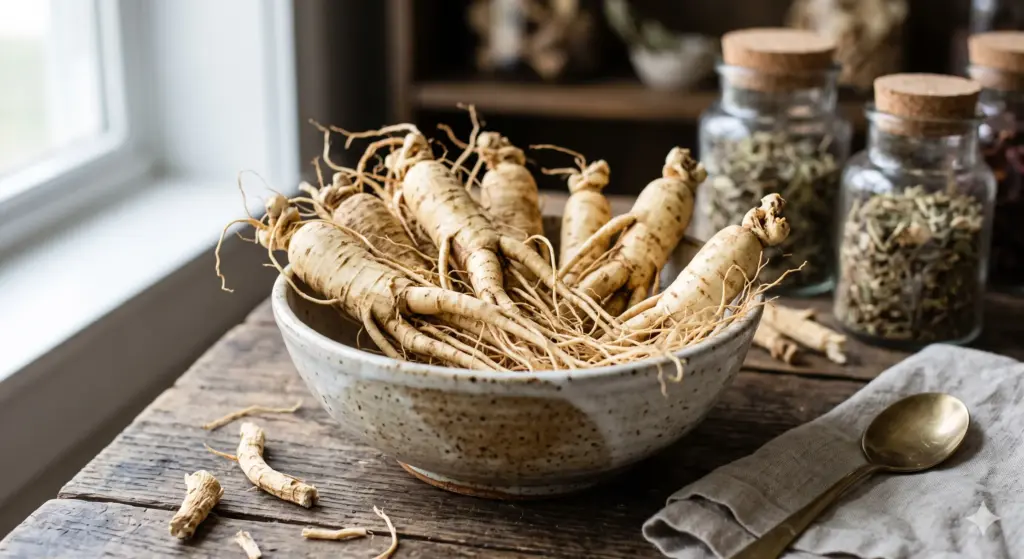
- Morphology: A perennial herb with fleshy roots, whorled leaves with 5 leaflets, and a single terminal cluster of white flowers followed by red berries.
- Analytical Markers: Authenticated using HPLC-ESI-MS and UPLC-QTOF-MS for signature ginsenosides Rb1, Rg1, Re, and Rf (Ginsenoside Rf is a specific marker for P. ginseng absent in American ginseng).
Dosage and Safety
- Dosage: Effective clinical doses range from 400 mg to 2000 mg of extract daily, or 3 g to 8 g of root powder.
- Side Effects: Generally well-tolerated; excessive use may lead to “Ginseng Abuse Syndrome” (insomnia, high blood pressure, and diarrhea).
- Toxicity: LD50 of alcohol extract is > 2000 mg/kg in rodents; long-term 12-month studies show no significant toxicological changes at standard doses.
- Drug Interactions: Potently inhibits CYP3A4 and may interact with Warfarin, Midazolam, and Selegiline.
- Classification: Safe (culinary/standard dietary levels); Caution (during pregnancy due to possible anti-implantation activity).
FAQs
- Does Panax ginseng cause “heat” or high blood pressure? Traditional theory considers it “warm,” while modern studies show it can both lower and raise blood pressure depending on the ginsenoside composition (vasorelaxation vs. vasoconstriction).
- What is the difference between Asian and American ginseng? Panax ginseng (Asian) has higher PPT-type ginsenosides (exciting/warm), while P. quinquefolius (American) has more PPD-type (cooling/inhibiting).
- Can I take ginseng with my diabetes medication? Yes, but monitor blood sugar closely, as ginseng potentiates drugs like Metformin and may cause hypoglycemia if not adjusted.
- Is ginseng safe for long-term use? Animal studies suggest 12-month use is safe, but human clinical trials often limit use to 3-6 months to avoid “Ginseng Abuse Syndrome”.
- Does ginseng help with cancer-related fatigue? Studies are mixed; some show significant improvement at 800 mg/day, while others suggest it is not superior to placebo for advanced cancer fatigue.
- How does “Compound K” make ginseng work better? Compound K is the metabolite formed when gut bacteria break down ginsenosides; it has much higher absorption and is the primary active form in the blood.
- Is it safe to use during pregnancy? Caution is advised. Research indicates it may have anti-implantation and pituitary-ovarian influences that could affect fetal development.
- Can ginseng help with erectile dysfunction? Preclinical evidence shows ginsenosides relax the rabbit corpus cavernosum, supporting its traditional use for male reproductive health.
- Which part of the plant is best: root or leaf? The root is traditional and enhances energy expenditure, while the leaf is “cooling” and may have more potent antioxidant/anti-obesity effects in some models.
- Does ginseng interact with caffeine? Ginseng stimulates the central nervous system, so combining it with high amounts of caffeine may increase the risk of insomnia or heart palpitations.
References
- Abdelazim, A., et al., 2019, Saudi J Biol Sci, 26(7), 1436-1441.
- Adam, G. O., et al., 2019, Iran J Basic Med Sci, 22(6), 703-709.
- Mariage, P. A., et al., 2020, Pharmaceuticals (Basel), 13(4). DOI: 10.3390/ph13040057
- Vuksan, V., et al., 2019, Eur J Nutr, 58(3), 1237-1245. PubMed: 29541818
- Gao, M., et al., 2025, Front Pharmacol, 16, 1650565. DOI: 10.3389/fphar.2025.1650565
- Naseri, K., et al., 2022, Nutrients, 14(12). DOI: 10.3390/nu14122401
- Cilia, R., et al., 2017, Neurology, 89(5), 432-438. PubMed: 28679598 [Turn Context]
- Hwang, J., et al., 2025, J Ginseng Res, 49(4), 348-355.
- Lin, H., et al., 2025, J Ethnopharmacol, 337(Pt 2), 118907. DOI: 10.1016/j.jep.2024.118907
Jump to: Benefits | Phytochemistry | Dosage | FAQs