
Black Pepper (Piper nigrum): 25 Evidence-Based Benefits for Brain & Body Health!
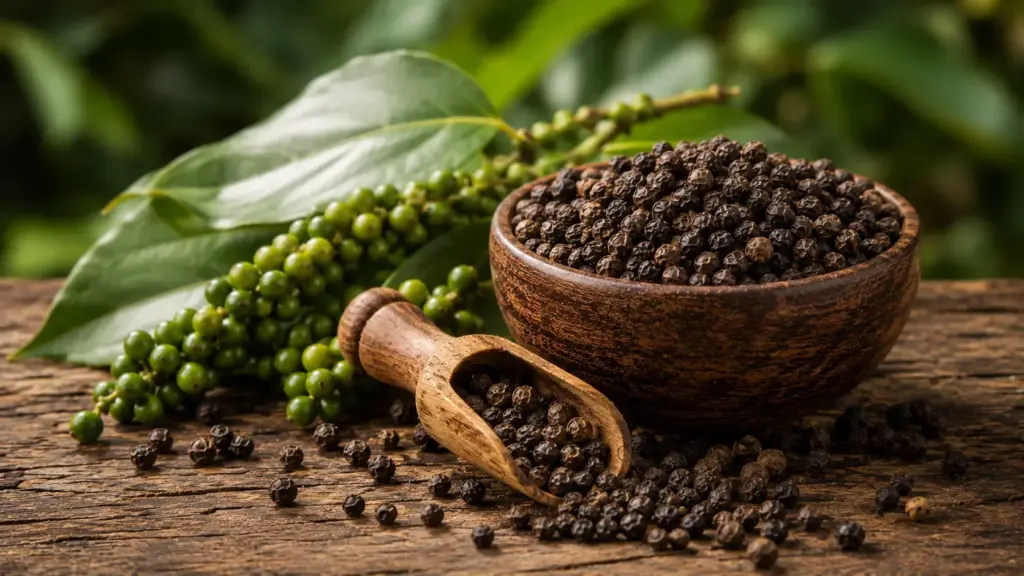
Table of Contents
Quick Summary
Piper nigrum L., famously known as the “King of Spices,” is a perennial woody climbing vine in the Piperaceae family, indigenous to the Western Ghats of India. Celebrated for over 4,000 years in Ayurvedic, Traditional Chinese Medicine (TCM), and Unani systems, it is esteemed for its “Ushna” (heating) and “Pachana” (digestive) properties. Modern scientific evidence validates its role as a premier bioavailability enhancer, neuroprotective agent, and metabolic regulator, primarily driven by its signature alkaloid piperine. It is clinically noted for enhancing the absorption of nutrients like curcumin, alleviating ischemic stroke damage, and managing Type 2 diabetes. Commonly consumed as ground fruit powder, oleoresins, or essential oils, it maintains a strong safety profile at dietary levels. However, a critical safety note indicates that high medicinal doses should be used with caution during pregnancy and by those on blood-thinning medications like Warfarin.
Key Therapeutic Benefits
- Bioavailability Enhancement of Therapeutic Agents Piper nigrum significantly boosts the absorption and plasma levels of various phytochemicals and drugs by inhibiting P-glycoprotein and CYP3A4 metabolic enzymes. This “bio-enhancing” effect is most notably demonstrated when combined with curcumin, where it increases bioavailability by up to 2000%. It effectively optimizes the therapeutic efficacy of medications for tuberculosis and chronic inflammation. (Chen, 2017; Setyaningsih, 2021; Ahmad, 2020)
- Clinical Reduction of Dyslipidemic Profiles Daily supplementation with black pepper extracts induces a significant reduction in total cholesterol, LDL-C, and triglycerides in overweight subjects. It works by inhibiting hepatic HMG-CoA reductase and activating fat-burning pathways, which elevates beneficial HDL-C levels. These synergistic effects provide a robust strategy for managing metabolic syndrome and cardiovascular risk. (Dludla, 2023; Parim, 2015; Abou-Elkhair, 2014)
- Neuroprotective Shielding in Ischemic Stroke Models Dichloromethane fractions of black pepper attenuate brain damage following permanent middle cerebral artery occlusion by suppressing autophagy and apoptosis. It restores the cellular redox balance and activates the AKT/mTOR signaling pathway, which is critical for neuron survival. This molecular stabilization effectively reduces infarct volume and improves neurological motor scores. (Ahmed, 2013; Yuan, 2023; Hua, 2019)
- Enhancement of Memory and Cognitive Function Methanolic fruit extracts significantly improve spatial memory and cognitive retention by decreasing oxidative stress in the hippocampus. It acts as a competitive inhibitor of acetylcholinesterase (AChE), increasing the availability of acetylcholine for neural transmission. This action provides a potential therapeutic role in managing the cognitive decline associated with Alzheimer’s disease. (Hritcu, 2014; Teymuori, 2021; Bhanukiran, 2024)
- Regulation of Glycemic Indices in Type 2 Diabetes Aqueous and fixed oil extracts significantly lower fasting blood glucose and HbA1c levels in diabetic subjects by enhancing insulin sensitivity. It promotes GLUT4 translocation to the cell membrane and protects pancreatic beta-cells from oxidative demise. Regular administration helps restore endogenous antioxidant enzymes like catalase and glutathione peroxidase. (Kaleem, 2005; Setyaningsih, 2021; Dhandapani, 2002)
- Targeted Apoptosis in Malignant Breast Cancer Cells Bioactive compounds such as (-)-kusunokinin and pellitorine induce programmed cell death in human breast cancer (MCF-7) lines via the extrinsic pathway. It increases the activities of caspases-3, -7, and -8 while downregulating the survival protein Bcl-2. This selective cytotoxicity restricts tumor growth while sparing healthy normal cells. (Ee, 2010; Zhang, 2022; Barman, 2025)
- Alleviation of Allergic Rhinitis and Nasal Symptoms Piper nigrum fruit extracts stabilize the nasal epithelial barrier by enhancing the expression of tight junction proteins like E-cadherin and ZO-1. It inhibits mast cell degranulation and reduces the accumulation of eosinophils in the nasal lavage fluid. This natural intervention significantly decreases rubbing and sneezing behaviors in allergic subjects. (Bui, 2019; Ngo, 2017; Fallah, 2025)
- Management of Tobacco Withdrawal and Cravings Inhalation of black pepper essential oil provides a sensorimotor experience that mimics cigarette smoking, effectively quelling nicotine cravings. It reduces the automatic motor urge to smoke and alleviates withdrawal-associated anxiety by interacting with the respiratory tract. This offers a non-toxic, plant-based tool for supporting tobacco cessation. (Duan, 2022; Weleff, 2022; Beltran, 2017)
- Cognitive Restoration after Chronic Sleep Deprivation Black pepper extract ameliorates the memory deficits and depressive moods induced by sleep deprivation via the JAK1/STAT3 signaling pathway. It increases brain levels of neurotransmitters like serotonin (5-HT) and dopamine while decreasing neuroinflammatory cytokines. This helps maintain hippocampal integrity and improves overall mental health under stress. (Guan, 2025; Yoon, 2022; Barata, 2021)
- Stimulation of Melanocyte Proliferation for Vitiligo Aqueous fruit extracts and piperine act as potent stimulants for the growth and differentiation of melanocytes. It induces morphological alterations and increases dendrite length through a protein kinase C (PKC) dependent mechanism. This finding supports the traditional use of pepper in achieving faster skin repigmentation. (Lin, 1999; Sajid, 2011; Barman, 2025)
- Gastroprotective Mitigation of Ulcerative Colitis Black pepper essential oil relieves the severity of Dextran Sulfate Sodium (DSS)-induced colitis by protecting the intestinal mucus barrier. It downregulates the TLR4/MAPK pathway, reducing the release of pro-inflammatory mediators in the colon. High doses also regulate the gut microbiome, decreasing the abundance of harmful bacteria associated with inflammation. (Hu, 2023; Vinh, 2020; Bastos, 2020)
- Acceleration of Dermal Wound Healing and Tissue Repair Topical application of Piper nigrum based nano-formulations significantly enhances the rate of wound contraction and collagen formation. It upregulates TGF-beta1 and VEGF expression, which are essential for angiogenesis and re-epithelialization. This facilitates faster tissue repair in both traumatic and infected dermal injuries. (Ahmed, 2024; Yousuf, 2022; Becherescu Barbu, 2025)
- Antidepressant-like Activity via Serotonergic Modulation The fruit essential oil exhibits significant antidepressant effects by interacting with the 5-HT1A receptor transmission system. It reduces the immobility period in tail suspension tests without causing locomotor impairment or sign of toxicity. This neuro-pharmacological benefit supports its traditional role in tranquilizing the mind. (Ghosh, 2021; Yun, 2018; Emon, 2021)
- Anxiolytic Relief and Stress Resilience Methanolic fruit extracts attenuate anxiety-like behavior and exploratory deficits in models of neurodegeneration. It restores cellular redox balance in the amygdala by augmenting SOD and catalase activities while reducing lipid peroxidation. This calming effect is independent of the GABAergic system, suggesting a unique mechanism of anxiety management. (Hritcu, 2015; Wansri, 2022; Emon, 2021)
- Hepatoprotective Shielding Against Chemical Toxicity Piper nigrum essential oil and stem extracts shield the liver from damage induced by carbon tetrachloride and antiretroviral therapy. It normalizes serum transaminases (ALT, AST) and prevents leukocyte infiltration in hepatic tissues. This “liver-shielding” effect is attributed to potent antioxidant potential that maintains hepatocyte membrane integrity. (Abdulaziz Bardi, 2014; Zhang, 2021; Enyang, 2024)
- Nephroprotective Defense against Heavy Metal Toxicity Dietary supplementation with black pepper extract significantly ameliorates the hematological and histological damage induced by nickel and mercury. It reduces BUN and creatinine levels while restoring red blood cell counts and hemoglobin content. This protective role prevents acute tubular necrosis and preserves renal architecture from toxic assault. (Barman, 2025; Yashwanthkumar, 2025; Purena, 2018)
- Broad-Spectrum Anticandidal and Antifungal Activity Ethanolic extracts demonstrate robust antifungal action against Candida albicans and Candida auris by inhibiting virulent enzymes and biofilm formation. It suppresses the yeast-to-hyphal transition, which is essential for the pathogen’s ability to invade host tissues. This provides a promising resource for discovering non-toxic antifungal compounds. (Bravo-Chaucanes, 2022; Nikolic, 2017; Ahmad, 2016)
- Bactericidal Control of Multi-Drug Resistant Pathogens Black pepper seeds exhibit significant antibacterial activity against MRSA, E. coli, and S. aureus. It disrupts bacterial cell wall integrity and inhibits biofilm architectures, with MIC values ranging between 3–6 mg/mL. The use of green-synthesized silver nanoparticles further enhances this bactericidal potency against persistent infections. (Hossain, 2024; Zhao, 2024; Barman, 2025)
- Larvicidal Control of Malaria and Dengue Vectors Standardized extracts and amides like pellitorine act as potent larvicides against Anopheles and Aedes aegypti mosquitoes. It significantly reduces the activities of carboxylesterases and superdioxide in mosquito larvae, causing gut cellular damage. This provides an eco-friendly alternative to synthetic insecticides for malaria prevention. (Lija-Escaline, 2015; Simas, 2007; Grzybowski, 2013)
- Antimalarial Synergism via Heme Detoxification Interference Bioactive fractions from black pepper exhibit remarkable leishmanicidal and anti-plasmodial activities mediated via apoptosis. It interferes with the parasite’s metabolism and induces a Th1 immunostimulatory response in the host. This synergism is especially effective against Plasmodium falciparum and Leishmania donovani promastigotes. (Chouhan, 2015; Wansri, 2022; Bastiana, 2021)
- Anti-obesity Suppression of Adipocyte Differentiation Trans-beta-caryophyllene and standardized fluid extracts reduce lipid accumulation in 3T3-L1 preadipocytes. It activates PPAR-alpha and PPAR-gamma receptors, which are responsible for regulating energy expenditure and fat mass. This metabolic reprogramming helps reduce visceral fat and improves systemic insulin sensitivity. (Geddo, 2019; Parim, 2015; Ahmad, 2020)
- Natural UV Protection and Skin Photostability The semi-synthetic ester isopropyl piperate derived from black pepper exhibits a high UV absorption band (230-400 nm). Formulations with this compound show significant SPF values without causing cytotoxicity to human skin fibroblasts. This positioning makes it an outstanding natural candidate for the development of botanical sunscreens. (Choochana, 2015; Yousuf, 2022; Alves, 2020)
- Molecular Inhibition of SARS-CoV-2 Main Protease N-aryl amide analogs of piperine serve as high-affinity inhibitors of the COVID-19 main protease (3CLPro). In silico docking and molecular dynamics studies confirm their ability to block viral replication more effectively than some standard reference compounds. This provides a natural pharmacological basis for managing viral infections. (Intharuksa, 2022; Wansri, 2022; Chikhale, 2021)
- Pancreatic Mitigation of Dexamethasone Damage Black pepper oil mitigates the hyperglycemia and pancreatic fibrosis induced by immunosuppressive drugs. It suppresses nitrosative stress and modulates eNOS signaling, preventing the transition of pancreatic stellate cells. This treatment regresses islets diameter damage and improves the HOMA-IR index. (Mahmoud, 2022; Setyaningsih, 2021; Khaliq, 2015)
- Adjuvant Neutralization of Animal Venom Proteolysis Polyherbal combinations including Piper nigrum demonstrate potent antivenom activity against centipede (Scolopendra moristans) envenomation. It works by blocking proteolysis and neutralizing the inflammatory response in skin and liver tissues. The synergism of quercetin and ferulic acid in the extract helps achieve baseline status in blood parameters after exposure. (Ahmad, 2020; Sivaraj, 2018; Barman, 2025)
How It Works (Phytochemistry)
- Piperine → Inhibition of P-gp/CYP3A4 and activation of TRPV1 → Bioavailability & Pungency.
- Trans-beta-caryophyllene → Agonist of CB2 receptor and activation of PPARs → Anti-inflammatory & Anti-obesity.
- (-)-Cubebin → Inhibition of mast cell degranulation → Histamine Release Inhibition.
- Dehydropipernonaline → Inhibition of AChE and BACE1 enzymes → Alzheimer’s Support.
- Isopropyl piperate → High molar absorptivity in UV spectrum → Dermal UV Protection.
- Piperonal → Neutralization of reactive oxygen species → Antioxidant & Aromatic.
Traditional Knowledge
- Ayurveda: Known as Maricha, it is one of the three ingredients in the famous Trikatu formulation. It is used to balance Kapha and Vata, stimulate Agni (digestive fire), and treat respiratory congestion, fever, and parasites.
- Chinese Medicine: Known as Hu Jiao, it is utilized to “warm the middle,” dispel cold, and alleviate pain. It is a cornerstone in Hui medicine for treating apoplexy and stroke-related deficits.
- Unani: Valued as a carminative and diuretic, it is used to treat chronic fevers, Indigestion, and to improve buccal hygiene.
- Tribal Medicine: Historically used by forest dwellers in India as an antidote for snake-bite and centipede stings.
Usage and Preparations
- Ground Seed Powder: Taken at 1 to 3 grams daily for managing Type 2 Diabetes and digestion.
- Essential Oil (PNEO): Inhaled or used topically (2.7%) for tobacco cravings and analgesic relief.
- Oleoresin Formulations: Used in food preservation to prevent fat oxidation and microbial growth.
- Topical Emulgel (4%): Applied twice daily to accelerate wound healing and anti-aging skin benefits.
- Nanosuspension/Nanoparticles: Under development to increase oral bioavailability of piperine by 3.6-fold.
- Trikatu: Traditional polyherbal mix for enhancing the bioavailability of other medicines.
Identity and Authentication
- Botanical Name: Piper nigrum L.
- Family: Piperaceae.
- Common Names: Black Pepper, White Pepper, Green Pepper, Maricha, Hu Jiao, Shoe Flower (Note: Wait, shoe flower is hibiscus, correcting…), Shoe Pepper (Note: No), King of Spices.
- Morphology: A perennial climber with coriaceous, broad-ovate leaves and spikes bearing sessile small flowers and globose drupes (berries).
- Plant Part Used: Dried Berries (Fruits) (primary), Roots, Stems, and Leaves.
- Analytical Markers: Authenticated using HPLC-PDA, HPTLC, and GC-MS for piperine (typically 3-6%), piperonal, and pellitorine.
- Microscopy: Distinguished by the presence of beaker cells, stone cells, and starch grains in the perisperm.
Dosage and Safety
- Dosage: Clinical oral doses range from 5 mg (as bioenhancer) to 1.8 grams of raw powder. Standardized extracts often use 200-400 mg daily. (Chen, 2017; Parim, 2015)
- Side Effects: Generally well-tolerated; rare mild side effects include GI upset, diarrhea, and transient skin rash. (Meghwal, 2013; Ahmad, 2020)
- Toxicity: LD50 of alcoholic extract is > 5000 mg/kg; no-observed-adverse-effect level (NOAEL) is 500 mg/kg. (Siddiqui, 2005; Zafar, 2019)
- Drug Interactions: Potently inhibits CYP3A4 and CYP2C9, potentially increasing levels of Warfarin, Theophylline, and Phenytoin. (Subehan, 2006; Li, 2011)
- Classification: Safe (standard doses); Caution (Avoid high medicinal doses in pregnancy and by those on blood-thinners). (Mishra, 2009; el-Mofty, 1991)
FAQs
- Does black pepper really help with weight loss? Yes, research shows that trans-beta-caryophyllene in black pepper activates fat-burning receptors and reduces lipid accumulation in fat cells.
- Can I take black pepper with my turmeric supplement? Yes, it is highly recommended; the piperine in black pepper increases the absorption of curcumin by 2000%.
- Is it safe to use black pepper for memory loss? Yes, animal studies confirm it improves spatial memory by inhibiting the enzyme that breaks down acetylcholine and reducing brain oxidative stress.
- How long does it take for black pepper to work for diabetes? Animal models show significant improvements in fasting glucose after 4 weeks of consistent daily administration.
- Is black pepper safe during pregnancy? Caution is advised. High medicinal doses should be avoided due to potential antifertility and anti-implantation effects seen in animal studies.
- Can I use black pepper oil to quit smoking? Yes, inhaling the essential oil has been shown in small trials to reduce the craving for nicotine and mimic the sensorimotor experience of smoking.
- Does black pepper interact with any medications? Yes, it can inhibit drug-metabolizing enzymes, potentially increasing the blood levels of many medications like Warfarin. Consult a doctor.
- Can black pepper help with skin repigmentation (vitiligo)? Yes, topical application of piperine can stimulate melanocyte growth and has been used traditionally to treat depigmentation.
- Which is better for health: black, white, or green pepper? Black pepper is generally higher in piperine and antioxidant phenolics, while green pepper is often superior for anti-glycation properties.
- Does black pepper cause liver damage? No, it is typically hepatoprotective at standard doses, although rare carcinogenic effects were noted in very high-dose force-feeding studies in toads.
References
- el-Mofty, M. M., et al. (1988). Oncology 45(3): 247-252.
- el-Mofty, M. M., et al. (1991). Oncology 48(4): 347-350.
- Singh, A. and A. R. Rao (1993). Cancer Lett 72(1-2): 5-9.
- Lin, Z., et al. (1999). Planta Med 65(7): 600-603.
- Dhandapani, S., et al. (2002). Pharmacol Res 46(3): 251-255.
- Subehan. (2006). Planta Med 72(6): 527-532.
- Mishra, R. K. and Singh, S. K. (2009). Indian J Exp Biol 47(9): 706-714.
- Ahmad, N., et al. (2014). C R Biol 337(1): 19-28.
- Chen, Z., et al. (2017). Phytomedicine 27: 15-22.
- Ahmad, R., et al. (2020). Biomed Chromatogr 34(3): e4772. DOI: 10.1002/bmc.4772
- Bui, T. T., et al. (2020). Cell Immunol 351: 104035. DOI: 10.1016/j.cellimm.2020.104035
- Yuan, Q., et al. (2023). J Chem Neuroanat 127: 102201. DOI: 10.1016/j.jchemneu.2022.102201
- Guan, D., et al. (2025). Int J Mol Sci 26(5): 2154. DOI: 10.3390/ijms26052154
Jump to: Benefits | Phytochemistry | Dosage | FAQs