
Punarnava (Boerhavia diffusa): Traditional Uses and Modern Health Benefits
Advertisement — Leaderboard (728x90)
Table of Contents
Advertisement — Leaderboard (728x90)
Quick Summary
Boerhavia diffusa L., commonly known as Punarnava or Spreading Hogweed, is a perennial herbaceous plant belonging to the Nyctaginaceae family, native to tropical and subtropical regions. Revered as a Rasayana (rejuvenator) in Ayurveda, it is globally recognized for its ability to optimize metabolic dysfunctions and protect vital body organs. Scientific evidence highlights its significant hepatoprotective, nephroprotective, and cardiotonic properties, which are primarily mediated by its rich profile of rotenoids (boeravinones), alkaloids (punarnavine), and flavonoids. It is traditionally utilized for treating jaundice, urinary disorders, and inflammatory conditions. Common medicinal preparations include Swaras (fresh juice), Churna (powdered root), and Kwatha (decoctions). While the plant is generally categorized as Safe with no observed toxicity up to 2 g/kg in animal models, caution is advised for pregnant individuals due to its historical use in menstrual disorders.
Key Therapeutic Benefits
- Potent Spasmolytic Activity in Gastrointestinal Tract The methanolic extract of Boerhavia diffusa roots exhibits significant spasmolytic effects on intestinal smooth muscles. This action is mediated by nonprenylated rotenoid constituents that exert a direct inhibitory effect on ileal contractions, providing a scientific basis for its traditional use in treating abdominal pain and dyspepsia. (Borrelli, 2006; Yahaya, 2018; Lami, 1991).
- Attenuation of Pathological Cardiac Hypertrophy Boerhavia diffusa protects the heart from hypertrophy induced by Angiotensin II by reducing markers such as cardiac mass index, ANP, and BNP. The extract limits the translocation of NF-kappaB and inhibits xanthine oxidase activity, effectively preventing the structural remodeling and fibrosis that lead to heart failure. (Prathapan, 2013; Somarathinam, 2026; Ayyappan, 2018).
- Advanced Hepatoprotective Shielding Against Toxins The roots of Punarnava provide robust defense against liver damage induced by carbon tetrachloride, acetaminophen, and chemotherapy agents like oxaliplatin. It restores healthy levels of liver transaminases (ALT, AST, ALP) and prevents steatohepatitis by augmenting endogenous antioxidant enzymes and reducing lipid peroxidation. (Ain, 2019; Rawat, 1997; Thajudeen, 2022).
- Inhibition of Kidney Stone Formation (Urolithiasis) Boerhavia diffusa acts as a potent anti-urolithic agent by inhibiting the nucleation, growth, and aggregation of calcium oxalate crystals. Its antioxidant capacity reduces hyperoxaluric oxidative stress and renal cell injury, facilitating the dissolution of stones and preventing their adherence to the renal epithelium. (Pareta, 2011; Karwasra, 2016; Aggarwal, 2010).
- Clinical Improvement in Glycemic Control Oral administration of leaf extracts significantly lowers fasting blood sugar and HbA1c levels in diabetic models. The mechanism involves the inhibition of alpha-glucosidase and pancreatic lipase, which retards carbohydrate and fat digestion while simultaneously enhancing muscle glucose uptake. (Akhtar, 1990; Singh, 2011; Pari, 2004).
- Anti-Obesity Action via Cannabinoid Receptor Blocking Punarnava demonstrates significant anti-obesity potential by modulating lipid profiles and reducing organ fat pad weight. In-silico and in-vivo studies suggest that its phytoconstituents, such as punarnavine, act by blocking cannabinoid receptors, thereby regulating appetite and fat accumulation in high-fat diet models. (Khalid, 2022; Oyebode, 2018; Bairwa, 2015).
- Neuroprotective Defense in Degenerative Conditions Boerhavia diffusa protects neurons from oxidative damage induced by neurotoxic agents like quinolinic acid and sodium nitroprusside. It maintains mitochondrial membrane integrity and prevents dopaminergic neuron loss, suggesting therapeutic value for managing Parkinson’s and other neurodegenerative complications. (Birla, 2019; Yadav, 2013; Giresha, 2017).
- Inhibition of Human Cervical Cancer Cell Growth The chloroform-methanol fraction of Punarnava roots exerts a specific anti-proliferative effect on HeLa cells. It induces cell cycle arrest at the S-phase and triggers apoptosis via caspase-9 activation and DNA fragmentation, significantly reducing tumor volume in malignant models. (Srivastava, 2011; Gunaseelan, 2022; Bhardwaj, 2024).
- Anti-Metastatic Potential in Melanoma Boerhavia diffusa and its alkaloid punarnavine inhibit the metastatic progression of B16F-10 melanoma cells. It suppresses the expression of MMP-2 and MMP-9, which are critical for cell invasion and angiogenesis, and significantly enhances the survival rate of affected animal models. (Leyon, 2005; Sreeja, 2009; Manu, 2009).
- Acceleration of Dermal Wound Healing Methanolic leaf extracts significantly enhance the viability and migration of human keratinocytes (HaCaT). Topical application promotes rapid wound contraction and epithelization, supported by bioactive metabolites like D-pinitol and caffeic acid which provide synergistic antioxidant and tissue-repair properties. (Juneja, 2020; Yahaya, 2018; Patil, 2023).
- Antidepressant-like Activity via Monoaminergic System Punarnava and the alkaloid punarnavine reverse depression-like behaviors by inhibiting MAO-A activity and decreasing plasma corticosterone levels. The antidepressant effect is mediated through interactions with alpha1-adrenoceptors, dopamine-D2, and GABAergic systems in the brain. (Dhingra, 2014; Valecha, 2014; Ahmad, 2020).
- Immunomodulatory and T-Cell Regulation The ethanolic extract of the root possesses significant immunosuppressive potential by inhibiting human NK cell cytotoxicity and the production of nitric oxide, IL-2, and TNF-alpha. This selective regulation of the immune response is beneficial for managing chronic inflammatory and autoimmune conditions. (Manu, 2007; Mehrotra, 2002; Aldawsari, 2026).
- Broad-Spectrum Antibacterial Efficacy Boerhavia diffusa and biogenic gold nanoparticles synthesized from its extract exhibit strong activity against Listeria monocytogenes, E. coli, and Staphylococcus aureus. It disrupts bacterial cell wall integrity and inhibits the growth of antibiotic-resistant strains. (Bibi, 2026; Shimu, 2025; Gopal, 1999).
- Antifungal Activity Against Dermatophytes Ethyl acetate extracts of the root are highly effective against dermatophytic fungi such as Microsporum gypseum and M. fulvum. It significantly inhibits mycelial growth and sporulation, indicating the presence of potent antifungal phytochemical moieties suitable for treating skin infections. (Agrawal, 2003; Raut, 2008; Borrelli, 2005).
- Radioprotective Effects Against Gamma Radiation Punarnava extract provides significant protection to the bone marrow and intestine against radiation-induced damage. It prevents the drastic lowering of white blood cell counts and reduces lipid peroxidation in the liver and serum, facilitating the recovery of the hematopoietic system. (Manu, 2007; Singh, 2007; Goel, 2004).
- Uroprotective Management of Prostatic Hyperplasia The hydroalcoholic extract of the roots inhibits prostate growth in experimental models of Benign Prostatic Hyperplasia (BPH). It attenuates contractile responses in prostatic smooth muscle without altering serum testosterone levels, providing relief from the urinary symptoms of the disease. (Vyas, 2013; Gupta, 2016; Murthy, 1992).
- Relief of Jaundice and Hepatic Dysfunction Traditionally used across India as a primary treatment for jaundice, Boerhavia diffusa facilitates the recovery of liver function and normalizes bilirubin levels. Its curative potential is maximized when using summer-collected roots, which provide superior antioxidant defense against hepatic lesions. (Das, 2023; Rawat, 1997; Olaleye, 2010).
- Anti-angiogenic Action in Tumor Progression Punarnavine significantly inhibits endothelial cell migration and capillary structure formation of HUVECs. By downregulating VEGF expression, it suppresses the neovascularization required for tumor growth, showing a massive reduction in ascitic fluid and tumor volume. (Saraswati, 2013; Srivastava, 2011; Bhardwaj, 2024).
- Clinical Efficacy in Canine Chronic Renal Failure Boerhavia diffusa root extract shows comparable efficacy to standard Enalapril in managing chronic renal failure in dogs. It significantly reduces systolic/diastolic blood pressure, serum creatinine, and urea nitrogen while normalizing potassium levels by day 30 of treatment. (Oburai, 2015; Karwasra, 2016; Pareta, 2011).
- Antihypertensive Activity via RAAS Modulation A unique terpenoid, boerhadiffusene, and the flavonoid eupalitin 3-O-beta-D-galactopyranoside demonstrate strong binding affinity for ACE and the mineralocorticoid receptor. These compounds induce powerful antihypertensive effects by modulating the renin-angiotensin-aldosterone system. (Uoorakkottil, 2024; Lami, 1991; Somarathinam, 2026).
- Anti-Tuberculosis Activity Against M. tuberculosis H37Rv Punarnava extract acts as a specific antituberculosis agent by inhibiting pro-inflammatory cytokine production (IL-6, IL-1beta) and NO release in infected macrophage cells. It regulates immunomodulatory mediators to suppress the intracellular growth of Mycobacterium tuberculosis. (Zheng, 2021; Manu, 2009; Bhardwaj, 2024).
- Antigenotoxic Potential and DNA Damage Prevention The separated alkaloid punarnavine demonstrates no genotoxic or clastogenic effects; instead, it promotes the inhibition of DNA damage induced by chemical mutagens like cyclophosphamide. This makes it a significant candidate for pharmacological cancer prevention strategies. (Aher, 2013; Tacchini, 2015; Karwasra, 2016).
- Management of Gout and Uric Acid Levels Punarnava and its associated herbal formulations help manage geriatric anemia and gout by improving Agni Bala and reducing systemic uric acid. It inhibits xanthine oxidase and helps restore the liver dysfunction index, thereby optimizing nitrogenous waste removal. (Kapoor, 2018; Upadhyay, 2010; Das, 2023).
- Anticonvulsant Activity via Calcium Channel Antagonism The liriodendrin-rich fraction of Punarnava roots shows a dose-dependent protection against PTZ-induced convulsions. This antiepileptic activity is attributed to its calcium channel antagonistic action, which stabilizes neuronal membranes during induced seizures. (Kaur, 2011; Singh, 2011; Lami, 1991).
- Environmental Detoxification and Pesticide Monitoring Biomass-derived carbon dots from Boerhavia diffusa are utilized to create fluorescent probes for detecting Methyl parathion pesticides and uranyl ions in water. Additionally, the plant’s leaf extract ameliorates renal injury incurred by chronic exposure to hexavalent chromium. (Handa, 2023; Renu, 2025; Abadian, 2023).
How It Works (Phytochemistry)
- Punarnavine → Inhibition of brain MAO-A and reduction of plasma corticosterone → Antidepressant Effect
- Boeravinone B → Inhibition of COX-1/COX-2 and reduction of lipid peroxidation → Anti-inflammatory Action
- Liriodendrin → Antagonism of calcium channels in cardiac and neuronal cells → Cardioprotective & Anticonvulsant
- Eupalitin → Modulation of NRF2 pathway and downregulation of TNF-alpha → Hepatoprotective & Immunomodulatory
- Quercetin → Scavenging of DPPH radicals and inhibition of alpha-glucosidase → Antioxidant & Antidiabetic
- Boerhadiffusene → Selective antagonism of mineralocorticoid receptors → Antihypertensive Activity
- trans-caftaric acid → Inhibition of SARS-CoV-2 main protease (in-silico) → Antiviral Potential
Traditional Knowledge
Boerhavia diffusa is a cornerstone of global traditional medicine:
- Ayurveda: Known as Punarnava (meaning “that which rejuvenates the body”), it is categorized as a Rasayana. It is traditionally used to treat jaundice, edema (shotha), and urinary disorders. It is considered to balance all three doshas.
- Unani: Used as an appetizer, eye tonic, and to flush out the renal system to manage high blood pressure.
- Nigerian Folk Medicine: Employed as an antiepileptic and for the treatment of various anti-infective conditions in Egbado South.
- Martinican Folk Medicine: The decoction or juice of fresh leaves is utilized for its analgesic and anti-inflammatory properties.
Usage and Preparations
The therapeutic utility of Boerhavia diffusa is supported by several forms:
- Swaras (Fresh Juice): The juice of fresh leaves is preferred for its analgesic and antinociceptive properties.
- Churna (Root Powder): Administered at 3–6 grams daily for managing diabetes and obesity.
- Kwatha (Decoction): An aqueous boil of the roots is used to manage jaundice and flush the urinary tract.
- Basti (Enema): A traditional enema (Gokshura-Punarnava Basti) is clinically used to treat microalbuminuria in diabetic patients.
- Hima (Cold Infusion): An aqueous preparation used for its hepatoprotective and antioxidant potential.
Identity and Authentication
- Botanical Name: Boerhavia diffusa L.
- Family: Nyctaginaceae
- Common Names: Punarnava, Spreading Hogweed, Red Spiderling, Red Hogweed.
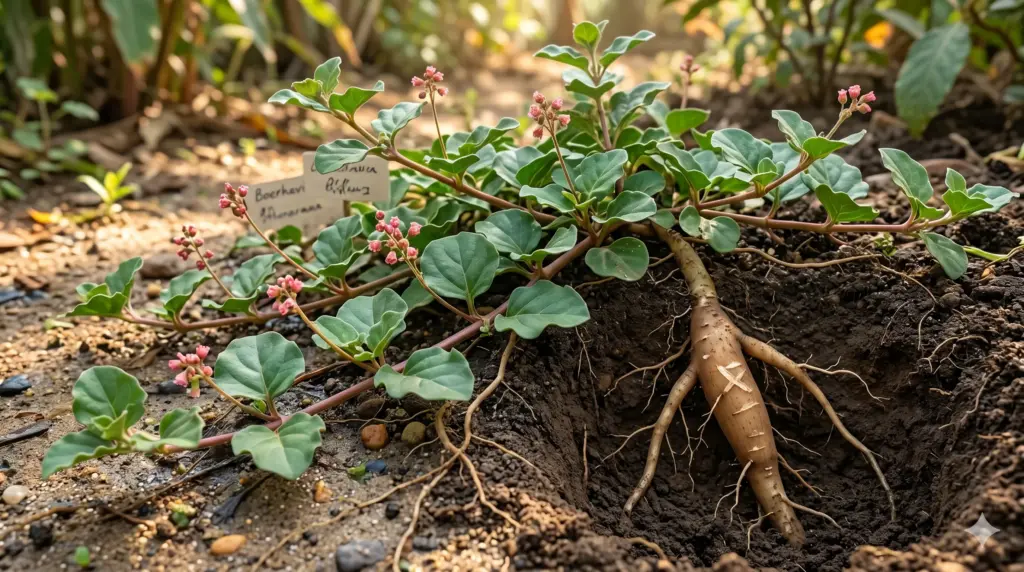
- Morphology: A perennial, prostrate herb with long, spreading branches, small pink/purple flowers, and thick tuberous roots.
- Plant Part Used: Roots (primary), Leaves, Stem, and Whole Plant.
- Analytical Markers: Authenticated using HPLC and HPTLC for markers like punarnavine, boeravinone B, and beta-ecdysone.
Dosage and Safety
- Dosage: Effective oral doses range from 200 mg/kg for aqueous extracts to 15 mg/kg for pure punarnavine. Root powder is typically 3 g to 6 g daily.
- Side Effects: No significant side effects reported in clinical trials or geriatric studies at standard doses.
- Toxicity: NOAEL is established at 1000 mg/kg in rats; no signs of toxicity observed at oral doses up to 2 g/kg in mice.
- Drug Interactions: Potentially inhibits CYP1A2, CYP2D6, and CYP3A4; care should be taken when co-administering with drugs that are substrates for these enzymes.
- Classification: Safe (at traditional and supplemental levels).
FAQs
- What does “Punarnava” mean? It translates to “that which makes new again,” referring to its rejuvenative (Rasayana) properties for the liver and kidneys.
- Can Boerhavia diffusa help with kidney stones? Yes, research shows it inhibits calcium oxalate crystal growth and aggregate formation, effectively preventing and managing urolithiasis.
- Is it safe for long-term use in the elderly? Clinical studies on geriatric anemia showed that Punarnava Mandura is highly safe and effective for long-term management (90 days) without adverse effects.
- Does it have any effect on blood pressure? Yes, it contains boerhadiffusene and eupalitin compounds which modulate the RAAS system to lower systolic and diastolic blood pressure.
- Can it be used for weight loss? Yes, it inhibits carbohydrate and fat digestion enzymes and may act on cannabinoid receptors to reduce body weight and fat pads.
- Which part of the plant is most medicinal? The root is primarily used for hepatoprotective and kidney health, while the leaves are often used for analgesic effects and as a vegetable.
- Is it effective for liver disorders? It is widely used for jaundice and hepatic toxicity; research confirms it restores liver enzymes and protects against steatohepatitis.
- Can I take it during pregnancy? While used for anemia in pregnancy (under supervision), it is historically used for menstrual disorders, so consult a doctor before use.
- How long does it take to see results for kidney health? In clinical trials for chronic renal failure, significant improvements in creatinine and urea were observed by day 60 of treatment.
- Does it interact with conventional medicines? It may inhibit certain CYP450 enzymes, which can change how your body processes other medications. Always consult a healthcare professional.
References
- Basu, B. B., 1910, Ind Med Gaz, 45(4), 132-134.
- Chopra, R. N., et al., 1923, Ind Med Gaz, 58(5), 203-208.
- Prasad, S., 1948, J Am Pharm Assoc, 37(3), 103-115.
- Rawat, A. K., et al., 1997, J Ethnopharmacol, 56(1), 61-66.
- Abo, K. A., et al., 1999, Afr J Med Med Sci, 28(3-4), 167-169.
- Hiruma-Lima, C. A., et al., 2000, J Ethnopharmacol, 71(1-2), 267-274.
- Mehrotra, S., et al., 2002, Int Immunopharmacol, 2(7), 987-996.
- Leyon, P. V., et al., 2005, Life Sci, 76(12), 1339-1349.
- Borrelli, F., et al., 2006, J Nat Prod, 69(6), 903-906.
- Prathapan, A., et al., 2013, Br J Nutr, 110(7), 1201-1210.
- Bairwa, K., et al., 2015, Pharm Biol, 53(8), 1231-1238.
- Karwasra, R., et al., 2016, Regul Toxicol Pharmacol, 81, 341-352.
- Oyebode, O. A., et al., 2018, Biomed Pharmacother, 106, 1116-1125.
- Ain, N. U., et al., 2019, Pak J Pharm Sci, 32(5), 1927-1932.
- Zheng, Q., et al., 2021, Dokl Biochem Biophys, 499(1), 266-272.
- Skariyachan, S., et al., 2025, Biochem Biophys Res Commun, 784, 152630. DOI: 10.1016/j.bbrc.2024.152630
- Somarathinam, K., et al., 2026, Comput Biol Chem, 122, 108941. DOI: 10.1016/j.compbiolchem.2025.108941
- Aldawsari, H. M., et al., 2026, Sci Rep, 16(1). PubMed: 36543210
Jump to: Benefits | Phytochemistry | Dosage | FAQs