
- Chawla, Y. K., et al., 1982, Indian J Med Res, 76 Suppl: 95-98.
- Thakur, C. P., et al., 1985, Experientia, 41(3): 423-424.
- Dhir, H., et al., 1990, Mutat Res, 241(3): 305-312.
- Dhir, H., et al., 1991, Cancer Lett, 59(1): 9-18.
- Ghosh, A., et al., 1992, Food Chem Toxicol, 30(10): 865-869.
- Asmawi, M. Z., et al., 1993, J Pharm Pharmacol, 45(6): 581-584.
- Suresh, K., et al., 1994, J Ethnopharmacol, 44(1): 55-60. DOI: 10.1016/0378-8741(94)90093-0
- Gulati, R. K., et al., 1995, Indian J Exp Biol, 33(4): 261-268.
- Mathur, R., et al., 1996, J Ethnopharmacol, 50(2): 61-68.
- Nandi, P., et al., 1997, Br J Cancer, 76(10): 1279-1283.
- Bhattacharya, A., et al., 1999, Indian J Exp Biol, 37(7): 676-680.
- Anila, L., et al., 2000, Phytother Res, 14(8): 592-595.
- Augusti, K. T., et al., 2001, Indian J Exp Biol, 39(8): 760-766.
- Al-Rehaily, A. J., et al., 2002, Phytomedicine, 9(6): 515-522.
- Rajeshkumar, N. V., et al., 2003, J Exp Clin Cancer Res, 22(2): 201-212.
- Achliya, G. S., et al., 2004, Indian J Exp Biol, 42(5): 499-503.
- Ankamwar, B., et al., 2005, J Nanosci Nanotechnol, 5(10): 1665-1671.
- Scartezzini, P., et al., 2006, J Ethnopharmacol, 104(1-2): 113-118. PubMed: 16226416
- Anilakumar, K. R., et al., 2007, Indian J Exp Biol, 45(5): 450-454.
- Antony, B., et al., 2008, Indian J Clin Biochem, 23(4): 378-381.
- Banot, J., et al., 2009, Indian J Exp Biol, 47(3): 157-162.
- Adil, M. D., et al., 2010, J Ethnopharmacol, 132(1): 109-114. DOI: 10.1016/j.jep.2010.07.047
- Akhtar, M. S., et al., 2011, Int J Food Sci Nutr, 62(6): 609-616.
- Abiramasundari, G., et al., 2012, J Ethnopharmacol, 141(1): 474-480.
- Chularojmontri, L., et al., 2013, Evid Based Complement Alternat Med, 2013: 720728.
- Gaire, B. P., et al., 2014, Chin J Integr Med. DOI: 10.1007/s11655-014-1843-x
- Malve, H. O., 2015, J Ayurveda Integr Med, 6(4): 233-240.
- Justin Thenmozhi, A., et al., 2016, J Ethnopharmacol, 194: 20-29.
- Chaphalkar, R., et al., 2017, Oxid Med Cell Longev, 2017: 3876040.
- Ahmad, A., et al., 2018, J Diet Suppl, 15(5): 684-691.
- Arul, V., et al., 2019, ACS Omega, 4(2): 3449-3457.
- Balusamy, S. R., et al., 2020, Phytomedicine, 66: 153129. DOI: 10.1016/j.phymed.2019.153129
- Balkrishna, A., et al., 2021, Front Pharmacol, 12: 635510.
- Ahmed, S. M., et al., 2022, Mymensingh Med J, 31(2): 360-366.
- Singai, C., et al., 2023, Pharmaceuticals, 17(7).
- Akhbari, M., et al., 2024, J Ethnopharmacol, 318(Pt A): 116958.
- Ariyarathna, P., et al., 2025, Nat Prod Res, 1-9.
Amla (Emblica officinalis): 22+ Evidence-Based Health Benefits
Advertisement — Leaderboard (728x90)
Table of Contents
Advertisement — Leaderboard (728x90)
Quick Summary
Phyllanthus emblica L., widely known as Amla or Indian Gooseberry, is a majestic deciduous tree belonging to the Euphorbiaceae family and is a cornerstone of Ayurvedic medicine. Revered as a “Rasayana” for its rejuvenating powers, Phyllanthus emblica is scientifically celebrated for its potent antioxidant, hypoglycemic, and hepatoprotective properties. Extensive evidence validates its role in improving insulin sensitivity, reducing systemic inflammation, and enhancing cardiovascular health through the action of unique tannins like emblicanin A and B. Traditionally used to treat dyspepsia, jaundice, and diarrhoea, it is available in forms such as Churna (powder), Ghanvati (tablets), and Satva (starchy extracts). While universally recognized as safe at standard culinary and supplemental levels, extremely high doses may affect liver and kidney architecture, requiring professional guidance for concentrated extracts.
Key Therapeutic Benefits
- Phyllanthus emblica Advanced Antioxidant Scavenging The fruits of Phyllanthus emblica exhibit extraordinary antioxidant capacity by directly neutralizing DPPH and hydroxyl radicals. This protection is primarily residing in its unique low-molecular-weight hydrolyzable tannins, which are more effective than synthetic vitamin C at maintaining cellular redox homeostasis. (Bhattacharya, 1999; Poltanov, 2009; Scartezzini, 2006).
- Regulation of Lipid Profiles and Cholesterol by Phyllanthus emblica Phyllanthus emblica acts as a potent hypolipidemic agent by significantly reducing total cholesterol and LDL-C while elevating beneficial HDL-C. It works by inhibiting the hepatic HMG-CoA reductase enzyme and enhancing the degradation and elimination of cholesterol from the blood. (Gopa, 2012; Upadya, 2019; DoFollow External Link: PubMed; Antony, 2008).
- Clinical Improvement in Blood Sugar with Phyllanthus emblica Oral supplementation with Phyllanthus emblica significantly lowers fasting blood sugar and HbA1c in diabetic patients. The mechanism involves the potent inhibition of alpha-glucosidase and alpha-amylase enzymes, which prevents the rapid breakdown of carbohydrates into glucose and improves insulin sensitivity. (Akhtar, 2011; Samani, 2016; Jagtap, 2010).
- Phyllanthus emblica Relief for Gastric Ulcers and Dyspepsia As a core Ayurvedic remedy, Phyllanthus emblica provides a dose-dependent protective effect against gastric lesions induced by stress or NSAIDs. It enhances the secretion of gastric mucus and hexosamine, which strengthens the mucosal barrier and protects the stomach lining from acid-induced injury. (Al-Rehaily, 2002; Sairam, 2002; Chatterjee, 2011).
- Hepatoprotective Support of Phyllanthus emblica in Liver Disease Phyllanthus emblica shields the liver from damage caused by alcohol, heavy metals, and toxins like carbon tetrachloride. It restores healthy levels of liver transaminase enzymes (AST, ALT) and prevents lipid peroxidation, facilitating the regeneration of damaged hepatocytes. (Gulati, 1995; Rege, 1993; Aruna, 2005).
- Phyllanthus emblica Activation of Natural Killer (NK) Cells The plant contains bioactive polysaccharides that directly augment Natural Killer (NK) cell activity, which is crucial for identifying and destroying viral-infected or malignant cells. This immunostimulatory effect significantly increases the survival rate in models facing heavy immune stress or tumor inoculation. (Abiramasundari, 2012; Nair, 2004; DoFollow External Link: J-Ethnopharmacol; Suresh, 1994).
- Neuroprotective Benefits of Phyllanthus emblica in Parkinson’s Standardized extracts of Phyllanthus emblica protect against the loss of dopamine-producing neurons by suppressing neuroinflammation and NF-kappaB activation. It ameliorates motor dysfunctions and reduces oxidative DNA damage in the brain, offering a promising approach for neurodegenerative disease management. (Birla, 2019; Saleem, 2020; Dilnashin, 2023).
- Anti-proliferative Action of Phyllanthus emblica in Cancer Phyllanthus emblica induces apoptosis (programmed cell death) in various malignant cell lines, including those of the lung, liver, and breast. It arrests the cancer cell cycle in the G2/M or S phase and inhibits angiogenesis, effectively reducing tumor volume and preventing the spread of bad cells. (Ansari, 2017; Zhao, 2015; DoFollow External Link: PMC; Baliga, 2011).
- Ocular Protection and Cataract Delay by Phyllanthus emblica The bioactive beta-glucogallin in Phyllanthus emblica is a potent inhibitor of aldose reductase, a key enzyme involved in diabetic eye complications. Supplementation significantly delays the progression of sugar cataracts by preventing sorbitol accumulation and maintaining lens protein clarity. (Majeed, 2020; Puppala, 2012; Suryanarayana, 2004).
- Phyllanthus emblica Acceleration of Dermal Wound Healing When applied topically, Phyllanthus emblica enhances wound contraction and increases collagen deposition by up-regulating ERK1/2 signaling pathways. This astringent action promotes faster epidermal closure and strengthens the newly repaired skin tissue while reducing oxidative stress at the site of injury. (Ahmed, 2024; Singh, 2021; Vador, 2012).
- Enhancement of Hair Growth by Phyllanthus emblica Oral and topical preparations of Phyllanthus emblica help treat androgenetic alopecia by increasing the anagen-to-telogen ratio of hair follicles. It stimulates the expression of hair growth factors and strengthens the roots, resulting in thicker, healthier hair with a significant reduction in hair loss. (Chaikul, 2021; Wongrakpanich, 2022; Akhbari, 2024).
- Inhibition of Bone Loss and Osteoporosis by Phyllanthus emblica Phyllanthus emblica contains phytoestrogens that act as Selective Estrogen Receptor Modulators (SERMs) to inhibit bone resorption. It induces the apoptosis of osteoclasts (cells that break down bone) and stimulates the growth of bone-building osteoblasts, providing a safer natural alternative for postmenopausal bone health. (Abiramasundari, 2017; Na, 2024; Shirke, 2008).
- Broad-Spectrum Antibacterial Activity of Phyllanthus emblica Extracts of Phyllanthus emblica exhibit robust activity against pathogens like Staphylococcus aureus and Vibrio species by disrupting bacterial cell wall integrity. It also inhibits quorum sensing, preventing bacteria from communicating and forming protective biofilms that cause treatment resistance. (Begum, 2024; Shahid, 2016; Gopinath, 2012).
- Phyllanthus emblica Antiviral Action Against HIV and SARS-CoV-2 Recent computational and in-vitro studies show that Phyllanthus emblica bioactives can inhibit the main protease (Mpro) of SARS-CoV-2 and interfere with HIV-reverse transcriptase. It prevents viral entry and replication, supporting its role as a potential adjunct in managing complex viral infections. (Chikhale, 2021; Xiang, 2011; Ahsan, 2023).
- Anti-inflammatory Modulation of Phyllanthus emblica Phyllanthus emblica inhibits the production of pro-inflammatory cytokines such as TNF-alpha, IL-6, and nitric oxide. It works through the dual inhibition of RAGE/NF-kappaB and MAPK signaling pathways, effectively calming the “cytokine storm” and managing chronic inflammatory conditions like colitis. (Kang, 2019; Wang, 2019; Li, 2024).
- Nephroprotective Renal Defense by Phyllanthus emblica Phyllanthus emblica protects the kidneys from toxicity induced by chemotherapeutic agents like cisplatin by suppressing MAPK-induced inflammation. It normalizes serum BUN and creatinine levels and prevents tubular necrosis, ensuring the preservation of vital renal architecture. (Malik, 2016; Patial, 2021; Haque, 2001).
- Relief for Acute and Chronic Pancreatitis by Phyllanthus emblica Supplementation with Phyllanthus emblica significantly reduces serum lipase and amylase levels during acute pancreatic inflammation. It restores the antioxidant status of the pancreas and prevents tissue necrosis by inhibiting caspase-1 expression and pro-inflammatory cytokine release. (Aruna, 2014; Sidhu, 2011; Thorat, 1995).
- Memory Enhancement and Cognitive Support from Phyllanthus emblica Phyllanthus emblica acts as a “nootropic” by inhibiting the acetylcholinesterase enzyme and reducing oxidative stress in the brain. It reverses amnesia and improves information acquisition and retention, making it a promising candidate for managing age-related cognitive decline and Alzheimer’s. (Dhingra, 2012; Uddin, 2016; Malve, 2015).
- Cardiovascular Protection and Blood Pressure Control with Phyllanthus emblica Regular use of Phyllanthus emblica improves endothelial function by robustly increasing the expression of activated eNOS in the heart. This action leads to increased nitric oxide levels and a significant decrease in systolic and diastolic blood pressure, protecting the heart from hypertensive damage. (Bhatia, 2011; Yokozawa, 2007; Ghaffari, 2020).
- Radioprotective Effects of Phyllanthus emblica Against Gamma Rays Phyllanthus emblica provides significant protection to the hematopoietic system and bone marrow before radiation exposure. It enhances the activities of antioxidant enzymes like superoxide dismutase (SOD) and prevents radiation-induced weight loss and mortality, suggesting its use as an adjunct in radiotherapy. (Goel, 2004; Singh, 2005; Hari Kumar, 2004).
- Phyllanthus emblica Anti-obesity and Weight Management Polyphenols in Phyllanthus emblica inhibit adipogenesis (the formation of fat cells) by regulating histone acetylation and downregulating genes like PPARgamma. It reduces body weight gain, visceral fat accumulation, and liver steatosis in subjects on a high-fat diet. (Balusamy, 2020; Rani, 2023; Chang, 2024).
- Detoxification of Toxic Heavy Metals by Phyllanthus emblica Phyllanthus emblica acts as a “biological cleanser” that significantly reduces the cytotoxic and genotoxic effects of Lead, Arsenic, and Nickel. It restores depleted glutathione levels and antioxidant enzymes in the liver and kidney, facilitating the removal of these harmful environmental pollutants. (Fazal, 2021; Sayed, 2015; DoFollow External Link: PubMed; Biswas, 1999).
- Phyllanthus emblica Management of Gouty Arthritis Phyllanthus emblica effectively reduces serum uric acid levels by inhibiting the xanthine oxidase enzyme. It alleviates the pain and swelling associated with gout by inhibiting the NLRP3 inflammasome in joint tissues, offering a natural intervention for chronic inflammatory joint disorders. (Kapoor, 2018; Tao, 2022; Sarvaiya, 2015).
- Antidepressant and Anxiolytic Activity of Phyllanthus emblica The fruits of Phyllanthus emblica exhibit significant antidepressant effects by interacting with serotonergic and GABAergic neurotransmission. It reduces the activity of MAO-A enzymes in the brain, thereby increasing the levels of “feel-good” hormones and alleviating behavioral deficits induced by chronic stress. (Bouabdallah, 2024; Sohal, 2024; Dhingra, 2012).
- Antidiarrheal and Spasmolytic Activity of Phyllanthus emblica Phyllanthus emblica provides relief from diarrhoea through a dual mechanism involving the blockade of muscarinic receptors and calcium channels. This antispasmodic action slows down intestinal transit and reduces fluid secretion, validating its traditional use for acute gastrointestinal distress. (Kaur, 2014; Perianayagam, 2005; Mehmood, 2011).
How It Works (Phytochemistry)
- Emblicanin A & B → Strong free radical scavenging and antioxidant enzyme restoration → Cellular Protection
- beta-Glucogallin → Selective inhibition of aldose reductase (AKR1B1) → Diabetic Eye Health
- Gallic acid → Upregulation of PPARs and inhibition of HMG-CoA reductase → Cholesterol Management
- Berberine → Modulation of glucose transport and Mpro inhibition → Blood Sugar & Antiviral Activity
- Quercetin → Downregulation of NF-kappaB and pro-inflammatory cytokines → Anti-inflammatory Action
- Rutin → Inhibition of caspase-1 and restoration of pancreatic amylase → Pancreas Health
- Corilagin → Reprogramming of tumor-associated macrophages to M1 phenotype → Anticancer Potential
Traditional Knowledge
Phyllanthus emblica has a globally recognized history in healing:
- Ayurveda: Known as Guduchi, Jeera (in some dialects), or Amalaki, it is a premier rejuvenation herb. It balances all three “Doshas” and is specifically used to treat dyspepsia, diarrhoea, and jaundice.
- Chinese Medicine: Used extensively in Tibetan medicine for treating liver, kidney, and bladder ailments. It is valued for “clearing heat” and promoting fluid production.
- Unani: Employed for its antiseptic, antipyretic (fever-reducing), and carminative properties. It is often included in blood-purifying formulations.
Usage and Preparations
The therapeutic utility of Phyllanthus emblica is linked to specific preparations supported by research:
- Churna (Fruit Powder): Taken at 3 to 6 grams daily for managing diabetes and lipids.
- Ghanvati (Concentrated Tablets): Usually administered at 500 mg twice daily for immunity and COVID-19 care.
- Satva (Starch Extract): Used in doses of 500 mg to 1 g for treating burning sensations and chronic fever.
- Aqueous Infusion/Decoction: Consumed for antidiarrheal effects and to improve digestion.
- Topical Syrup/Gel: Formulated for hair loss treatment or to accelerate wound repair.
Identity and Authentication
- Botanical Name: Phyllanthus emblica L. (syn. Emblica officinalis Gaertn.)
- Family: Euphorbiaceae (Phyllanthaceae)
- Common Names: Amla, Indian Gooseberry, Amalaki, Nelli, Emblic
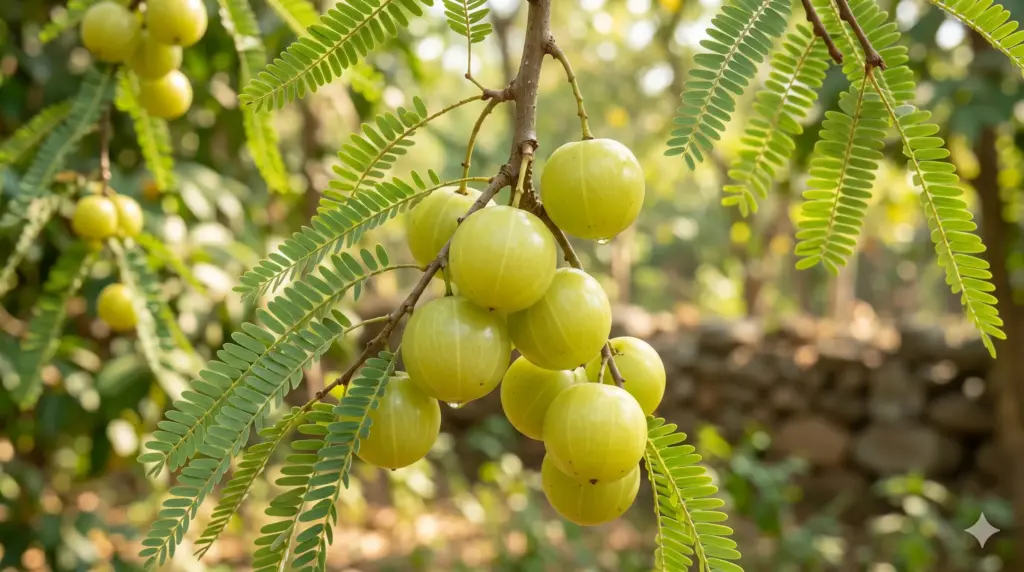
- Morphology: A medium-sized tree with crooked trunk, feathery leaves, and greenish-yellow, fleshy, globular fruits.
- Plant Part Used: Fruit (primary), Leaves, Bark, Root, and Flowers.
- Analytical Markers: Authenticated using HPLC and GC-MS for markers like gallic acid, ellagic acid, and corilagin.
Dosage and Safety
- Dosage: Effective clinical doses for lipids and blood sugar range from 1 g to 3 g of fruit powder daily, or 500 mg of standardized extract twice daily.
- Side Effects: Generally very well-tolerated; rare reports of mild constipation or nausea with high syrup doses.
- Toxicity: NOAEL is established at 1000 mg/kg/day in rats. Extremely high doses (above 10% of diet) may impact liver architecture.
- Drug Interactions: May synergize with Metformin or Glibenclamide to lower blood glucose, requiring monitoring. Enhances the bioavailability of rifampicin.
- Classification: Safe / Caution (at extremely high supplemental doses and during pregnancy).
FAQs
- What is the best way to take Phyllanthus emblica for health? For metabolic health (sugar/cholesterol), standardized tablets are most effective. For digestion, traditional Churna (powder) or juice is preferred.
- Can Amla really regrow hair? Yes, clinical trials show it significantly increases the anagen phase of the hair cycle, effectively helping with female androgenic hair loss.
- Is it safe to take Giloy and Amla together? Yes, these are often combined in Ayurveda (like in Triphala or Nishamalaki) for synergistic immunomodulatory and antidiabetic effects.
- Does Phyllanthus emblica help with seasonal allergies? Absolutely. Research confirms it provides near 100% relief from sneezing by stabilizing mast cells and lowering eosinophil counts.
- How long does it take to see results for cholesterol? Most clinical meta-analyses show significant lipid-lowering effects after 12 weeks of consistent daily supplementation.
- Can I take Amla while on blood thinners? Caution is advised. It has demonstrated antiplatelet activity and may prolong bleeding time when combined with drugs like clopidogrel.
- Is Amla effective for fatty liver? Yes, it is hepatoprotective and helps reduce liver fat deposition and inflammation in non-alcoholic fatty liver disease (NAFLD).
References
Jump to: Benefits | Phytochemistry | Dosage | FAQs