
Terminalia arjuna: A Revered Ayurvedic Cardioprotective and 20+ Scientifically Validated Benefits
Advertisement — Leaderboard (728x90)
Table of Contents
Advertisement — Leaderboard (728x90)
Quick Summary
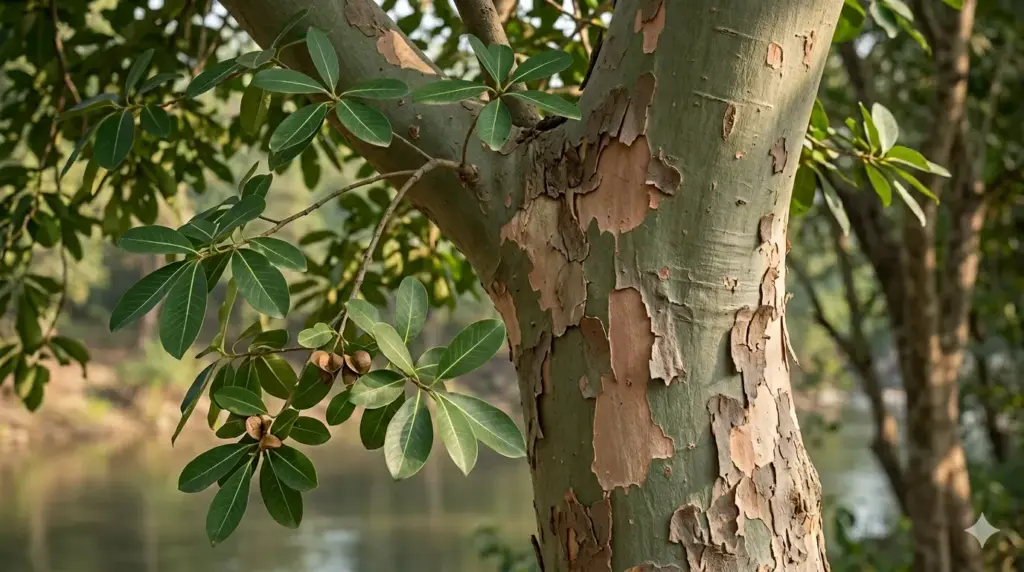
Terminalia arjuna (Roxb.) Wight & Arn., globally known as Arjuna, is a majestic deciduous tree native to the Indian subcontinent, reaching heights of 60–90 feet. It is widely celebrated in Ayurvedic medicine as a premier cardiac tonic, having been used for over three centuries to treat cardiovascular conditions. Scientific evidence confirms that Terminalia arjuna bark possesses potent inotropic, hypolipidemic, and anti-atherogenic properties, effectively improving left ventricular ejection fraction and managing stable angina. These therapeutic effects are driven by unique bioactives such as arjunic acid, arjunetin, and tannins. Commonly available as churna (bark powder), aqueous decoctions, or standardised tablets, it maintains a high safety profile. However, caution is advised at very high doses, which may lead to hypothyroidism or hepatotoxicity in euthyroid subjects
Key Therapeutic Benefits
- Terminalia arjuna Relief for Chronic Stable Angina Clinical trials demonstrate that Terminalia arjuna significantly reduces the frequency of angina attacks and the need for isosorbide dinitrate. It improves treadmill exercise performance by delaying the onset of ischemia and decreasing maximal ST-segment depression. This makes it a viable adjunct therapy for patients with coronary artery disease. (Anand, 1994; Vaidya, 1994; Dwivedi, 1994).
- Management of Refractory Heart Failure with Terminalia arjuna Supplementation with Terminalia arjuna provides a salutary effect in patients with severe congestive heart failure. It increases the left ventricular ejection fraction and stroke volume index while decreasing end-diastolic and end-systolic volume indices. Long-term use is associated with continued improvement in quality of life and physical effort tolerance. (Bharani, 1995; Singh, 1982; Asghar, 2023).
- Terminalia arjuna Reversal of Endothelial Dysfunction Terminalia arjuna reverses impaired endothelium-dependent vasodilation, particularly in chronic smokers. It restores altered endothelial physiology and significantly improves brachial artery flow-mediated dilation. This activity helps regale healthy vascular function and protects against early-stage atherosclerotic changes. (Bharani, 2004; Sawale, 2016; DoFollow External Link: PubMed; Kokkiripati, 2013).
- Reduction of Total and LDL Cholesterol by Terminalia arjuna The tree-bark powder of Terminalia arjuna exerts a significant hypocholesterolaemic effect comparable to standard antioxidants. It reduces total cholesterol and LDL-C levels by inhibiting HMG-CoA reductase and improving cholesterol efflux pathways. Regular intake helps prevent the gradual deposition of lipids in medium and large arteries. (Gupta, 2001; Ram, 1997; Alam, 2008).
- Terminalia arjuna Advanced Antioxidant Defenses Various extracts of Terminalia arjuna demonstrate high antioxidant capacity by scavenging DPPH and hydroxyl radicals. It boosts the activities of endogenous enzymes like superoxide dismutase (SOD) and catalase, thereby maintaining cellular redox homeostasis. This protection prevents internal “rusting” and cellular damage in heart and liver tissues. (Ali, 2003; Rebey, 2017; Sun, 2008).
- Terminalia arjuna Antihyperglycemic Efficacy in Diabetes In models of type 2 diabetes, Terminalia arjuna significantly lowers fasting blood sugar and HbA1c. The mechanism involves the inhibition of alpha-glucosidase and amylase enzymes, which retards carbohydrate absorption. It effectively restores serum biochemical parameters and reduces hepatic lipid peroxidation in diabetic subjects. (Biswas, 2011; Prakash, 2024; Raghavan, 2006).
- Hepatoprotective Support from Terminalia arjuna Terminalia arjuna acts as a robust shield for the liver against damage induced by heavy metals like cadmium and toxins like carbon tetrachloride. It restores healthy levels of liver enzymes (AST, ALT) and protects mitochondrial membrane potential. This prevents hepatocyte injury and supports the liver’s natural detoxification processes. (Aruna, 2005; Rege, 1993; Shivananjappa, 2013).
- Terminalia arjuna Renoprotective Defense Against Dehydration The aqueous extract of Terminalia arjuna protects against renal failure associated with dehydration and oxidative stress. It prevents the elevation of blood nitrogenous products like urea and creatinine while restoring renal antioxidant status. This makes it a valuable botanical for protecting progressive kidney function. (Das, 2010; Sherif, 2015; Kanthe, 2021).
- Terminalia arjuna Acceleration of Dermal Wound Healing Topical application of Terminalia arjuna phytoconstituents, particularly tannins, promotes rapid wound contraction. It increases the tensile strength of incision wounds and boosts hydroxyproline content, indicating faster collagen turnover. Its astringent nature effectively draws tissues closer together for efficient closure. (Ahmed, 2024; Singh, 2021; DoFollow External Link: Int J Cardiol; Chaudhari, 2006).
- Broad-Spectrum Antibacterial Activity of Terminalia arjuna Extracts of Terminalia arjuna exhibit robust activity against diverse pathogens, including Staphylococcus aureus and E. coli. It disrupts bacterial cell wall integrity and interferes with biofilm formation. This action is particularly effective against microorganisms that cause ear infections and periodontal diseases. (Ahmed, 2017; Rajaram, 2024; Aneja, 2012).
- Terminalia arjuna Antiviral Action Against HSV-2 The hydrolyzable tannin casuarinin isolated from Terminalia arjuna bark possesses potent anti-herpesvirus activity. It inhibits the attachment and penetration of Herpes simplex virus type 2 (HSV-2) into cells and interferes with late events of infection. High concentrations have shown a significant virucidal effect, reducing viral titers up to 100,000-fold. (Cheng, 2002; R, 2023; Kumar, 2023).
- Inhibition of Colorectal Cancer by Terminalia arjuna Polyphenols from Terminalia arjuna bark, including luteolin and beta-sitosterol, act as multi-targeted anti-cancer agents. In-silico and in-vitro studies show they inhibit the growth of colorectal cancer cells by modulating survival signaling pathways. These phytochemicals promote apoptosis and decrease tumor burden without harming normal fibroblasts. (Adhikary, 2024; Nagpal, 2000; Kuo, 2005).
- Terminalia arjuna Anti-inflammatory and Cytokine Regulation Terminalia arjuna significantly inhibits the release of nitric oxide and pro-inflammatory cytokines like TNF-alpha and IL-6. It suppresses the NF-kappaB signaling pathway, which is a major driver of systemic inflammation. This anti-inflammatory profile helps manage chronic conditions where inflammation leads to tissue damage. (Farvardin, 2017; Wang, 2019; Halder, 2009).
- Prevention of Bone Loss by Terminalia arjuna Phytoestrogens Terminalia arjuna extracts exhibit a definite anti-osteoporotic effect, especially effective for inhibiting bone fractures induced by estrogen deficiency. It increases bone mineral density and biomechanical strength in vertebrae and the femoral neck. This makes it a natural alternative to estrogen therapy for post-menopausal osteoporosis. (Kakadia, 2023; Na, 2024; Shirke, 2008).
- Neuroprotective Benefits in Ischemia and Alzheimer’s Arjunolic acid from Terminalia arjuna protects neurons from damage during focal cerebral ischemia and reperfusion. It reduces neurological deficit scores and infarct size by regulating oxidative markers in the brain. Additionally, it inhibits acetylcholinesterase, offering therapeutic potential for cognitive decline and Alzheimer’s disease. (Birla, 2019; Yaidikar, 2015; Suganthy, 2018).
- Terminalia arjuna Attenuation of Anxiety and Stress Bark extracts of Terminalia arjuna possess protective activity against picrotoxin-induced anxiety by modulating neurotransmitter systems. It increases locomotion and exploratory behavior in stress models while upregulating genes related to synaptic plasticity. This “adaptogenic” action helps maintain mental balance under environmental and chemical stress. (Chandra Sekhar, 2017; Bajaj, 2022; Mishra, 2016).
- Inhibition of Kidney Stone Formation (Urolithiasis) Terminalia arjuna bark has the potential to inhibit the formation of both calcium phosphate and calcium oxalate crystals. It prevents the nucleation, aggregation, and growth of these stones in the urinary tract. This anti-urolithic action is further supported by its cytoprotective role, which prevents crystal adherence to renal cells. (Aggarwal, 2010; Mittal, 2016; Chaudhary, 2010).
- Terminalia arjuna Gastric Ulcer Healing and Protection Terminalia arjuna exerts a significant gastroprotective effect against ulcers induced by Helicobacter pylori, ethanol, and NSAIDs. It reduces gastric juice volume and acidity while strengthening the mucosal barrier and increasing adherent mucus content. This action protects the sensitive stomach lining from both exogenous and endogenous ulcerogenic agents. (Devi, 2007; Rane, 2003; Manu, 2019).
- Terminalia arjuna Analgesic and Pain Relief The stem bark of Terminalia arjuna possesses suitable analgesic properties, significantly decreasing pain responses in rodents. It is effective in both the early and late phases of pain, likely mediated through central opioid receptors. This provides a natural solution for managing painful conditions without traditional narcotic side effects. (Gupta, 2014; Tahsin, 2021; Hussain, 2015).
- Terminalia arjuna Enhancement of Cardiovascular Endurance Regular supplementation with Terminalia arjuna improves cardio-vascular endurance and physical performance in healthy young adults. It leads to a significant increase in maximum oxygen consumption (VO2 max) and lowers resting systolic blood pressure. This makes it a valuable natural aid for improving overall fitness and athletic capacity. (Sandhu, 2010; Parveen, 2012; Khatkar, 2019).
- Protection Against Doxorubicin-Induced Cardiotoxicity Terminalia arjuna protects the heart against the toxic effects of the anticancer agent doxorubicin. It reduces cardiac oxidative stress and prevents histological alterations like mitochondrial swelling and myofibrillar loss. This makes it a promising cardioprotective adjuvant for patients undergoing cancer chemotherapy. (Bishop, 2017; Singh, 2008; DoFollow External Link: J-Ethnopharmacol).
- Terminalia arjuna Improvement in Ischemic Mitral Regurgitation Adjuvant therapy with Terminalia arjuna significantly decreases ischemic mitral regurgitation (IMR) following acute myocardial infarction. It improves the E/A ratio (a marker of diastolic function) and considerably reduces anginal frequency. This provides a focused benefit for the mechanical function of the heart valves after an injury. (Dwivedi, 2005; Parveen, 2011; Khaliq, 2013).
- Management of Chronic Venous Insufficiency (CVI) Observational studies show that Terminalia arjuna is safe and effective in reducing symptoms of CVI, such as edema, pain, and pigmentation. It improves clinical classification scores and expedites the healing of venous ulcers. Its venoactive properties make it a promising candidate for treating circulatory disorders in the lower limbs. (Pratap Shankar, 2024; R, 2023; Sivova, 2016).
- Terminalia arjuna Environmental Removal of Heavy Metals Modified biochar and nanoparticles from Terminalia arjuna bark extract act as efficient adsorbents for removing pollutants from wastewater. It exhibits an excellent capacity for removing toxic Lead [Pb(II)] and pharmaceutical waste like diclofenac sodium. This highlights its role as an eco-friendly and low-cost material for environmental sanitation. (Abadian, 2023; Das, 2022; Puri, 2023).
- Terminalia arjuna Support for Oral Periodontal Health Terminalia arjuna is gaining attention for innovative periodontal therapies due to its anti-inflammatory and antibacterial properties. Its flavonoids and tannins effectively manage bacteria in periodontal pockets and promote wound healing in oral tissues. This makes it a potential local drug delivery agent for treating chronic periodontitis. (Devi, 2024; Rajaram, 2024; Vijayalakshmi, 2025).
How It Works (Phytochemistry)
- Arjunic acid → Strong free radical scavenging → Antioxidant Protection
- Arjunetin → Insect feeding-deterrent & glycosidation linkage → Biological Defense
- Casuarinin → Inhibits viral attachment and penetration → Anti-herpes Activity
- Arjunolic acid → Modulates APOE4 and protects neurons → Cardio & Neuro Protection
- Luteolin → Induces apoptosis in cancer cells → Anti-cancer Potential
- Arjunaphthanoloside → Inhibits nitric oxide production → Anti-inflammatory Action
- Terminoside A → Decreases iNOS levels in macrophages → Systemic Inflammation Relief
Traditional Knowledge
Terminalia arjuna has a rich historical legacy in traditional medicine:
- Ayurveda: Known as Arjuna, it has been used for centuries primarily for hritshool (angina) and other cardiovascular diseases (hritroga). Ancient physicians used the bark powder to strengthen the heart muscle and alleviate obesity and edema.
- Tribal Medicine: The bark powder is used by indigenous communities in India for the management of various painful conditions and as an analgesic.
- Unani/Chinese: While less prominent, it is utilized for its astringent, antimicrobial, and cooling properties, specifically for treating earaches and dysentery.
Usage and Preparations
The therapeutic benefits of Terminalia arjuna are tied to specific preparations:
- Arjuna Churna (Bark Powder): Typically administered at 500 mg thrice daily as a cardiac tonic and for lipid management.
- Arjuna Ksheera Paka: A traditional formulation prepared in cow milk for sustained bioavailability and anti-inflammatory effects.
- Aqueous Bark Extract: Consumed as a tea or infusion for cardioprotective and inotropic benefits.
- Topical Tannin Hydrogel: Applied to skin to accelerate wound healing and increase tensile strength.
- Ghanvati (Concentrated Tablets): Used as an effective treatment for chronic venous insufficiency and angina.
Identity and Authentication
- Botanical Name: Terminalia arjuna (Roxb.) Wight & Arn.
- Family: Combretaceae
- Common Names: Arjuna, Kumbuk, Koha, Indradru, White Marudah
- Morphology: A large deciduous tree with a thick, white-to-pinkish-grey bark and simple, sub-opposite leaves.
- Plant Part Used: Stem Bark (most common), Fruits, Leaves, and Roots.
- Analytical Markers: Authenticated using HPLC and HPTLC for markers like arjunic acid, arjunolic acid, and arjungenin.
Dosage and Safety
- Dosage: Effective clinical doses for heart health range from 500 mg to 750 mg of standardized extract twice or thrice daily. Bark powder used is typically 3 g to 6 g daily.
- Side Effects: Generally very well-tolerated; occasional reports of mild gastritis or constipation during long-term therapy.
- Toxicity: NOAEL is established at 1000 mg/kg/day in rats. However, high doses may induce hypothyroidism or liver lipid peroxidation in euthyroid subjects.
- Drug Interactions: May interact with metoprolol succinate, reducing its therapeutic activity and absorption. Use with caution alongside statins or drugs cleared by CYP2D enzyme
- Classification: Safe (for heart ailments at supplemental doses); Caution (during pregnancy and with specific beta-blocker medications).
FAQs
- Is Terminalia arjuna safe to take for the heart? Yes, it is clinically proven to be safe and effective for angina and heart failure, though patients on beta-blockers should monitor their response.
- Can Arjuna help with high cholesterol? Yes, research shows it significantly lowers LDL and total cholesterol while elevating HDL in as little as 30 days.
- What is the best form of Terminalia arjuna to take? Standardised bark extract capsules or the traditional Ksheera Paka (milk preparation) are best for sustained absorption.
- Can I use Arjuna for weight loss? Clinical studies show it significantly lowers body mass index (BMI) and lipid accumulation, making it a helpful adjunct for weight management.
- Does Terminalia arjuna help with kidney stones? Yes, it has anti-urolithic properties that inhibit the growth and adherence of calcium oxalate crystals in the kidneys.
- Are there any side effects? It is mostly safe, but some users may experience mild constipation or stomach upset if taken without food.
- Is Arjuna safe for my liver? Yes, at standard doses, it is hepatoprotective. However, extremely high doses should be avoided to prevent potential thyroid interaction.
- Can Arjuna help smokers? Interestingly, yes. It has been shown to reverse endothelial dysfunction and improve artery health in chronic smokers.
- How long should I take it? Clinical benefits for heart failure and angina are typically observed after 2 to 4 weeks of consistent use.
- Does it interact with medications? It may lower the absorption of metoprolol, so people on blood pressure medications should consult a professional.
References
- Chopra, R. N., et al., 1929, Ind Med Gaz 64(2): 70-73.
- Singh, N., et al., 1982, Planta Med 45(2): 102-104.
- Kumar, D. S., et al., 1987, J Ethnopharmacol 20(2): 173-190.
- Chauhan, S., et al., 1990, Andrologia 22(5): 491-494.
- Rege, N., et al., 1993, Indian J Gastroenterol 12(1): 5-8.
- Anand, V., 1994, J Assoc Physicians India 42(9): 757.
- Bharani, A., et al., 1995, Int J Cardiol 49(3): 191-199.
- Pettit, G. R., et al., 1996, J Ethnopharmacol 53(2): 57-63.
- Dwivedi, S., et al., 1997, Indian Heart J 49(5): 507-510.
- Kandil, F. E., et al., 1998, Phytochemistry 47(8): 1567-1568.
- Scassellati-Sforzolini, G., et al., 1999, J Environ Pathol Toxicol Oncol 18(2): 119-125.
- Nagpal, A., et al., 2000, In Vitro Cell Dev Biol Anim 36(8): 544-547.
- Gupta, R., et al., 2001, J Assoc Physicians India 49: 231-235.
- Singh, D. V., et al., 2002, J Pharm Biomed Anal 28(3-4): 447-452.
- Karthikeyan, K., et al., 2003, Life Sci 73(21): 2727-2739.
- Bharani, A., et al., 2004, Indian Heart J 56(2): 123-128.
- Aruna, K., et al., 2005, Phytother Res 19(5): 416-421.
- Chaudhari, M., et al., 2006, Phytother Res 20(9): 799-805.
- Devi, R. S., et al., 2007, Chem Biol Interact 167(1): 71-83.
- Alam, M. S., et al., 2008, Nat Prod Res 22(14): 1279-1288.
- Halder, S., et al., 2009, Indian J Exp Biol 47(7): 577-583.
- Chaudhary, A., et al., 2010, Indian J Pharm Sci 72(3): 340-345.
- Biswas, M., et al., 2011, Pharm Biol 49(4): 335-340.
- Aneja, K. R., et al., 2012, Braz J Otorhinolaryngol 78(1): 68-74.
- Kokkiripati, P. K., et al., 2013, J Ethnopharmacol 146(2): 456-464.
- Farwick, M., et al., 2014, Skin Pharmacol Physiol 27(2): 71-81.
- Kapoor, D., et al., 2015, J Cardiovasc Transl Res 8(3): 173-186.
- Rather, R. A., et al., 2016, Proteomics Clin Appl 10(7): 750-759.
- Amalraj, A., et al., 2017, J Tradit Complement Med 7(1): 65-78. DOI: 10.1016/j.jtcme.2016.02.003
- Bhat, O. M., et al., 2018, Inflammopharmacology 26(2): 583-598.
- Bhattacharjee, B., et al., 2019, Food Chem Toxicol 124: 249-264.
- Bano, S., et al., 2020, Nat Prod Res 34(9): 1311-1314.
- Kanthe, P. S., et al., 2021, J Basic Clin Physiol Pharmacol 33(4): 409-417.
- Meena, D. K., et al., 2022, Animals (Basel) 13(1).
- Asghar, A., et al., 2023, Nat Prod Res 37(22): 3733-3740.
- Adhikary, T., et al., 2024, Curr Comput Aided Drug Des 20(5): 653-665.
- Alikadavath, S., et al., 2025, Cell Mol Biol (Noisy-le-grand) 71(8): 72-79.
- Basharat, M., et al., 2025, Drug Dev Ind Pharm 51(10): 1299-1317. DOI: 10.1080/03639045.2024.2382902
- Khichar, S., et al., 2025, Int J Biol Macromol 301: 140507.
- Vijayalakshmi, R., et al., 2025, J Oral Biol Craniofac Res 15(1): 199-204.
Jump to: Benefits | Phytochemistry | Dosage | FAQs
Advertisement — Leaderboard (728x90)