
Tribulus terrestris: 20+ Evidence-Based Health Benefits
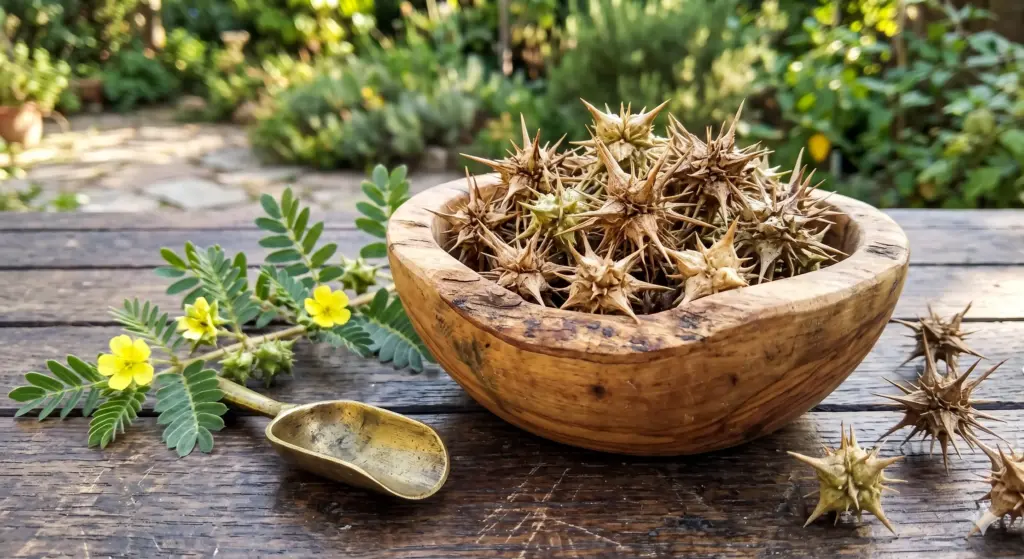
Table of Contents
Quick Summary
Tribulus terrestris L., a prominent annual herb in the Zygophyllaceae family, is globally recognized as Gokshura, Puncture Vine, or Bai Jili. Historically, it has been a cornerstone of Ayurvedic medicine for treating urinary disorders, sexual dysfunction, and liver ailments. Modern scientific research validates that Tribulus terrestris possesses significant aphrodisiac, anti-urolithic, and hypoglycemic properties. These therapeutic actions are primarily driven by its rich content of steroidal saponins, such as protodioscin and tribulosin, alongside bioactive flavonoids and alkaloids. The herb is commonly available in preparations like concentrated extracts, ground fruit powder, and aqueous decoctions. While it is generally safe at standard dosages, high-dose administration has been linked to hepatorenal toxicity and photosensitivity in animal and rare human cases, necessitating professional monitoring during long-term supplementation.
Key Therapeutic Benefits
- Tribulus terrestris Enhancement of Female Sexual Desire Clinical trials demonstrate that Tribulus terrestris significantly improves symptoms of hypoactive sexual desire disorder (HSDD) in women. Supplementation increases scores in desire, arousal, and satisfaction while reducing pain during intercourse. The mechanism is linked to a significant rise in free and bioavailable testosterone levels without causing androgenic side effects. (Akhtari, 2014; Postigo, 2016; de Souza, 2016).
- Improvement of Erectile Function and Proerectile Pressure Tribulus terrestris acts as a natural erectogenic agent by increasing intracavernous pressure (ICP) and enhancing the release of nitric oxide from the endothelium. This activity helps relax the smooth muscles of the corpus cavernosum, facilitating blood flow. The presence of protodioscin is credited with converting testosterone into more potent dihydrotestosterone to support male attributes. (Adaikan, 2000; Zhang, 2019; Do, 2013).
- Inhibition of Kidney Stone Formation (Urolithiasis) The aqueous extract of Tribulus terrestris exhibits potent anti-urolithic properties by inhibiting the nucleation and growth of calcium oxalate crystals. It provides a protective effect on renal epithelial cells by reducing oxalate-induced injury and decreasing lactate dehydrogenase release. This makes it a primary candidate for the prevention and medical management of urolithiasis. (Aggarwal, 2010; Sangeeta, 1994; Kaushik, 2019).
- Tribulus terrestris Natural Diuretic and Ionic Excretion Administration of Tribulus terrestris leaf and fruit extracts elicits significant diuretic activity, often comparable to pharmaceutical agents like furosemide. It increases the volume of urine output and the excretion of sodium, potassium, and chloride ions. This action is traditionally utilized to “propel” urinary stones and manage edema through systemic fluid regulation. (Al-Ali, 2003; Sudheendran, 2021; Phillips, 2006).
- Clinical Improvement in Glycemic Control (Diabetes) Tribulus terrestris significantly lowers fasting blood sugar and glycosylated hemoglobin (HbA1c) in patients with type 2 diabetes. It works by inhibiting the activity of alpha-glucosidase and amylase enzymes in the small intestine, which retards the absorption of postprandial glucose. This helps stabilize insulin levels and protects against the oxidative stress associated with chronic hyperglycemia. (Amin, 2006; DoFollow External Link: PubMed; Samani, 2016; Li, 2002).
- Regulation of Lipid Profiles and Atherosclerosis Prevention The saponins in Tribulus terrestris act as hypolipidemic agents, significantly reducing total cholesterol, LDL-C, and triglycerides in the serum and liver. It enhances the activity of superoxide dismutase (SOD), which prevents the accumulation of lipids in blood vessels. This “vascular-protective” action helps repair endothelial dysfunction and reduces the risk of atherosclerotic plaque formation. (Chu, 2003; Tuncer, 2009; Li, 2013).
- Hepatoprotective Shielding Against Toxins Tribulus terrestris provides robust protection for the liver against damage from heavy metals like mercury and chemicals like carbon tetrachloride. It restores the activities of transaminase enzymes (AST, ALT) and prevents the breakdown of liver proteins. By maintaining antioxidant status, it shields hepatocytes from oxidative assault and facilitates rapid recovery from toxic stress. (Aruna, 2005; Rebey, 2017; Jagadeesan, 2006).
- Tribulus terrestris Anti-inflammatory and Cytokine Modulation Extracts of Tribulus terrestris inhibit the production of nitric oxide and suppress pro-inflammatory cytokines such as TNF-alpha and IL-6. The mechanism involves the regulation of NF-kappaB and MAPK signaling pathways in macrophages. This anti-inflammatory profile is effective in reducing systemic swelling and manages inflammatory burdens in chronic conditions. (Abbas, 2022; DoFollow External Link: BMC; Wang, 2019; Ko, 2015).
- Neuroprotective Effects in Parkinson’s and Alzheimer’s Tribulus terrestris standardized extracts protect against nigral dopamine neuronal loss and neuroinflammation by inhibiting microglia activation. It ameliorates motor dysfunctions and reduces brain oxidative DNA damage markers like 8-OHdG. Additionally, it significantly improves neurofibrillary tangles and acetylcholinesterase levels, offering therapeutic potential for neurodegenerative diseases. (Birla, 2019; Saleem, 2020; Chauhdary, 2019).
- Anticancer and Anti-proliferative Action The saponin fraction of Tribulus terrestris, specifically terrestrosin D, induces apoptosis in multiple cancer cell lines, including breast (MCF-7) and liver (HepG2). It arrests the cell cycle in the S phase or G0/G1 phase and destabilizes mitochondrial membrane potential. This “cytostatic” effect significantly reduces tumor volume and burden without affecting non-malignant cells. (Abbas, 2022; Sun, 2003; Patel, 2019).
- Inhibition of Bone Loss and Osteoporosis Support Phytoestrogen-rich extracts of Tribulus terrestris effectively inhibit bone loss induced by estrogen deficiency. It increases bone mineral density and stimulates the growth of bone-building osteoblasts. Unlike synthetic estrogen, it exerts a Ca2+-sparing effect without causing unwanted growth in the uterus, making it a safer natural alternative for postmenopausal bone health. (Abiramasundari, 2017; Shirke, 2008; Marques, 2019).
- Acceleration of Dermal Wound Healing When applied to damaged skin, Tribulus terrestris extracts promote rapid wound contraction and the restoration of collagen fibers. It modulates the expression of inflammatory markers at the injury site to ensure a cleaner and faster repair process. This enhancement of epidermal closure strengthens the newly formed tissue and prevents excessive scarring. (Ahmed, 2024; Singh, 2021; Das, 2025).
- Broad-Spectrum Antibacterial Activity Tribulus terrestris exhibits robust activity against diverse pathogens, including Staphylococcus aureus and E. coli. It works by disrupting bacterial cell wall integrity and interfering with quorum sensing signals that germs use to communicate. This action is particularly effective against multidrug-resistant strains often found in oral and urinary tract infections. (Al-Bayati, 2008; Shahid, 2016; Gopinath, 2012).
- Antifungal Protection Against Candida Spirostanol-based saponins from Tribulus terrestris significantly inhibit the growth of Candida albicans and Cryptococcus neoformans. The compounds destroy the fungal cell membrane and inhibit hyphal formation, which is a major virulence factor. This provides a natural solution for managing resistant fungal infections that no longer respond to conventional fluconazole treatments. (Bedir, 2002; Zhang, 2005; Al-Bayati, 2008).
- Muscle Damage Recovery for Athletes In trained athletes, Tribulus terrestris supplementation significantly alleviates exercise-induced muscle damage. It reduces levels of creatine kinase (CK) and lactate dehydrogenase (LDH), while mitigating the rise in inflammatory markers like CRP. This “antioxidant-protective” effect helps speed up the recovery process after high-intensity training sessions without altering the body’s natural steroid profile. (Ma, 2017; Talemi, 2021; Milasius, 2009).
- Antidepressant and Anxiolytic Profile Tribulus terrestris induces significant anxiolytic-like and antidepressant effects by modulating neurotransmitters in the brain. It reduces the activity of monoamine oxidase (MAO-A) and stabilizes “feel-good” hormones like serotonin and dopamine. This adaptogenic action helps prevent memory deficits and behavioral abnormalities induced by chronic mild stress. (Bouabdallah, 2024; Wang, 2013; Dhingra, 2008).
- Cardiac Ischemia and Infarction Protection Tribulus terrestris provides cardioprotective effects against myocardial ischemia by activating PKCepsilon and Nrf2 signaling pathways. It inhibits the production of reactive oxygen species (ROS) in heart cells and maintains mitochondrial membrane potential. This action reduces the size of ventricular wall infarction and prevents characteristic ECG alterations like ST-segment depression. (Reshma, 2019; Wang, 1990; Sun, 2008).
- Renoprotective Defense in Diabetic Nephropathy In models of diabetic kidney disease, Tribulus terrestris ameliorates renal impairment by lowering serum creatinine and blood urea nitrogen (BUN). It activates PPARgamma pathways to reduce glomerular damage and inhibits the formation of advanced glycation end products (AGEs). This preservation of renal architecture is vital for preventing the progression of long-term diabetic complications. (Jiang, 2018; Pei, 2021; Najafi, 2014).
- Initial Treatment for Benign Prostatic Hyperplasia (BPH) Clinical evaluations show that formulations containing Tribulus terrestris leaves significantly lower International Prostate Symptom Scores (IPSS) in aging men. It effectively reduces prostate volume and improves peak urinary flow rates by regulating local inflammatory responses. This provides a well-tolerated herbal alternative for the initial management of symptomatic BPH. (Sengupta, 2011; Kaplan, 2012; GamalEl Din, 2019).
- Management of Polycystic Ovarian Syndrome (PCOS) Tribulus terrestris helps combat hormonal disruption and oxidative stress in PCOS models. It regularizes ovarian follicular growth, increases the number of corpus luteum, and restores estrous cyclicity. By downregulating inflammatory markers like IL-6, it provides a therapeutic effect on the underlying metabolic issues associated with the syndrome. (Dehghan, 2012; Sandeep, 2015; Qayyum, 2026).
- Improvement of Sperm Quality and Male Fertility Administration of Tribulus terrestris methanolic extract improves semen quantity, sperm count, and motility in cases of idiopathic infertility. It protects the male reproductive system against oxidative damage induced by environmental toxins like lead and nicotine. This “vitalizing” effect on the testes and epididymis increases the overall proportion of mature and viable sperm. (Aldaddou, 2022; Salgado, 2017; Haghmorad, 2019).
- Tribulus terrestris Analgesic and Pain Relief The methanolic extract of Tribulus terrestris fruits possesses a suitable analgesic effect, reducing both acute and chronic pain. It is found to be more effective than ASA (aspirin) in the chronic phase of pain and demonstrates lower gastric ulcerogenicity than conventional anti-inflammatory drugs. It also alleviates neuropathic pain by lowering inflammatory mediators in the sciatic nerve. (Heidari, 2007; Yunusova, 2023; Borran, 2017).
- Advanced Radical Scavenging and Antioxidant Potential Tribulus terrestris is rich in phenolic acids and flavonoids that demonstrate high DPPH and ABTS radical scavenging activity. These bioactives hunt down harmful free radicals to maintain cellular redox homeostasis and prevent premature cell aging. The antioxidant capacity is consistently high across various plant parts, including the seeds and leaves. (Hammoda, 2013; Rebey, 2017; Idug, 2026).
- Environmental Adsorption of Radioactive and Pharmaceutical Pollutants Modified biochar derived from Tribulus terrestris biomass acts as an efficient alternative adsorbent for removing Uranium (VI) and diclofenac sodium from aqueous solutions. This eco-friendly application promotes environmental protection by facilitating the sustainable management of toxic industrial waste. It highlights the plant’s unique role as a biological cleanser for human and ecological health. (Ahmed, 2021; Vyas, 2019; Abadian, 2023).
- Melanocyte Stimulation for Vitiligo and Tanning Tribulus terrestris decoctions exercise a two-way regulation on tyrosinase activity and melanocyte proliferation. At high concentrations, it enhances the expression of melanocyte-stimulating hormone (MSH) and promotes melanin synthesis and epidermal migration. This mechanism provides a scientific basis for its potential use in treating vitiligo and other pigment-deficient skin disorders. (Deng, 2002; Yang, 2006; Wang, 2025).
How It Works (Phytochemistry)
- Protodioscin → Converts to DHEA/DHT and releases Nitric Oxide → Libido & Erectile Support
- Tribulosin → Activates PKCepsilon and protects cardiocytes → Heart Ischemia Protection
- Hecogenin → Triggers apoptosis and reduces Bcl-2 expression → Anti-tumor Activity
- Tigogenin → Inhibits TNF-alpha and NF-kappaB pathways → Anti-inflammatory Action
- Kaempferol → Scavenges free radicals and inhibits alpha-glucosidase → Antioxidant & Antidiabetic
- Harmane → Gradually interacts with tryptamine-associated neurons → Neurological Response
Traditional Knowledge
- Ayurveda: Recognized as Gokshura, it is a key ingredient in “Dashamoola.” It is used as a Rasayana (rejuvenator) and to treat Shukra-dosha (sexual disorders) and Mutrakricchra (painful urination).
- Chinese Medicine: Known as Bai Jili, it is used to “calm the liver,” dispel melancholy, improve eyesight, and relieve skin itching and breast cancer symptoms.
- Unani Medicine: Called Khar-i-khasak, it is valued as a carminative, diuretic, and a primary remedy for lowering high blood pressure and treating gonorrhea.
- Iranian Medicine: Utilized for centuries to propel urinary stones, treat epilepsy, and provide natural pain relief for rheumatic conditions.
Usage and Preparations
- Concentrated Tablets (Ghanvati): Taken as 250–500 mg doses thrice daily for sexual dysfunction and BPH.
- Fruit Decoction (Kwatha): Prepared as an aqueous boil to treat kidney stones and act as a diuretic.
- Ground Seed/Fruit Powder: Consumed at 3–6 grams daily for managing diabetes and boosting vitality.
- Topical Gel (Silver Nanoparticles): Formulated using fruit extracts to accelerate the healing of wounds and oral infections.
- Lignanamide Extracts: Specifically isolated fractions used in research to provide hepatoprotective support.
Identity and Authentication
- Botanical Name: Tribulus terrestris L.
- Family: Zygophyllaceae
- Common Names: Gokshura, Gokharu, Bai Jili, Puncture vine, Caltrop
- Morphology: A prostrate, spreading annual herb with yellow flowers and woody, spine-covered (puncture) fruits.
- Plant Part Used: Fruits (most common), Roots, and Leaves.
- Analytical Markers: Authenticated using HPLC and HPTLC for high levels of protodioscin, tribulosin, and diosgenin.
Dosage and Safety
- Dosage: Effective clinical doses range from 450 mg to 1250 mg of standardized extract daily. Fruit powder is typically used at 3 g to 6 g.
- Side Effects: Generally well-tolerated; however, rare reports of priapism and mild gastrointestinal upset exist.
- Toxicity: NOAEL is established at 750 mg/kg/day in rats. Extremely high doses (10% of diet) can cause enterohepatonephropathy and jaundice in grazing sheep.
- Drug Interactions: May rise INR levels in patients on Warfarin. Acts as a moderate CYP 3A4 inhibitor, potentially increasing the risk of Rhabdomyolysis with Statins.
- Classification: Safe (at dietary/supplemental levels); Caution (during pregnancy and high-dose concentrated extracts).
FAQs
- Does Tribulus terrestris actually boost testosterone in humans? Scientific evidence for increasing testosterone in healthy, young males is inconclusive. However, it significantly improves libido and erectile function, likely via nitric oxide release rather than direct hormonal increase.
- Can I take this herb for kidney stones? Yes, research confirms it inhibits calcium oxalate crystal growth and helps “propel” stones through its natural diuretic action.
- Is it safe to take Tribulus with cholesterol medications? Caution is advised. Recent case reports suggest it may interact with Statins (like atorvastatin), increasing the risk of muscle damage (rhabdomyolysis).
- Can Tribulus terrestris help women with low sexual desire? Yes, clinical studies show it is highly effective for women with hypoactive sexual desire disorder, improving arousal and satisfaction scores.
- Does it have anti-cancer properties? In lab and animal models, it induces apoptosis in cancer cells, particularly in the breast, liver, and prostate, by arresting the cell cycle.
- Will it make me fail a drug test for sports? Standard extracts do not typically alter the T/E ratio above WADA limits, but some commercial supplements have been found contaminated with banned steroids.
- How long does it take to see benefits for sexual health? Most clinical trials report significant improvements after 4 to 12 weeks of daily supplementation.
References
- Abadjieva, D., et al., 2016, PLoS One 11(2): e0150400. DOI: 10.1371/journal.pone.0150400
- Abbas, M. W., et al., 2022, Antioxidants (Basel) 11(6). PubMed: 35740057
- Adaikan, P. G., et al., 2000, Ann Acad Med Singap 29(1): 22-26.
- Aggarwal, A., et al., 2010, Int Braz J Urol 36(4): 480-488.
- Ahmed, K. A., et al., 2024, Skin Res Technol 30(5): e13727.
- Akhtari, E., et al., 2014, Daru 22(1): 40. DOI: 10.1186/2008-2231-22-40
- Al-Ali, M., et al., 2003, J Ethnopharmacol 85(2-3): 257-260.
- Al-Bayati, F. A., et al., 2008, J Zhejiang Univ Sci B 9(2): 154-159.
- Aldaddou, W. A., et al., 2022, J Ethnopharmacol 295: 115337.
- Amin, A., et al., 2006, Ann N Y Acad Sci 1084: 391-401.
- Aruna, K., et al., 2005, Phytother Res 19(5): 416-421.
- Basaiyye, S. S., et al., 2018, J Tradit Complement Med 8(3): 410-419.
- Bedir, E., et al., 2002, Pharmazie 57(7): 491-493.
- Birla, H., et al., 2019, Neuromolecular Med 21(1): 42-53.
- Chauhdary, Z., et al., 2019, Pak J Pharm Sci 32(2): 805-816.
- Chu, S., et al., 2003, Zhong Yao Cai 26(5): 341-344.
- Deng, Y., et al., 2002, Di Yi Jun Yi Da Xue Xue Bao 22(11): 1017-1019.
- Do, J., et al., 2013, Korean J Urol 54(3): 183-188.
- Gauthaman, K., et al., 2003, J Altern Complement Med 9(2): 257-265.
- Gopinath, V., et al., 2012, Colloids Surf B Biointerfaces 96: 69-74.
- Heidari, M. R., et al., 2007, Ann N Y Acad Sci 1095: 418-427.
- Kaushik, J., et al., 2019, Sci Rep 9(1): 15969. DOI: 10.1038/s41598-019-52317-0
- Postigo, S., et al., 2016, Rev Bras Ginecol Obstet 38(3): 140-146.
- Reshma, P. L., et al., 2019, Biomed Pharmacother 111: 1342-1352.
- Samani, N. B., et al., 2016, J Evid Based Complementary Altern Med 21(4): NP91-97.
- Sengupta, G., et al., 2011, Clin Ther 33(12): 1943-1952.
- Shahid, M., et al., 2016, J Biol Regul Homeost Agents 30(3): 785-788.
- Shirke, S. S., et al., 2008, Exp Biol Med 233(11): 1403-1410.
- Sun, B., et al., 2003, Zhong Yao Cai 26(2): 104-106.
- Tuncer, M. A., et al., 2009, Acta Histochem 111(6): 488-500.
- Zhang, H., et al., 2019, Diabetes Metab Syndr Obes 12: 1705-1716.
Jump to: Benefits | Phytochemistry | Dosage | FAQs