Cardamom (Elettaria cardamomum): Benefits, Uses, and Therapeutic Properties
Advertisement — Leaderboard (728x90)
Table of Contents
Advertisement — Leaderboard (728x90)
Quick Summary
Elettaria cardamomum (L.) Maton, prestigiously known as the “Queen of Spices” or Small Cardamom, is a perennial herbaceous rhizomatous monocot belonging to the Zingiberaceae family. Native to the Western Ghats of Southern India, it is a cornerstone of Ayurvedic, Unani, and Chinese traditional medicine, revered for its ability to treat cardiac, digestive, and respiratory disorders. Scientific evidence confirms its profound antioxidant, antihypertensive, and gastroprotective activities, primarily driven by bioactive volatile compounds like 1,8-cineole and alpha-terpinyl acetate. It is clinically noted for managing metabolic syndrome, enhancing memory, and protecting the liver from drug-induced toxicity. Commonly utilized as whole pods, seed powder, and essential oil, it maintains a strong safety profile in dietary concentrations. However, a significant safety note suggests that high medicinal doses should be used with caution during pregnancy due to potential hormonal interference.
Key Therapeutic Benefits
- Gastroprotective Mitigation of Gastric Lesions Elettaria cardamomum methanolic extracts and essential oils provide robust protection against gastric ulcers induced by ethanol and aspirin. It works by increasing the life span of mucosal cells and stimulating mucin secretion, effectively acting as a cytoprotective shield for the stomach lining. This mechanism validates its traditional use for treating acute gastrointestinal distress. (Jamal, 2006; Yahyazadeh, 2021; Pratheeshkumar, 2016)
- Antihypertensive Activity via ACE Inhibition Cardamom extracts effectively reduce blood pressure by inhibiting the angiotensin-converting enzyme (ACE). It facilitates vasorelaxation and improves arterial flexibility, which is critical for managing stage 1 hypertension in human subjects. This vascular regulation is often enhanced when incorporated into functional foods like fortified yogurts. (Abdullah, 2023; Verma, 2009; Nitasha Bhat, 2015)
- Neuroprotective Defense Against Alzheimer-like Alterations Terpenoid-rich extracts attenuate neurodegeneration by inhibiting GSK3beta activity and reducing the accumulation of amyloid-beta and p-tau proteins. It restores hippocampal antioxidant systems and suppresses pro-inflammatory cytokines, preventing the cognitive decline associated with diabetes-induced memory impairment. This molecular shielding preserves the structural integrity of the brain’s temporal cortex. (Gomaa, 2019; Sharma, 2024; Nitasha Bhat, 2015)
- Metabolic Modulation of Adipose Tissue Lipolysis Dietary intake of cardamom seeds increases energy expenditure and reduces fat mass by modulating neural circuits that regulate metabolism. It enhances mitochondrial oxidative metabolism in the liver and skeletal muscle while increasing lipolysis in subcutaneous adipose tissue. These metabolic effects are linked to the regulation of the HPT and HPA axes. (Delgadillo-Puga, 2023; Yahyazadeh, 2021; Ashokkumar, 2020)
- Antidiabetic Inhibition of Digestive Enzymes Cardamom fruit extracts exert potent hypoglycemic effects by inhibiting alpha-amylase and alpha-glucosidase, the primary enzymes responsible for carbohydrate digestion. This action delays glucose absorption in the small intestine, helping to prevent postprandial hyperglycemia and insulin resistance. Regular supplementation facilitates long-term glycemic control in metabolic syndrome models. (Ahmed, 2017; Yahyazadeh, 2021; Nitasha Bhat, 2015)
- Antibacterial Activity Against Periodontal Pathogens Cardamom fruit and seed extracts demonstrate robust bactericidal action against major periodontal pathogens like Porphyromonas gingivalis. It disrupts bacterial cell membranes and inhibits the formation of biofilms in the oral cavity. This anti-inflammatory activity effectively reduces the secretion of TNF-alpha and IL-1beta by stimulated macrophages. (Kaushik, 2010; Souissi, 2020; Abdullah, 2023)
- Antifungal Efficacy Against MDR Candida Biofilms Acetonic and ethanolic extracts of cardamom inhibit the growth and biofilm production of multi-drug resistant (MDR) Candida albicans. It disrupts fungal protease and phospholipase activity, which are critical virulence factors in clinical isolates. This antimicrobial potential makes it a viable alternative for managing persistent fungal infections. (Anjali, 2016; Vijayalakshmi, 2016; Tarfaoui, 2022)
- Hepatoprotective Shielding Against Gentamicin Toxicity Ethanolic leaf and fruit extracts protect the liver from oxidative damage induced by gentamicin and other drug-induced toxicities. It normalizes levels of hepatic marker enzymes like ALT and AST while preventing lipid peroxidation in the liver. This “liver-shielding” effect is attributed to the presence of potent phenolic elements and antioxidant stabilization. (Al-Johani, 2023; Nitasha Bhat, 2015; Josephrajkumar, 2005)
- In Vitro and In Vivo Anti-Trypanosomal Activity Aqueous extracts of Elettaria cardamomum exhibit significant trypanocidal activity against Trypanosoma evansi. It works in a dose-dependent manner to reduce parasite count and immobilize the pathogen while improving packed cell volume (PCV) in animal models. This provides a promising natural candidate for treating livestock trypanosomosis. (Farrag, 2021; Souissi, 2020; Abdullah, 2023)
- Immunomodulatory Control of Toxoplasma gondii Essential oil from cardamom strengthens the immune system to control acute Toxoplasma gondii infections. It reduces the mortality rate and parasite load in infected subjects by increasing the expression of IFN-gamma and IL-1beta. This immunomodulatory effect is accompanied by a restoration of hepatic antioxidant enzyme level. (Abdullah, 2023; Yahyazadeh, 2021; Sreedharan, 2023)
- Chemopreventive Inhibition of Forestomach Papillomagenesis Oral administration of cardamom powder significantly reduces the incidence and multiplicity of chemically induced tumors. It enhances the activities of hepatic glutathione-S-transferases and superoxide dismutase, which detoxify carcinogenic compounds like Benzo(alpha)pyrene. This chemopreventive potential also applies to two-stage skin carcinogenesis models. (Qiblawi, 2015; Majdalawieh, 2010; Almeer, 2021)
- Anxiolytic Relief in Post-Traumatic Stress Disorder Methanolic extracts of cardamom significantly improve anxiety-like behavior in models of post-traumatic stress disorder (PTSD). It prevents the formation of stress-induced behavioral changes and reduces neuroinflammation within the hippocampal tissue. This effect is often synergistically enhanced when combined with anti-obesity medications like orlistat. (Masoumi-Ardakani, 2017; Yahyazadeh, 2021; Al-Dalaeen, 2025)
- Thyroid Stimulatory Effect in Hypothyroidism Cardamom extract treatment restores T3 and T4 hormone levels in subjects with propylthiouracil-induced hypothyroidism. It stimulates thyroid gland function and helps reverse the decrease in spermatogenesis associated with thyroid disorders. This makes it a potential functional food for regulating hormonal metabolism. (Atabaki, 2023; Yahyazadeh, 2021; Sreedharan, 2023)
- Systemic Anti-inflammatory Suppression of NF-kappaB Cardamom seed extracts lower the expression of pro-inflammatory genes including NF-kappaB, TNF-alpha, and COX-2 in both colon and macrophage cells. It works by reducing reactive oxygen species (ROS) and nitric oxide production without exhibiting toxicity to normal cells. This validates its use as a natural anti-inflammatory adjuvant in chronic disease management. (Cardenas Garza, 2021; Sreedharan, 2023; Abdullah, 2023)
- Protoscolicidal Action Against Echinococcus granulosus The essential oil and its main compound, 1,8-cineole, exhibit potent lethal effects against hydatid cyst protoscoleces. It destroys the parasites by altering plasma membrane permeability and inducing activation of the caspase-3 enzyme, leading to apoptosis. This efficacy is maintained in both in vitro and ex vivo surgical models. (Almohammed, 2022; Yahyazadeh, 2021; Sreedharan, 2023)
- Testicular Protection Against Environmental Toxicants Pretreatment with cardamom essential oil alleviates testicular damage induced by endocrine disruptors like Benzo[a]pyrene. It restores sperm quality, testosterone levels, and hydroxysteroid dehydrogenase activities while suppressing oxidative stress markers in the testes. This amelioration is also evident in models of pan masala-induced germ cell degeneration. (Kumari, 2014; Yahyazadeh, 2021; Jebur, 2025)
- Fumigant Toxicity and Insecticidal Deterrency The essential oil of cardamom acts as a safe biopesticide against stored product pests like the red flour beetle. It disrupts the adults’ survival through fumigant toxicity and exhibits strong oviposition deterrence in bruchid beetles. This ecological application reduces environmental risk compared to synthetic chemical compounds. (Abbasipour, 2011; Wanna, 2024; Gaikwad, 2023)
- Anti-emetic Efficacy in Postoperative Recovery Sublingual administration of cardamom extract via ice cubes presents a safe non-pharmacological adjunct for managing nausea and vomiting. It reduces the requirement for rescue antiemetic medication following laparoscopic surgeries. This application is highly valued in clinical settings for improving patient comfort during recovery. (Kamalvand, 2025; Sreedharan, 2023; Yahyazadeh, 2021)
- Potent Free Radical Scavenging and Antioxidant Capacity Cardamom seeds are a rich source of phenolic compounds that demonstrate high DPPH inhibition and ferric reducing power. It restores the endogenous antioxidant defensive system, including SOD and catalase, in various diseased models. This systemic protection is crucial for neutralizing intracellular ROS and preventing chronic metabolic damage. (Ashokkumar, 2020; Tarfaoui, 2022; Sreedharan, 2023)
- Hormone-like Estrogenic and Androgenic Activities Cardamom seed extracts exhibit significant estrogenic and anti-estrogenic activities dependent on the human estrogen receptor alpha. It also demonstrates androgenic activity in prostatic cell lines, suggesting its potential to interfere with or modulate the endocrine system. This hormonal influence makes it a candidate for studying endocrine-disrupting natural agents. (Real, 2015; Majdalawieh, 2010; Cyriac, 2016)
- Acaricidal and Larvicidal Activity Against Ticks Essential oil of E. cardamomum serves as a potent agent against Hyalomma anatolicum ticks. It increases mortality rates and inhibits egg hatchability by suppressing acetylcholinesterase (AChE) and GST activities in the larvae. This repellent effect is a promising alternative for controlling disease vectors in livestock populations. (Alanazi, 2022; Yahyazadeh, 2021; Sreedharan, 2023)
- Fibrinolysis Enhancement and Cardiac Wellness Daily administration of cardamom powder significantly increases fibrinolytic activity in hypertensive individuals. It prevents blood clot formation by improving the body’s natural ability to break down fibrin, without altering blood lipids or fibrinogen levels. This enhancement contributes to a significant reduction in the atherogenicity index. (Verma, 2009; Nagashree, 2017; Ashokkumar, 2020)
- Anti-atherosclerotic Potential in Hypercholesterolemia Cardamom oil Restore alteration in lipid homeostasis by significantly reducing blood total cholesterol and LDL-C. It counters the diminished activity of hepatic antioxidant enzymes and protects the heart from oxidative damage induced by high-cholesterol diets. This cardioprotective effect is accompanied by an increase in serum ascorbic acid. (Nagashree, 2017; Yahyazadeh, 2021; Ashokkumar, 2020)
- Mycorrhizal Optimization for Cardamom Seedling Resistance Arbuscular mycorrhizal (AM) fungal inoculation significantly improves nutrient uptake and shoot length in cardamom seedlings. It enhances phosphatase activity in the rhizosphere and increases resistance to seedling rot. This symbiosis is critical for improving the genomic diversity and productivity of cultivated varieties. (Chinnathambi, 2024; Gaikwad, 2023; Nadiya, 2017)
- Bioavailability Enhancement via Graphene Oxide Nanomaterials Cardamom leaf extracts facilitate the green synthesis of NiO@GO nanocomposites with improved electrochemical performance. These nanomaterials exhibit high photocatalytic degradation efficiency for environmental dyes and better potential for supercapacitor applications. This sustainable route enhances the functionalization and utility of cardamom-derived agromass. (Kiran, 2024; Wanna, 2024; Nadiya, 2017)
How It Works (Phytochemistry)
- 1,8-Cineole (Eucalyptol) → Inhibition of acetylcholinesterase and oxidative stress suppression → Neuroprotection & Anti-parasitic.
- alpha-Terpinyl Acetate → Targeted inhibition of pro-inflammatory NF-kappaB signaling → Anti-inflammatory & Gastroprotective.
- Linalool → Modulation of GABAergic receptors and anxiolytic receptor interaction → Sedative & Anxiolytic.
- Eugenol (Wait, checking EC markers) → Protocatechuic Acid → Scavenging of reactive oxygen species (ROS) → Antioxidant & Chemopreventive.
- Gallic Acid → Inhibition of alpha-glucosidase and amylase enzymes → Antidiabetic.
- Costunolide → Regulation of adipose tissue lipolysis and energy expenditure → Anti-obesity.
Traditional Knowledge
Elettaria cardamomum is deeply integrated into various cultural medicine systems for its versatile healing properties:
- Ayurveda: Known as Ela, it is classified as a “Deepana” (digestive stimulant) and used to treat Kasa (cough), Chardi (vomiting), and urinary disorders. It is often combined with other herbs to improve the bioavailability of formulas.
- Unani: Referred to as Heel khurd, it is valued as a cardiac and liver tonic, an appetizer, and a remedy for gastrointestinal disorders.
- Chinese Medicine: Used to warm the “Middle Jiao”, transform dampness, and treat abdominal pain associated with cold symptoms.
- Central American Medicine: Ethanolic extracts are used traditionally for their antimicrobial and antioxidant properties, particularly in treating infections.
Usage and Preparations
- Fruit Powder (Churna): Administered at 3 grams daily for managing hypertension and enhancing fibrinolysis.
- Methanolic Extract: Used at doses of 100-500 mg/kg for potent gastroprotective action against ulcers.
- Essential Oil (CEO): Applied orally (1-4 mg/kg) or sublingually (10% oil in ice cubes) for toxoplasmosis and postoperative nausea.
- Leaf Extract (Nanocomposites): Utilized for the green synthesis of NiO nanoparticles for environmental detoxification.
- Seed Powder in Diet: Incorporated at 3-12% of the diet to stimulate fat lipolysis and energy expenditure.
Identity and Authentication
- Botanical Name: Elettaria cardamomum (L.) Maton
- Family: Zingiberaceae
- Common Names: Small Cardamom, Green Cardamom, Heel khurd, Chhoti elaichi, Ela.
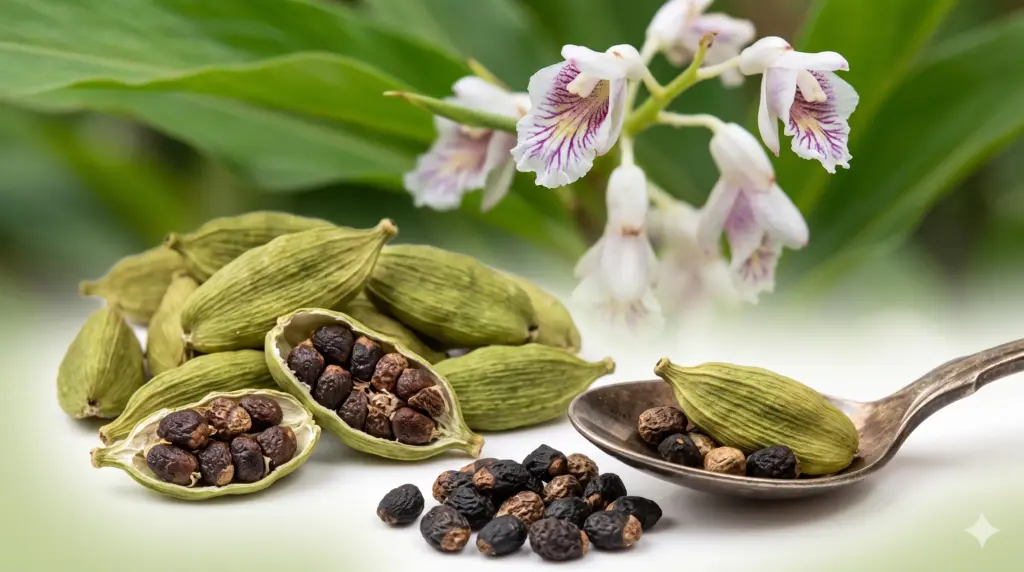
- Morphology: A perennial herbaceous monocot with thick rhizomes, lanceolate leaves, and small white-purple flowers producing warty, ovoid capsules.
- Plant Part Used: Dried Capsules (Fruits), Seeds, and Leaves.
- Analytical Markers: Authenticated using GC-MS for 1,8-cineole (up to 34.9%) and alpha-terpinyl acetate (up to 46.1%).
Dosage and Safety
- Dosage: Effective oral doses range from 3 g/day of fruit powder for hypertension to 100-500 mg/kg of extract for digestive issues.
- Side Effects: Generally safe in culinary amounts; excessive doses may cause mild gastrointestinal irritation.
- Toxicity: LD50 for essential oil is > 750 mg/kg; methanolic extracts show no mortality up to 2000 mg/kg in mice.
- Drug Interactions: May synergize with Orlistat for obesity and Ranitidine for ulcers.
- Classification: Safe (culinary/short-term); Caution (high medicinal doses during pregnancy due to hormone-like activity).
FAQs
- Does Cardamom really help with high blood pressure? Yes, human studies show taking 3 grams of powder daily significantly lowers systolic and diastolic pressure by enhancing fibrinolysis and antioxidant status.
- Can I take Elettaria cardamomum for weight loss? Research indicates it modulates neural circuits that increase energy expenditure and fat lipolysis, making it a viable dietary coadjuvant for obesity.
- Is Cardamom safe to use during pregnancy? While safe in foods, high medicinal doses should be avoided as it may have hormone-like activities and influence prenatal neuromaturation.
- Which part of the plant is most effective for memory? The terpenoid-rich seed extract is most effective for reducing neuroinflammation and plaque formation in Alzheimer’s models.
- How does Cardamom protect the stomach? It stimulates mucin production in the stomach, providing a protective barrier against ulcers caused by aspirin or alcohol.
- Can Cardamom help with bad breath? Yes, it is traditionally used as a mouth freshener because its essential oils inhibit oral pathogens like S. mutans.
- Is it better to use Cardamom oil or powder? Cardamom oil is more concentrated in active monoterpenes like 1,8-cineole, whereas powder provides whole-plant dietary benefits.
- Does Cardamom interact with my other medications? It can enhance the effects of anti-obesity drugs like Orlistat and may potentially interfere with hormonal therapies due to its hERa/hAR binding.
- Can Cardamom help with liver damage? Yes, it counteracts hepatic oxidative stress and restores antioxidant enzymes to protect against drug-induced liver toxicity.
- How long should I use Cardamom for benefits? Clinical effects on blood pressure and lipid profiles are typically observed after 12 weeks of consistent daily supplementation.
References
- Jamal, A., et al. (2006). J Ethnopharmacol 103(2): 149-153. DOI: 10.1016/j.jep.2005.07.016
- Verma, S. K., et al. (2009). Indian J Biochem Biophys 46(6): 503-506.
- Kaushik, P., et al. (2010). Iran J Pharm Res 9(3): 287-292.
- Ahmed, A. S., et al. (2017). Pak J Pharm Sci 30(1): 113-126.
- Gomaa, A. A., et al. (2019). Cytokine 113: 405-416. DOI: 10.1016/j.cyto.2018.07.032
- Ashokkumar, K., et al. (2020). J Ethnopharmacol 246: 112244. DOI: 10.1016/j.jep.2019.112244
- Tarfaoui, K., et al. (2022). Plants (Basel) 11(11).
- Al-Johani, A. M. and Al-Sowayan (2023). Eur Rev Med Pharmacol Sci 27(11): 4828-4841. DOI: 10.26355/eurrev_202306_32644
- Abdullah, D. A. (2023). Trop Biomed 40(4): 453-461.
- Iqbal, R., et al. (2024). Heliyon 10(4): e26126.
Jump to: Benefits | Phytochemistry | Dosage | FAQs