
Moringa (Moringa oleifera): Miracle Tree for Metabolic Health and 20+ Uses
Advertisement — Leaderboard (728x90)
Table of Contents
Advertisement — Leaderboard (728x90)
Quick Summary
Moringa oleifera L., widely known as the Drumstick Tree or Miracle Tree, is a fast-growing tropical plant in the Moringaceae family. Native to the Indian subcontinent, it has been revered in Ayurvedic and Unani medicine for centuries as a “Rasayana” (rejuvenator) and a potent treatment for over 300 clinical conditions. Modern scientific evidence confirms its status as a multi-functional therapeutic agent possessing profound antidiabetic, anti-inflammatory, and hepatoprotective activities. These properties are driven by a rich reservoir of bioactives, including quercetin, kaempferol, and unique glucosinolates. It is clinically noted for its ability to regulate fasting blood glucose, enhance reproductive health, and provide a nutrient-dense solution for malnutrition. Commonly consumed as a fine leaf powder (Churna), aqueous infusion, or milk decoction, it maintains an excellent safety profile. However, a critical safety note indicates that medicinal doses should be used with caution during pregnancy due to potential anti-implantation effects.
Key Therapeutic Benefits
- Antihyperglycemic Activity via Beta Cell Regeneration Moringa oleifera leaf extracts significantly lower fasting blood glucose by repairing damaged pancreatic beta-cells. It normalizes hepatic pyruvate carboxylase expression and restores the histological structure of the pancreas. This dual action enhances insulin secretion and improves systemic glucose clearance in diabetic models. (Abd El Latif, 2014; Ngamukote, 2016; Ruckmani, 1998)
- Endothelium-Dependent Vasorelaxation for Hypertension Aqueous extracts of the leaves induce significant vasorelaxation in resistance arteries by stimulating the production of nitric oxide (NO). It acts by inhibiting voltage-gated calcium channels and activating H2S-dependent signaling pathways. These mechanisms effectively lower mean arterial blood pressure and alleviate vascular dysfunction in hypertensive subjects. (Aekthammarat, 2020; Tiencheu, 2021; Jan, 2025)
- Hepatoprotection Against Chemical and Pollutant Toxicity Pre-treatment with Moringa shields the liver from damage induced by paracetamol, diclofenac, and heavy metals like cadmium. It works by upregulating the Nrf2/HO-1 signaling cascade, which improves cellular antioxidant capacity and reduces cadmium accumulation. This prevents hepatic necrosis and restores healthy levels of ALT and AST enzymes. (Buranasudja, 2024; Ndlovu, 2023; Farid, 2020)
- Neuroprotective Defense in Alzheimer’s and Ataxia Moringa oleifera polyphenols alleviate oxidative stress induced by amyloid-beta (Abeta1-42) in neuronal cells. It activates the Akt signaling pathway, which suppresses neuronal apoptosis and prevents mitochondrial dysfunction. Regular administration improves memory, spatial learning, and motor coordination in neurodegenerative models. (Balit, 2024; Nurhayati, 2024; Ekong, 2017)
- Caspase-Dependent Apoptosis in Pancreatic Cancer Aqueous leaf extracts exert potent anti-tumor effects by downregulating nuclear factor-kappaB (NF-kB) in human pancreatic cancer lines. It induces cell cycle arrest at the sub-G1 phase and synergistically enhances the cytotoxic efficacy of chemotherapy drugs like cisplatin. This targeted action effectively inhibits the proliferation of malignant adenocarcinomas. (Berkovich, 2013; Paul, 2019; Abdelameed, 2025)
- Amelioration of Allergic Asthma and Hay Fever Bioactive metabolites strongly inhibit histamine release from mast cells and reduce airway inflammation. It suppresses pro-inflammatory cytokines such as IL-4 and IL-5, which are critical mediators of the allergic response. This results in improved nasal flow and reduced symptoms of congestion and sneezing in clinical settings. (Giugliano, 2024; Noubissi, 2022; Hengpratom, 2025)
- Acceleration of Diabetic Wound Healing via VEGF Topical application of Moringa leaf gels significantly improves wound contraction and decreases the period of epithelization. It upregulates the expression of vascular endothelial growth factor (VEGF) and TGF-beta1, promoting rapid angiogenesis and collagen deposition. This enhancement is vital for treating chronic diabetic foot ulcers and traumatic lesions. (Al-Ghanayem, 2022; Ningrum, 2023; Chin, 2018)
- Anti-Adipogenic Regulation of PPAR-gamma Moringa oleifera prevents weight gain and visceral fat accumulation by activating the AMPK signaling pathway. It downregulates lipogenic genes like PPARgamma and SREBP-1c, while promoting the browning of white fat tissue. This metabolic reprogramming increases energy expenditure and improves the systemic atherogenic index. (Xie, 2018; Li, 2024; Cho, 2025)
- Disruption of Cariogenic Streptococcus mutans Biofilms Ethanolic extracts of the root and leaves exhibit robust antimicrobial activity against Streptococcus mutans, the primary pathogen in dental caries. It disrupts established biofilm architectures and prevents bacterial adherence to the tooth surface. This makes it a promising natural candidate for preventative oral health and adjunctive gingivitis treatment. (Jwa, 2019; Pal, 1995; Ahmed, 2023)
- Enhancement of Male Fertility and Sperm Quality Supplementation with Moringa leaf powder significantly improves sperm volume, count, and motility by stimulating the hypothalamic-pituitary-gonadal axis. It increases testosterone and LH levels while protecting the testes from oxidative damage induced by toxins like lead acetate. This restorative effect improves reproductive outcomes and combats male infertility. (Laoung-On, 2021; Zeng, 2019; Ajuogu, 2019)
- Antihyperuricemic Inhibition of Xanthine Oxidase Moringa oleifera leaf hydrolysates, rich in phenolics and peptides, effectively reduce serum uric acid levels by inhibiting the xanthine oxidase (XO) enzyme. It regulates renal urate transporters and downregulates pro-inflammatory cytokines linked to gout. This multiple action profile manages hyperuricemia-associated metabolic disorders and joint inflammation. (Tian, 2021; Melebary, 2023; Hu, 2023)
- Immunomodulatory Stimulation of T-Cells and NK Cells Methanolic leaf extracts cause a significant immunostimulatory effect on both cell-mediated and humoral immune systems. It increases WBC and lymphocyte counts and enhances neutrophil adhesion and phagocytic indices. These properties polarize the immune system toward a Th1-dominant response, essential for combating viral infections. (Nfambi, 2015; Sudha, 2010; Gu, 2024)
- Radioprotection against Gamma-Irradiation and Radioiodine Aqueous extracts provide significant defense against gamma-radiation by scavenging induced hydroxyl radicals. It prevents chromosome damage in bone marrow and protects salivary glands and hepatic tissue from radiation-induced lipid peroxidation. This makes it a valuable adjuvant for patients undergoing radiotherapy to reduce systemic toxicity. (Sinha, 2012; Bhartiya, 2006; Uma Devi, 1999)
- Nephroprotective Renal Defense in Melamine Toxicity Moringa leaf extracts and biosynthesized selenium nanoparticles reverse melamine-induced renal impairment. It lowers serum creatinine and BUN levels while suppressing the expression of apoptosis-related genes like Caspase-3. This preservation of renal architecture prevents tubular necrosis and interstitial nephritis caused by environmental contaminants. (Abu-Zeid, 2021; Sahoo, 2014; Karthivashan, 2016)
- Antiviral Inhibition of SARS-CoV-2 Main Protease Bioactive compounds such as quercetin 3-O-glucoside and gentiatibetine serve as potent inhibitors against the SARS-CoV-2 main protease (Mpro). In silico docking confirms strong binding affinities that effectively block viral replication and entry. Clinical trials show that Moringa syrup improves oxygen saturation and reduces hospitalization time in COVID-19 patients. (Rahayu, 2022; Aa, 2017; Giugliano, 2024)
- Gastroprotective Mitigation of Aspirin-Induced Ulcers Standardized leaf juice provides robust protection against gastric ulcers by increasing the life span of mucosal cells and mucin secretion. It works as a potent cytoprotective shield for the stomach lining, comparable to standard drugs like cimetidine. This validates its traditional use for managing Amlapitta (acidity) and peptic ulcers. (Ijioma, 2018; Ruckmani, 1998; Ewuola, 2015)
- Restoration of Striatal Dopamine in Parkinson’s Moringa oleifera leaf extract ameliorates neuronal degeneration in the brain’s temporal cortex. It restores depleted dopamine levels and reduces glial fibrillary acidic protein (GFAP) expression, indicating reduced neuroinflammation. This molecular stabilization protects dopaminergic neurons from damage induced by environmental toxins and aging. (Hassan, 2025; Sadek, 2017; Aliyu, 2021)
- Osteogenic Differentiation of Mesenchymal Stem Cells Leaf extracts enhance the proliferation and osteogenic differentiation of human bone marrow stem cells. It increases the expression of bone-specific genes like Runx2 and BMP2, facilitating mineralization and bone formation. This provides a natural therapeutic strategy for preventing osteoporosis and enhancing fracture healing in edentulous areas. (Khan, 2022; Sanap, 2021; Azizsoltani, 2018)
- Anticonvulsant Activity in Epilepsy Models Pre-treatment with Moringa leaf extracts delays seizure latency and reduces the frequency of EEG paroxysms in epilepsy models. It acts through the complementary action of non-polar fatty acids and polar flavonoids to stabilize neuronal membranes. Its efficacy in reducing seizure severity resembles that of the reference antiepileptic drug ethosuximide. (Gonzalez-Trujano, 2018; Sadek, 2017; Hassan, 2025)
- Antileishmanial and Anti-Salmonella Efficacy Leaf-synthesized silver nanoparticles result in a significant reduction in the size of cutaneous leishmaniasis lesions compared to standard treatments. Furthermore, methanolic extracts exhibit 100% inhibition of multidrug-resistant Salmonella Typhimurium in vivo. These antimicrobial activities are mediated via enhanced antioxidant enzyme mobilization and membrane disruption of the pathogens. (El-Khadragy, 2018; Nkamkeu, 2025; Sallam, 2025)
- Cardioprotection against Doxorubicin Cardiotoxicity Hydro-alcoholic extracts mitigate the cardiotoxicity induced by the chemotherapy drug doxorubicin. It reduces levels of cardiac troponin I (cTnI) and pro-inflammatory cytokines like IL-6, which indicate cardiomyocyte damage. This “heart-shielding” effect is achieved by augmenting tissue antioxidant status and suppressing apoptotic pathways. (Mohamad, 2025; Obeid, 2024; Ebhohon, 2022)
- Antimutagenic Shielding of DNA Integrity Water infusions of Moringa leaves protect plasmid DNA from oxidative strand breakage caused by free radicals. Bioactive compounds like kaempferol 3-O-neohesperidoside demonstrate more potent antioxidant and antimutagenic activities than positive controls like BHT. This molecular shielding is critical for preventing genotoxicity and long-term metabolic disorders. (Rahayu, 2022; Hamed, 2019; Barros, 2025)
- Alleviation of Functional Constipation via 5-HT Pathway Hot water extracts significantly improve gastrointestinal motility and fecal water content in constipated subjects. It works by modulating signaling pathways mediated by 5-HT and Ach receptors, which stimulate intestinal fluid secretion and muscle layer thickness. This validates its traditional Ayurvedic use as a Panchakarma (purgative) agent. (Gao, 2023; Zula, 2021; Li, 2024)
- Molecular Antidepressant-like Effects Moringa oleifera leaf extracts significantly reduce immobility time in stress-induced depression models by modulating central serotonergic and dopaminergic systems. It alleviates neuroinflammation in the hippocampus and cerebral cortex, attenuating anxiety and depression-like behavioral changes. Its potency in behavioral tests is comparable to standard pharmaceutical antidepressants. (Mahmoud, 2022; Xi, 2025; Aa, 2017)
- Suppression of Breast Cancer via Wnt/beta-Catenin Dichloromethane fractions selectively inhibit human breast cancer cells (MCF-7) by inducing caspase-8 mediated apoptosis. It downregulates Bcl-2 expression and suppresses the Wnt/beta-catenin signaling pathway, which is critical for tumor proliferation and metastasis. This specific cytotoxicity occurs with minimal impact on non-cancerous breast cells. (Mohd Fisall, 2021; Wanjiru, 2022; Khor, 2020)
How It Works (Phytochemistry)
- Quercetin 3-O-glucoside → Competitive inhibition of SARS-CoV-2 Mpro → Antiviral
- Kaempferol → Induction of Bax/Caspase-3 mediated apoptosis → Anticancer
- Chlorogenic Acid → Inhibition of alpha-glucosidase and amylase → Antidiabetic
- Glucomoringin → Upregulation of Nrf2/HO-1 defensive machinery → Hepatoprotective
- Niaziminin → Inhibition of 6beta-hydroxylation and calcium influx → Hypotensive
- Beta-Sitosterol → Reduction of intestinal cholesterol micellization → Hypolipidaemic
- Vicenin-2 → Stimulation of fibroblast synthesis and collagen deposition → Wound Healing
- Luteolin → Suppression of tau protein hyperphosphorylation → Alzheimer’s Support
Traditional Knowledge
Moringa oleifera is one of the most culturally significant plants in global healing:
- Ayurveda: Known as Sigru, it is a premier Rasayana used to balance Kapha and Vata doshas. It is traditionally indicated for Medoroga (obesity), Gandamala (swollen nodes), and improving Agni (digestive fire).
- Unani: Referred to as Sahjan, it is valued as an appetizer, a heart and liver tonic, and a natural treatment for asthma and joint pain.
- Chinese Medicine: Known as La-mu, it is utilized for its jianghuo (heat-clearing) properties and to detoxify the blood.
- Folk Medicine: Widely used in the Indian subcontinent and Africa as a “Miracle Tree” to combat malnutrition and as a prophylactic against snakebites.
Usage and Preparations
- Leaf Powder (Churna): Taken at 3 to 7 grams daily with water or milk for managing diabetes and metabolic syndrome.
- Aqueous Infusion (Tea): Fresh or dried leaves boiled in water to improve respiratory health and lower blood pressure.
- Standardized Extract (Capsules): 500 mg capsules taken twice daily for potent antioxidant and hepatoprotective benefits.
- Topical Hydrogel (2-4%): Applied to the skin for accelerating the healing of exuding wounds and diabetic ulcers.
- Solid Dispersion (SD): Innovative formulation used to improve the water solubility and bioavailability of leaf powder for functional beverages.
Identity and Authentication
- Botanical Name: Moringa oleifera Lam.
- Family: Moringaceae (Moringa family)
- Common Names: Drumstick tree, Sahjan, Moringa, Miracle tree, Horseradish tree.
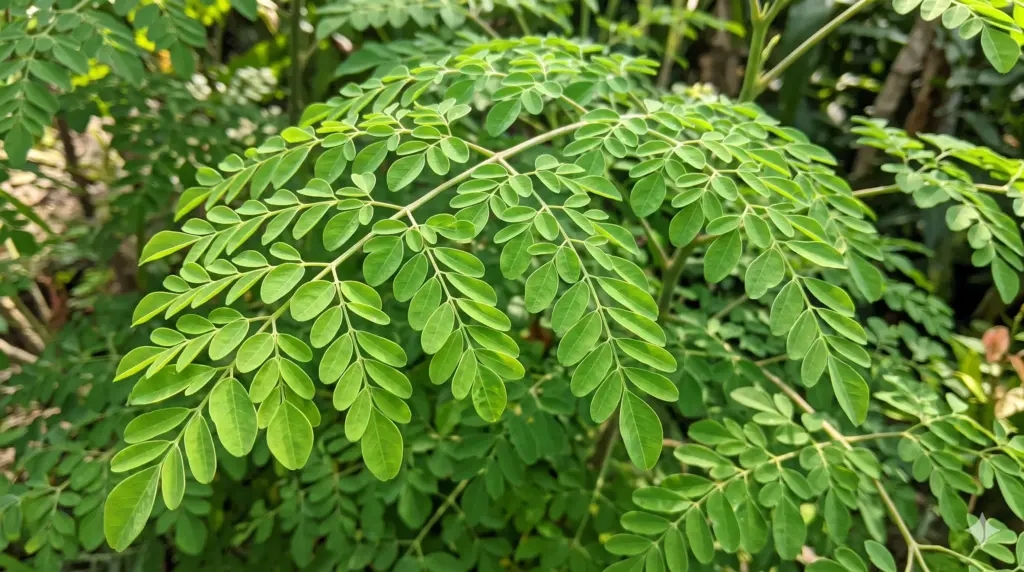
- Morphology: A deciduous tree with tripinnate leaves, fragrant creamy-white flowers, and long, three-angled pendulous pods (drumsticks).
- Plant Part Used: Leaves (primary), Seeds, Root Bark, Flowers, and Pods.
- Analytical Markers: Authenticated using HPLC-DAD and GC-MS for quercetin, kaempferol, chlorogenic acid, and glucomoringin.
Dosage and Safety
- Dosage: Effective clinical doses range from 300 mg to 1500 mg of extract or 4 g to 8 g of leaf powder daily. (Jan, 2025; Ranasinghe, 2017)
- Side Effects: Generally well-tolerated; mild and transient gastrointestinal symptoms (gas, loose stools) may occur at doses > 7 g/day. (Matias, 2025; Saleem, 2020)
- Toxicity: LD50 of the aqueous leaf extract is established at 1585 mg/kg; methanol extracts show NOAEL up to 2000 mg/kg. (Awodele, 2012; Saleem, 2020)
- Drug Interactions: May reduce the anti-hyperglycemic efficacy of Sitagliptin; no significant interaction with Nevirapine or Amodiaquine. (Olurishe, 2016; Monera-Penduka, 2017; Olawoye, 2018)
- Classification: Safe (culinary/standard doses); Caution (during pregnancy due to potential anti-implantation effects).
FAQs
- Why is Moringa called the “Miracle Tree”? It is packed with all essential amino acids, vitamins, and minerals, and has been traditionally used to treat over 300 different clinical conditions.
- Can Moringa help with weight loss? Yes, it activates the AMPK pathway, which suppresses fat cell formation (adipogenesis) and promotes the burning of stored fat.
- Is Moringa safe to take during pregnancy? No. While nutritious, research indicates potential anti-implantation activities that may interfere with a healthy pregnancy.
- Does Moringa really lower blood sugar? Yes, clinical and animal studies show it inhibits alpha-glucosidase and helps regenerate insulin-producing cells in the pancreas.
- How long does it take for Moringa to lower blood pressure? Significant reductions in mean arterial pressure have been observed in research models after 3 to 4 weeks of consistent daily use.
- What is the best form of Moringa for energy? The fine leaf powder (Churna) added to smoothies or water provides the highest concentration of bioavailable vitamins and minerals for energy.
- Can Moringa protect the liver from medication? Yes, it is hepatoprotective and can mitigate the toxic effects of drugs like paracetamol and doxorubicin by boosting liver antioxidants.
- Is it safe to take Moringa with diabetes meds like Metformin? Generally yes, but it may potentiate the effects of blood sugar drugs, requiring careful monitoring to avoid hypoglycemia.
- Can Moringa help with Alzheimer’s and memory? Research shows its antioxidants and polyphenols reduce amyloid-beta plaques and protect hippocampal neurons, supporting cognitive health.
- Does Moringa interact with HIV medications? Clinical trials show it does not significantly alter the blood levels of antiretrovirals like Nevirapine, making it safe for supplemental use in HIV patients.
References
- Ruckmani, K., et al., 1998, Anc Sci Life, 17(3), 220-223.
- Uma Devi, P., et al., 1999, Indian J Exp Biol, 37(3), 262-268.
- Tahiliani, P. and A. Kar, 2000, Pharmacol Res, 41(3), 319-323.
- Bhartiya, U. S., et al., 2006, Indian J Exp Biol, 44(8), 647-652.
- Sudha, P., et al., 2010, Indian J Physiol Pharmacol, 54(2), 133-140.
- Awodele, O., et al., 2012, J Ethnopharmacol, 139(2), 330-336.
- Berkovich, L., et al., 2013, BMC Complement Altern Med, 13, 212. DOI: 10.1186/1472-6882-13-212
- Abd El Latif, A., et al., 2014, Biochem Cell Biol, 92(5), 413-419. DOI: 10.1139/bcb-2014-0010
- Ngamukote, S., et al., 2016, Chin J Integr Med, 22.
- Saleem, A., et al., 2020, J Food Biochem, 44(10), e13400. DOI: 10.1111/jfbc.13400
- Tian, Y., et al., 2021, J Ethnopharmacol, 270, 113808.
- Buranasudja, V., et al., 2024, Heliyon, 10(18), e37424. DOI: 10.1016/j.heliyon.2024.e37424
- Jan, R. U., et al., 2025, Vet Sci, 12(9). DOI: 10.3390/vetsci12090588
Jump to: Benefits | Phytochemistry | Dosage | FAQs