
Bitter Melon (Momordica charantia): Diabetes Control, Metabolic Health and 20+ Benefits
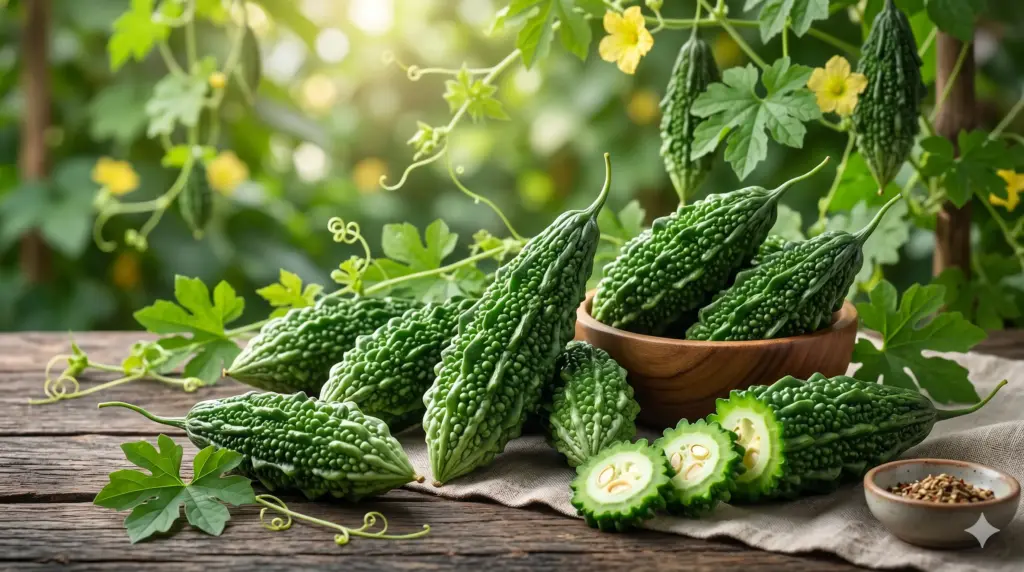
Table of Contents
Quick Summary
Momordica charantia L., commonly known as Bitter Melon, Bitter Gourd, or Karela, is a tropical and subtropical vine of the Cucurbitaceae family. Extensively utilized in Ayurvedic, Chinese, and Unani traditional medicine, it is celebrated as a premier treatment for diabetes mellitus and metabolic disorders. Modern scientific research validates its status as a multi-functional therapeutic agent possessing potent hypoglycemic, antitumor, neuroprotective, and immunomodulatory activities. These properties are driven by a rich profile of bioactives, including charantin, polypeptide-p (plant insulin), and cucurbitane-type triterpenoids. While widely used as a vegetable and supplement, it is strictly contraindicated during pregnancy due to its demonstrated teratogenic and anti-implantation effects.
Key Therapeutic Benefits
- Clinical Improvement in Glycemic Control (Diabetes) Momordica charantia fruit and seed extracts significantly lower fasting blood glucose and HbA1c levels in diabetic subjects. The mechanism involves repairing damaged pancreatic beta-cells, enhancing insulin secretion, and improving peripheral insulin sensitivity.
- Extra-pancreatic Regulation of Glucose Uptake The fruit juice stimulates glucose and amino acid uptake in skeletal muscle cells (L6 myotubes) by mimicking insulin action. It increases the translocation of GLUT4 to the cell membrane, facilitating systemic glucose clearance independently of insulin secretion.
- Antiadipogenic Inhibition of Adipocyte Hypertrophy Bitter melon supplementation reduces visceral fat mass and prevents weight gain by downregulating lipogenic genes like PPARgamma and SREBP-1c. It promotes the browning of white fat tissue, thereby increasing energy expenditure and metabolic efficiency.
- Neuroprotective Defense Against Ischemic Stroke Polysaccharides (MCP) and exosomes (ELNs) from the plant attenuate cerebral ischemia-reperfusion injury. They protect the blood-brain barrier (BBB), decrease infarct size, and inhibit neuronal apoptosis by activating the AKT/GSK3beta signaling pathway.
- Targeted Apoptosis in Malignant Breast Cancer Bioactive peptides (BG-4) and proteins (MAP30) selectively induce caspase-dependent apoptosis in breast cancer cells (MCF-7, MDA-MB-231). They suppress the Wnt/beta-catenin signaling pathway, reducing tumor proliferation and metastatic potential.
- Inhibition of Pancreatic Cancer Progression Both Chinese and Indian cultivars exhibit strong efficacy against pancreatic cancer. The extract inhibits cell proliferation, induces cell death, and restricts angiogenesis in tumor xenografts.
- Molecular Shielding in Alzheimer’s Disease Bitter melon is rich in luteolin, which inhibits acetylcholinesterase and reduces the hyperphosphorylation of tau protein. It facilitates the clearance of amyloid-beta plaques and improves spatial learning and memory in neurodegenerative models.
- Gastroprotective Augmentation of Gastric Mucin Water decoctions and seed oils provide robust protection against gastric ulcers induced by ethanol or NSAIDs. It works by increasing mucin secretion and the lifespan of mucosal cells, creating a cytoprotective shield for the stomach lining.
- Amelioration of Ulcerative Colitis and Gastritis Momordica charantia polysaccharides (MCP) alleviate ulcerative colitis and gastritis by inhibiting the NF-kappaB signaling pathway. They regulate gut microbiota and enhance the expression of MUC2 to restore the colonic mucus barrier.
- Cardioprotection Against Myocardial Infarction Pre-treatment with fruit extracts or polysaccharides significantly reduces infarction size and cardiac marker enzymes (CK-MB, LDH). It enhances endogenous antioxidant enzymes like SOD and catalase to protect the myocardium from oxidative stress.
- Antihyperlipidaemic Regulation of VLDL and LDL Oral supplementation elicits a potent hypolipidaemic effect, reducing total cholesterol, triglycerides, and LDL-C. It facilitates the conversion of cholesterol to bile acids and lowers the systemic atherogenic index.
- Immunomodulatory Stimulation of NK and T-Cells Seed lectins (MCL) and polysaccharides act as immunostimulants, increasing the counts of Natural Killer (NK) cells and CD4+/CD8+ T-cells. It induces a shift toward a favorable Th2 anti-inflammatory status in autoimmune conditions.
- Antiviral Inhibition of SARS-CoV-2 Phytochemicals like rutin and quercetin from leaf extracts act as inhibitors of the SARS-CoV-2 main protease (Mpro). They block the viral spike protein binding to the host ACE2 receptor, presenting potential for COVID-19 management.
- Broad-Spectrum Antibacterial and Antibiofilm Activity Standardized extracts exhibit robust activity against multidrug-resistant Staphylococcus aureus, E. coli, and Bacillus cereus. It disrupts bacterial biofilm formation and increases membrane fluidity to enhance antibiotic efficacy.
- Attenuation of Periodontal Pathogens Bitter melon oil demonstrates antibacterial properties against early colonizers of chronic periodontitis, such as Streptococcus pyogenes and Porphyromonas gingivalis. It inhibits the formation of pro-inflammatory mediators that cause alveolar bone loss.
- Inhibition of HIV-1 Replication Seed proteins like MAP30 and alpha-momorcharin inhibit HIV-1 reverse transcriptase and integrase activity. This restricts viral replication in both acutely and chronically infected cells.
- Nephroprotective Renal Defense The plant mitigates the progression of diabetic nephropathy by suppressing oxidative stress and reducing renal vascular leakage. It prevents the elevation of BUN and creatinine induced by hyperglycemia or antiretroviral therapy.
- Acceleration of Dermal Wound Healing Topical application of M. charantia ointments or gels improves wound contraction and collagen deposition. It upregulates TGF-beta expression and promotes rapid re-epithelialization in both normal and diabetic wounds.
- Hepatoprotective Support Against Chemical Toxins Extracts shield the liver from damage induced by carbon tetrachloride (CCl4) and high-fat diets. It normalizes liver enzymes (ALT, AST, ALP) and prevents hepatic fibrosis by augmenting the antioxidant defense system.
- Antidepressant and Anxiolytic-like Effects Methanol extracts significantly reduce immobility time in stress tests and increase open-arm exploration. This effect is dependent on the serotonergic, dopaminergic, and GABAergic systems.
- Antimalarial Selectivity Against P. falciparum Specific root and fruit fractions demonstrate in vitro activity against Plasmodium falciparum. However, some studies on Plasmodium berghei showed limited efficacy, suggesting activity may be strain-specific.
- Inhibition of Bone Resorption and Osteoporosis Water extracts ameliorate bone loss by inhibiting the differentiation of osteoclasts. It downregulates TRAP levels and restores bone microarchitecture, facilitating fracture healing in estrogen-deficient models.
- Anthelminthic Activity Against Intestinal Parasites Hydroalcoholic extracts demonstrate significant activity against Haemonchus contortus and Fasciola hepatica eggs. It reduces egg counts and parasite burden in infected livestock models.
- Management of Polycystic Ovarian Syndrome (PCOS) Standardized extracts improve hormonal balance by reducing testosterone and LH levels in PCOS models. It acts as an insulin sensitizer and ovulation enhancer, helping to restore mature follicles.
- Larvicidal Control of Disease Vectors Green-synthesized nanoparticles using leaf extracts act as potent mosquito larvicides against Anopheles stephensi and Aedes aegypti. It offers an eco-friendly approach to vector control without permanent environmental toxicity.
How It Works (Phytochemistry)
- Charantin → Competitive inhibition of alpha-glucosidase and increased insulin sensitivity → Antidiabetic.
- Polypeptide-p (Plant Insulin) → Direct hypoglycemic action by mimicking bovine insulin → Hypoglycemic.
- MAP30 / alpha-Momorcharin → Ribosome-inactivating activity and inhibition of viral integrase → Antiviral & Anticancer.
- mcIRBP-9 → High-affinity binding to the insulin receptor to stimulate glucose clearance → Diabetes Management.
- Momordicine I & II → Modulation of NF-kappaB and AMPK signaling pathways → Anti-inflammatory & Anti-obesity.
- Vicine → Potential synergistic hypoglycemic action with other glycosides → Antidiabetic.
- MCP Polysaccharides → Scavenging of ROS and activation of the SIRT1/beta-catenin axis → Neuroprotection & Anti-aging.
Traditional Knowledge
- Ayurveda: Known as Karela, it is classified as a “Deepana” (digestive stimulant) and used to treat Prameha (diabetes), Kushtha (skin diseases), and liver disorders.
- Traditional Chinese Medicine (TCM): Known as Kugua, it is used for its jianghuo (heat-clearing and detoxifying) properties and to improve vision.
- African Folk Medicine: Used as a remedy for fevers, malaria, and dysmenorrhea in various rural communities.
- Caribbean (Jamaica): Known as Cerasee, the tea is traditionally consumed for its cleansing and antidiabetic effects.
Usage and Preparations
- Fruit Juice / Pulp: Consumed daily (up to 200 ml) for hypoglycemic effects.
- Standardized Extract (mcIRBP-19): Administered at 600 mg/day to reduce fasting blood glucose and HbA1c.
- Fruit Powder (Churna): Taken at 3 to 6 grams for diabetes and obesity management.
- Topical Ointment: 10% fruit powder formulations for accelerating wound healing.
- Seed Oil: Orally or topically used for antimicrobial and anticoagulant benefits.
- Encapsulated Exosomes (ELNs): Investigated as advanced delivery systems for cancer and stroke therapy.
Identity and Authentication
- Botanical Name: Momordica charantia L.
- Family: Cucurbitaceae.
- Common Names: Bitter melon, Bitter gourd, Karela, Balsam pear, Balsam apple, Cerasee.
- Morphology: A slender, climbing annual vine with deeply lobed leaves, yellow unisexual flowers, and pendulous warty fruits that turn orange-yellow when ripe.
- Plant Part Used: Unripe Fruit, Seeds, Leaves, and Whole Plant.
- Analytical Markers: Authenticated using HPLC-DAD and LC-MS/MS for charantin, momordicosides, vicine, and polypeptide-p
Dosage and Safety
- Dosage: Effective oral doses range from 300 mg to 2000 mg of standardized extract or 50-200 ml of fresh juice daily.
- Side Effects: Generally safe; rare cases of hypoglycemic coma and convulsions in children. High doses may cause abdominal pain and diarrhea.
- Toxicity: LD50 of juice is 91.9 mg/100g (s.c. mice). Potential risk of rhabdomyolysis and atrial fibrillation at excessive intake.
- Drug Interactions: Potentiates the effect of Metformin, Glibenclamide, and Rosiglitazone, requiring dosage monitoring. May interact with Pazopanib.
- Classification: Avoid strictly during pregnancy (teratogenic and abortifacient risk)
FAQs
- Does Bitter Melon really work as “plant insulin”? Yes, it contains polypeptide-p and mcIRBP, which bind to insulin receptors and stimulate glucose uptake, acting similarly to human insulin.
- Can I take Bitter Melon during pregnancy? No. Multiple studies confirm its teratogenic effects and ability to cause fetal resorptions and malformations in animal models.
- Is Bitter Melon effective for weight loss? Yes, it activates the AMPK pathway, which promotes fat burning and inhibits the formation of new fat cells.
- Does it interact with my diabetes medication? Yes, it has a synergistic effect with drugs like Metformin and Glibenclamide, which could lead to dangerously low blood sugar if not monitored.
- Can Bitter Melon help with memory loss? Research indicates its phytochemicals inhibit tau hyperphosphorylation and protect hippocampal neurons, suggesting potential benefits for Alzheimer’s.
- Is Bitter Melon juice better than capsules? Both are effective, but fresh juice is traditionally noted for its rapid onset of hypoglycemic activity.
- Does Bitter Melon cause liver damage? At standard doses, it is hepatoprotective; however, one case report linked excessive herbal tea intake to herb-induced liver injury.
- How does it help with skin infections? Its extracts exhibit robust antibacterial activity against S. aureus and E. coli, and can be used topically to accelerate wound healing.
- Can Bitter Melon help with cancer? Extensive laboratory evidence shows it induces cell death in breast, liver, pancreatic, and cervical cancer lines.
- Is Bitter Melon safe for long-term use? Generally yes, but one case report suggests that ingestion for over 7 months may be associated with acute interstitial nephritis.
References
- Abas, R., et al., 2014, Oxid Med Cell Longev, 2014: 429060.
- Ahmed, I., et al., 2004, Mol Cell Biochem, 261(1-2): 63-70.
- Ahmad, Z., et al., 2012, Molecules, 17(8): 9631-9640.
- Altun, G., et al., 2024, Histochem Cell Biol, 163(1): 5.
- Basch, E., et al., 2003, Am J Health Syst Pharm, 60(4): 356-359.
- Bortolotti, M., et al., 2019, Front Pharmacol, 10: 486.
- Cai, H., et al., 2022, Front Pharmacol, 13: 908830.
- Chou, M. C., et al., 2022, Int J Mol Sci, 23(3).
- Lo, H. Y., et al., 2017, J Agric Food Chem, 65(42): 9266-9274.
- Raish, M., et al., 2017, Int J Biol Macromol, 97: 544-551.
- Yuan, M. K., et al., 2022, Pharm Biol, 60(1): 1214-1223.
Jump to: Benefits | Phytochemistry | Dosage | FAQs