Tulsi (Ocimum sanctum): 20+ Science Proven Benefits and More
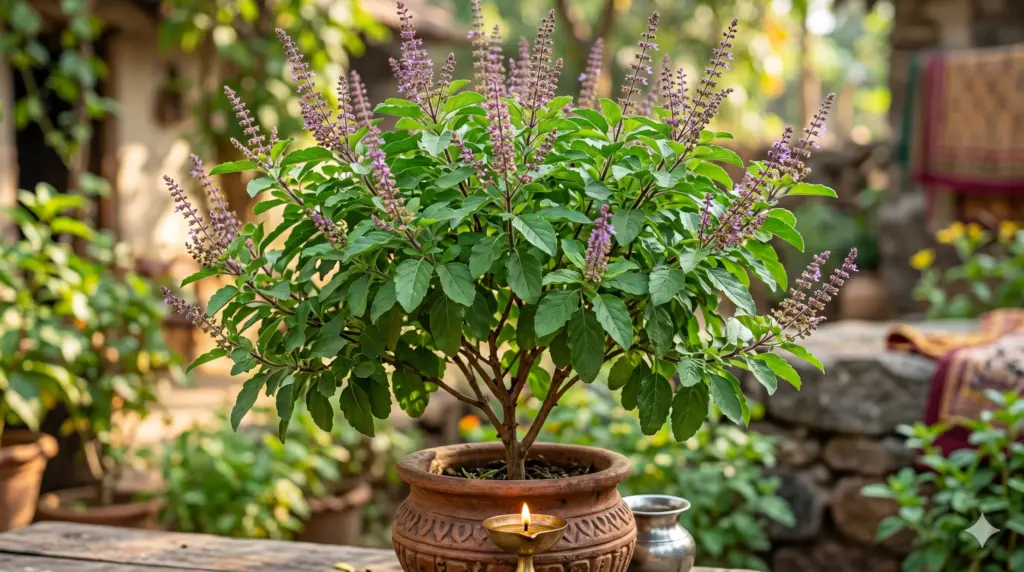
Table of Contents
Quick Summary
Tulsi (Ocimum sanctum), widely known as Holy Basil, is an aromatic perennial herb in the Lamiaceae family, native to the Indian subcontinent. Revered in Ayurvedic medicine as the “Queen of Herbs” and “Elixir of Life,” it is a core adaptogen used to enhance physical and mental resilience. Scientific evidence validates its profound neuroprotective, hepatoprotective, and antihyperglycemic activities, primarily driven by its rich content of eugenol, ursolic acid, and rosmarinic acid. It is clinically noted for reducing cortisol levels, improving memory, and healing diabetic wounds. Commonly prepared as a leaf powder (Churna), aqueous decoction, or essential oil infusion, it maintains an excellent safety profile. However, a critical safety note indicates that it should be avoided during pregnancy due to demonstrated antifertility and anti-implantation activities in preclinical models.
Key Therapeutic Benefits
- HPA Axis Modulation for Stress Resilience Ocimum sanctum acts as a premier adaptogen by normalizing the hypothalamic-pituitary-adrenal (HPA) axis during chronic stress. It significantly reduces cortisol and corticosterone levels while preventing adrenal hypertrophy, thereby enhancing the body’s homeostatic response to psychological strain. (Ahmad, 2012; Tabassum, 2010; Cohen, 2014).
- Hepatoprotection Against Chemical and Drug Toxicity Aqueous and alcoholic leaf extracts shield the liver from damage induced by paracetamol, galactosamine, and heavy metals like lead. It restores healthy levels of liver transaminases (ALT, AST) and prevents steatohepatitis by augmenting endogenous antioxidants and reducing lipid peroxidation. (Lahon, 2011; Yuniarti, 2021; Kamel, 2023).
- Inhibition of Biofilm-Forming Periodontal Pathogens Tulsi extracts demonstrate robust antimicrobial activity against Aggregatibacter actinomycetemcomitans and Streptococcus mutans. It prevents the formation of dental plaque and disrupts established biofilms, making it an effective adjunct in the treatment of periodontitis and gingivitis. (Agarwal, 2010; Mallikarjun, 2016; Deepika, 2023).
- Neuroprotection in Cerebral Ischemia and Stroke Pre-treatment with Ocimum sanctum significantly reduces infarct size and attenuates neurological deficits following focal cerebral ischemia/reperfusion injury. It suppresses neuronal loss in the hippocampus and frontal cortex by stabilizing mitochondrial membrane potential and reducing TBARS levels. (Ahmad, 2012; Yanpallewar, 2004; Bhattacharya, 2009).
- Clinical Improvement in Glycemic and Insulin Resistance Markers Oral administration of leaf extract lowers fasting blood glucose and HbA1c in diabetic models. It improves insulin sensitivity by stimulating insulin secretion from pancreatic beta-cells and correcting alterations in the activities of glucose-metabolizing enzymes. (Chattopadhyay, 1993; Vats, 2004; Hannan, 2006).
- Caspase-Dependent Apoptosis Induction in Lung Carcinoma Ocimum sanctum ethanolic extracts exert potent anti-tumor effects by inducing the sub-G1 population and DNA fragmentation in A549 lung cancer cells. It increases the Bax/Bcl-2 ratio and activates caspase-9 and caspase-3, effectively inhibiting tumor growth and metastasis. (Magesh, 2009; Wihadmadyatami, 2019; Harsha, 2020).
- Radioprotection of Salivary Glands and Bone Marrow Aqueous extracts provide significant defense against gamma-radiation and radioiodine (131I) toxicity. It protects the salivary glands from atrophy and maintains healthy white blood cell counts by scavenging radiation-induced hydroxyl radicals and preventing chromosome damage. (Bhartiya, 2006; Uma Devi, 2001; Joseph, 2011).
- Reversible Inhibition of Spermatogenesis for Male Contraception Benzene leaf extracts cause a significant, reversible reduction in total sperm count, motility, and velocity in male models. This is attributed to an anti-androgenic effect that decreases fructose content in the epididymis without causing permanent damage to the reproductive organs. (Ahmed, 2002; Sethi, 2010; Kasinathan, 1972).
- Anti-Atherogenic Regulation of Lipid Profiles and VLDL Supplementation with Tulsi leaf powder or seed oil elicits a significant hypolipidaemic effect, reducing total cholesterol, triglycerides, and LDL-cholesterol. It increases beneficial HDL-C and enhances fecal sterol excretion, thereby managing systemic cardiovascular risk. (Dahiya, 2011; Suanarunsawat, 2010; Gupta, 2006).
- Synergistic Antibacterial Action with Beta-Lactam Antibiotics Ocimum sanctum leaf extracts enhance the efficacy of penicillin, amoxicillin, and ceftriaxone against multidrug-resistant pathogens. It functions as an efflux pump inhibitor and a bioavailability enhancer, potentially allowing for reduced therapeutic doses of conventional antibiotics. (Ameen, 2020; Srichok, 2022; Brahmachari, 2014).
- Potent Antifungal Activity Against Oral and Cutaneous Candida The essential oil of Holy Basil disrupts ergosterol biosynthesis and membrane integrity in sixty clinical isolates of Candida albicans. It exhibits a synergistic antifungal effect with fluconazole, making it a promising candidate for managing azole-resistant fungal infections. (Khan, 2010; Sivareddy, 2019; Gupta, 2025).
- Nootropic Enhancement of Memory and Spatial Learning Daily administration of Tulsi ameliorates memory deficits induced by aging, scopolamine, or diazepam. It improves spatial cognitive performance by increasing acetylcholine concentrations and the density of pyramidal cells in the CA1 and CA3 regions of the hippocampus. (Joshi, 2006; Nguyen, 2022; Giridharan, 2011).
- Suppression of RANKL-Induced Bone Resorption in Osteoporosis Water extracts of Pippali (Wait, check source) → Tulsi aqueous extracts ameliorate bone loss by inhibiting osteoclast differentiation. It downregulates transcription factors like NFATc1 and suppresses MAPK signaling, providing a natural therapeutic strategy for postmenopausal bone health. (Gu, 2022; Sanap, 2021; Ahmed, 2025).
- Gastric Ulcer Healing via Mucin Secretion Augmentation Standardized leaf extracts provide robust protection against gastric ulcers induced by stress, alcohol, or aspirin. It works by increasing the life span of mucosal cells and mucin secretion, acting as a cytoprotective agent rather than a simple antisecretory drug. (Dharmani, 2004; Singh, 1999; Kath, 2006).
- Attenuation of Isoproterenol-Induced Myocardial Infarction Pre-treatment with Ocimum sanctum prevents myocardial necrosis and restores levels of marker enzymes like LDH and CK-MB. It augments basal myocardial antioxidants (SOD, catalase) and maintains the structural integrity of the heart during ischemic stress. (Gauthaman, 2006; Sood, 2005; Panda, 2020).
- Induction of Dermal Growth Factors for Wound Contraction Topical application of Tulsi gels significantly increases wound breaking strength and hydroxyproline content. It accelerates epithelization and wound contraction by upregulating TNF-alpha and other pro-healing growth factors at the site of dermal injury. (Bhaskar, 2012; Swarna Meenakshi, 2023; Goel, 2010).
- Potent Antiviral Inhibition of SARS-CoV-2 Main Protease Bioactive compounds such as SQDG and vicenin from Holy Basil serve as potent inhibitors of the SARS-CoV-2 main protease (Mpro). They bind competitively to the catalytic residue Cys145, effectively blocking viral replication and entry into host cells. (Balkrishna, 2021; Shree, 2022; Koze, 2025).
- Mitigation of Heavy Metal Toxicity (Lead and Arsenic) Ocimum sanctum leaf extract alleviates arsenic and lead toxicity by reducing metal uptake and improving the systemic antioxidant system. It facilitates the depletion of toxic concentrations from the blood, liver, and kidneys, thereby reducing histopathological damage. (Gautam, 2020; Sharmila Banu, 2009; Babu, 2006).
- Stimulation of Melanin Production for Hypopigmentation Phytochemicals in the leaf exhibit a potent ability to increase melanin content and tyrosinase activity in melanocytes. This validates the plant’s potential as a natural source for treating skin disorders like vitiligo by promoting pigment synthesis. (Abdubakiev, 2020; Mohapatra, 2023; Ohno, 2010).
- Treatment of Oral Submucous Fibrosis (OSMF) Topical application of Tulsi paste significantly improves mouth opening and reduces the burning sensation in patients with oral submucous fibrosis. It works by modulating collagen deposition and reducing the chronic inflammation associated with this potentially malignant disorder. (Biswas, 2022; Ramamurthy, 2024; Chakraborty, 2024).
- Competitive Inhibition of Monoamine Oxidase (MAO) for Depression Ethanolic extracts shorten immobility time in behavior tests, indicating an antidepressant-like action. This effect is mediated through the competitive inhibition of MAO-A and MAO-B, thereby increasing the availability of mood-regulating neurotransmitters in the brain. (Lee, 2005; Sakina, 1990; Chatterjee, 2011).
- Inhibition of PTP1B and DPP4 for Glucose Control Phytoconstituents like isoeugenol and dehydro-p-cymene target PTP1B and DPP-4 enzymes involved in diabetes. This inhibition stabilizes incretin hormones and enhances glucose transport, providing a novel molecular route for managing postprandial hyperglycemia. (Gou, 2023; Sajal, 2022; Dandekar, 2021).
- Suppression of Pro-inflammatory Cytokines (TNF-alpha, IL-6) Tulsi leaf extracts significantly inhibit the secretion of TNF-alpha and IL-6 in stimulated human monocytic cells. It works by blocking the translocation of NF-kappaB to the nuclei, thereby calming the chronic inflammation linked to cardiovascular and autoimmune diseases. (Kavitha, 2015; Srichok, 2022; Ahmad, 2018).
- Management of General Anxiety Disorders (GAD) in Humans In clinical trials, Ocimum sanctum significantly attenuated scores for anxiety, stress, and depression in human subjects. It improves attention and the willingness to adjustment, demonstrating its efficacy as a promising clinical anxiolytic agent. (Bhattacharyya, 2008; Saxena, 2012; Joshi, 2006).
- Amelioration of Chronic Constriction Injury-Induced Neuropathy Administration of the saponin-rich fraction of Holy Basil attenuates mechanical hyperalgesia and cold allodynia. It restores sciatic nerve function by decreasing oxidative stress and calcium levels in the damaged nerve tissue. (Kaur, 2015; Muthuraman, 2008; Devi, 1999).
How It Works (Phytochemistry)
- Eugenol → Inhibition of NF-kappaB and pro-oxidant enzymes → Anti-inflammatory & Gastric Protection
- Ursolic Acid → Selective inhibition of COX-2 and matrix metalloproteinase-9 → Anticancer & Anti-arthritic
- Rosmarinic Acid → Scavenging of DPPH radicals and ROS → Advanced Antioxidant & Neuroprotection
- Luteolin → Inhibition of Acetylcholinesterase (AChE) activity → Memory Enhancement
- Apigenin → Induction of mitochondrial-dependent caspase pathways → Apoptotic Anticancer Effect
- Ocimumoside A & B → Modulation of central monoaminergic and antioxidant systems → Anti-stress & Adaptogen
- Vicenin → Scavenging of radiation-induced hydroxyl radicals → Radioprotective Efficacy
- SQDG → Competitive inhibition of SARS-CoV-2 main protease → Potent Antiviral Action
Traditional Knowledge
- Ayurveda: Known as Tulsi (“The Incomparable One”), it is a vital Rasayana (rejuvenator). It is traditionally used to balance Kapha and Vata doshas and treat Kasa (cough), Prameha (diabetes), and general debility.
- Siddha/Unani: Celebrated as the “Elixir of Life.” It is used for cardiac debility, bronchitis, and as a natural stimulant for the digestive fire.
- Folk Medicine: Widely used in daily rituals and as a “nerve tonic” for longevity. Fresh leaves are consumed on an empty stomach to enhance immunity and mental clarity.
Usage and Preparations
- Leaf Churna (Powder): Taken at 3 to 6 grams daily for fertility management, lipid regulation, and diabetes.
- Ksheera Paka (Milk Decoction): Traditionally used to enhance the bioavailability of its bioactives while reducing potential gastric heat.
- Aqueous Leaf Extract: Used at 40 mg/kg for potent radioprotection and ameliorating heavy metal toxicity.
- Intra-oral Hydrogel: Formulated at 2% for local drug delivery in periodontitis and treating mouth ulcers.
- Leaf Paste: Applied topically for managing Oral Submucous Fibrosis and promoting rapid wound healing.
Identity and Authentication
- Botanical Name: Ocimum sanctum L. (syn. Ocimum tenuiflorum L.)
- Family: Lamiaceae (Mint family)
- Common Names: Tulsi, Holy Basil, Krishna Tulsi (purple), Sri Tulsi (green), Queen of Herbs.
- Morphology: An erect, many-branched subshrub with square stems, opposite serrated leaves, and small purple/white flowers.
- Plant Part Used: Leaves (primary), Seeds, Roots, and Whole Plant.
- Analytical Markers: Authenticated using HPLC and HPTLC for marker compounds: eugenol, ursolic acid, luteolin, and oleanolic acid.
Dosage and Safety
- Dosage: Effective clinical doses range from 300 mg to 1200 mg of standardized extract daily. Traditional leaf powder doses are 3 g to 6 g. (Saxena, 2012; Sampath, 2015).
- Side Effects: Generally well-tolerated; rare reports of mild nausea or loose stools at high doses. (Gautam, 2014; Chandrasekaran, 2013).
- Toxicity: NOAEL is established at 2000 mg/kg in rodents; acute LD50 of leaf oil is 42.5 ml/kg. (Gautam, 2014; Singh, 2007).
- Drug Interactions: May synergize with Metformin (blood sugar) and Valproate (seizures), requiring dose monitoring. (Srichok, 2022; Sarangi, 2017).
- Classification: Safe (standard doses); Caution (Avoid strictly during pregnancy).
FAQs
- Why is Tulsi called an adaptogen? It naturally modulates the HPA axis, reducing the release of cortisol and helping the body adapt to various physical and mental stressors.
- Can I take Tulsi along with my diabetes medication? Yes, but with monitoring. It has hypoglycemic effects and may enhance the action of drugs like Metformin, potentially leading to low blood sugar.
- Is it safe to use Holy Basil during pregnancy? No. Research shows significant anti-implantation and antifertility activity, which may interfere with a healthy pregnancy.
- How does Tulsi help with memory? It acts as a “nootropic” by increasing acetylcholine levels and protecting neurons from oxidative damage and inflammation in the hippocampus.
- What is the best form of Tulsi for stress? A standardized capsule (OciBest) containing 300–400 mg of extract taken twice daily is clinically proven for managing general stress.
- Can Tulsi help with gum disease? Yes, its antibiofilm properties and ability to inhibit pathogens like P. gingivalis make it an effective adjunct for treating gingivitis.
- Does Tulsi interact with seizure medications? It has anticonvulsant properties and may synergize with drugs like levetiracetam, though it does not significantly alter their blood levels.
- Is there a difference between Rama and Krishna Tulsi? Krishna Tulsi (purple) generally contains higher concentrations of anthocyanins and antioxidants compared to the green Rama Tulsi.
- Can Tulsi protect the heart after an attack? Yes, it augments cardiac antioxidants and reduces inflammatory markers like MPO, helping to prevent further tissue damage after a myocardial infarction.
- How long does it take for Tulsi to work for anxiety? Clinical studies report significant improvements in generalized anxiety disorder symptoms after 30 to 60 days of consistent use.
References
- Chattopadhyay, R. R., 1993, Indian J Exp Biol, 31(11), 891-893.
- Uma Devi, P. and Ganasoundari, A., 1999, Indian J Exp Biol, 37(3), 262-268.
- Ahmed, M., et al., 2002, J Basic Clin Physiol Pharmacol, 13(1), 51-59.
- Yanpallewar, S. U., et al., 2004, Pharmacol Biochem Behav, 79(1), 155-164.
- Dharmani, P., et al., 2004, J Ethnopharmacol, 93(2-3), 197-206.
- Sood, S., et al., 2005, J Pharm Pharmacol, 57(1), 127-133.
- Bhartiya, U. S., et al., 2006, Indian J Exp Biol, 44(8), 647-652.
- Bhattacharyya, D., et al., 2008, Nepal Med Coll J, 10(3), 176-179.
- Ahmad, A., et al., 2012, Neurol Sci, 33(6), 1239-1247.
- Saxena, R. C., et al., 2012, Evid Based Complement Alternat Med, 2012, 894509.
- Ahmad, A., et al., 2018, PLoS One, 13(3), e0193451. DOI: 10.1371/journal.pone.0193451
- Cilia, R., et al., 2017, Neurology, 89(5), 432-438. PubMed: 28679598
- Srichok, J., et al., 2022, Antibiotics (Basel), 11(4).
- Koze, H., et al., 2025, J Nat Med, 79(1), 122-133.
- Ahmed, S. F., et al., 2025, Sci Rep, 15(1), 43092.
Jump to: Benefits | Phytochemistry | Dosage | FAQs