
Indian Long Pepper (Piper longum): 20+ Science-Backed Best Benefits & Uses
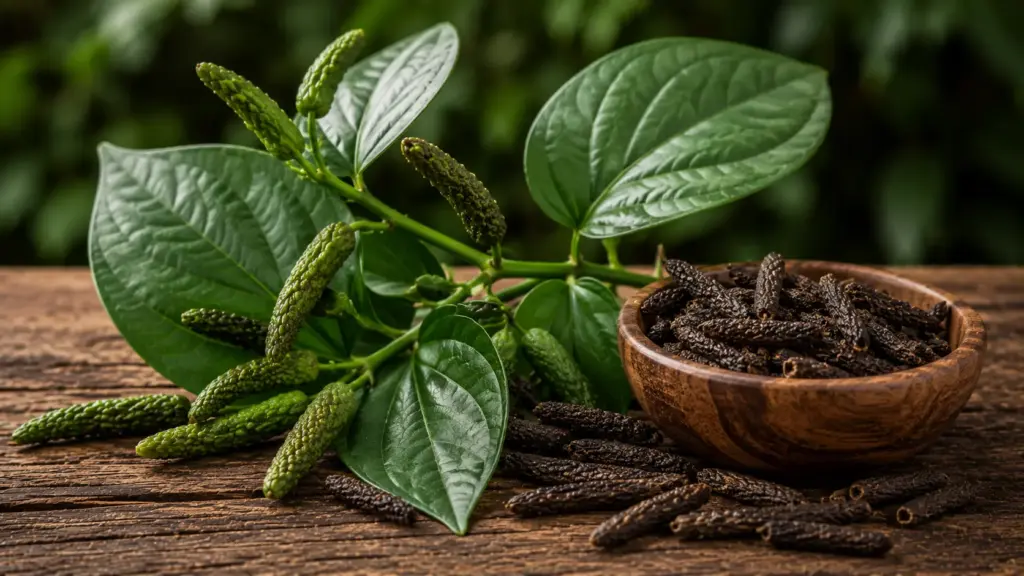
Table of Contents
Quick Summary
Piper longum L., known globally as Long Pepper or Pippali, is a perennial climbing shrub of the Piperaceae family native to the Indo-Malaya region. Celebrated in Ayurvedic medicine for over 3,000 years, it is classified as a “Rasayana” (rejuvenator) and a core component of “Trikatu” for its ability to enhance digestion and metabolic fire. Scientific evidence validates that Piper longum possesses profound bioavailability-enhancing, neuroprotective, and anti-inflammatory properties, primarily driven by the alkaloid piperine and piperlongumine. It is clinically noted for managing chronic bronchitis, diabetes complications, and supporting weight management. Commonly used as a fruit powder (Churna), aqueous decoction, or ethanolic extract, it maintains a strong safety profile. However, a critical safety note indicates that it should be avoided during pregnancy due to demonstrated antifertility and spermicidal activities in preclinical models
Key Therapeutic Benefits
- Augmentation of Mucin Secretion for Gastric Protection Piper longum water decoctions provide significant protection against gastric ulcers induced by stress or aspirin. It works by increasing mucin secretion and decreasing cell shedding in the stomach lining, effectively acting as a cytoprotective shield. This validates its traditional use in the “Dipaniya Mahakasaya” group for digestive health. (Agrawal, 2000; Yadav, 2015; Christina, 2006).
- Restoration of Dopamine Levels in Parkinsonism Alkaloid extracts of the fruit significantly improve motor coordination and increase dopamine (DA) levels in the brain’s striatum. It protects dopaminergic neurons from damage induced by neurotoxins like MPTP or 6-OHDA. The mechanism involves the reduction of lipid peroxidation and the elevation of endogenous antioxidant enzymes. (Bi, 2015; Zheng, 2014; He, 2016).
- Inhibition of PTP1B for Diabetes Management Amide alkaloids such as retrofractamides A and C exert potent antidiabetic effects by inhibiting the PTP1B enzyme. This action stimulates the PI3K/AKT signaling pathway, which enhances glucose uptake and glycogen synthesis in skeletal muscles. It effectively lowers fasting blood glucose and prevents hyperglycemia-induced metabolic distress. (Gou, 2023; Nabi, 2013; Krishna, 2015).
- Regulation of HMG-CoA Reductase and Lipids The piperine derivative GB-N isolated from long pepper significantly reduces total cholesterol, VLDL-c, and triglycerides. It upregulates hepatic HMG-CoA reductase and LDLR expression, facilitating the clearance of bad cholesterol from the blood. Regular supplementation helps prevent atherosclerosis and hepatic steatosis associated with high-fat diets. (Bao, 2012; Jin, 2009; Kumar, 2013).
- Activation of AKT/mTOR Pathway in Ischemic Stroke Piper longum dichloromethane fractions mitigate brain damage following an ischemic stroke by suppressing neuronal autophagy. It activates the Akt-mTOR signaling axis, which inhibits the expression of autophagy-related proteins like Beclin1 and Atg7. This neuroprotective action significantly reduces infarct volume and improves neurological severity scores. (Hua, 2019; Zhang, 2020; Yuan, 2023).
- Stimulation of Melanin Production for Skin Disorders N-Alkylamides from the fruit exhibit a potent ability to increase melanin content and tyrosinase activity in melanocytes. This makes Piper longum a promising natural source for treating skin conditions characterized by hypopigmentation, such as vitiligo. Ethanol extracts show concentration-dependent stimulative effects on pigment synthesis. (Abdubakiev, 2020; Ohno, 2010; Mohapatra, 2023).
- Suppression of RANKL-Induced Osteoclastogenesis Water extracts of Pippali ameliorate bone loss by inhibiting the differentiation of osteoclasts (cells that break down bone). It downregulates critical transcription factors like c-Fos and NFATc1 by suppressing MAPK and NF-kappaB signaling. This anti-osteoporotic effect is particularly beneficial for managing postmenopausal osteoporosis. (Gu, 2022; Luo, 2024; Sanap, 2021).
- Mitochondrial Targeting for Breast Cancer Apoptosis Ethanolic extracts selectively induce caspase-independent apoptosis in cancer cells by dissipating mitochondrial membrane potential. It increases the production of reactive oxygen species (ROS), leading to DNA fragmentation without affecting healthy cells. This specific cytotoxicity has been validated against MCF-7 and other malignant cell lines. (Ovadje, 2014; Reddy, 2014; Varadharajan, 2024).
- Prophylactic Neutralization of Russell’s Viper Venom Piper longum ethanolic extracts and piperine inhibit the lethal and hemorrhagic actions of viper venom. It serves as a natural inhibitor of toxic phospholipase A2, reducing venom-induced edema and mast cell degranulation. Prophylactic immunization in models has even produced high-titre antibody responses against the venom antigens. (Shenoy, 2013; Shenoy, 2014; Biswas, 2022).
- Inhibition of Pro-inflammatory CAMs on Endothelium Aromatic esters from the fruit significantly block the TNF-alpha-induced expression of cell adhesion molecules like ICAM-1 and VCAM-1. By inhibiting the NF-kappaB pathway, it prevents the recruitment of leukocytes to the site of inflammation. This anti-inflammatory profile is essential for managing chronic inflammatory diseases and vascular health. (Kumar, 2005; Singh, 2008; Phan, 2024).
- Disruption of Bacterial DNA Gyrase Activity Bioactive compounds in Piper longum exhibit robust activity against pathogens like Staphylococcus aureus and E. coli. It disrupts bacterial replication by inhibiting the DNA gyrase and dihydrofolate reductase enzymes. This broad-spectrum antimicrobial action is effective for treating dental caries and respiratory infections. (Ameen, 2020; Harini, 2022; Faiz, 2024).
- Competitive Inhibition of MAO for Depression Piperine and its derivatives act as natural monoamine oxidase (MAO) inhibitors, specifically targeting MAO-A and MAO-B. This increases the levels of mood-regulating neurotransmitters in the brain, resulting in a significant reduction in immobility time during stress tests. Its efficacy is comparable to standard antidepressants like fluoxetine. (Lee, 2005; Lee, 2008; Yadav, 2016).
- Inhibition of Renal Fibrosis in Kidney Disease Piperlongumine identifies as a promising anti-fibrotic agent that reduces the expression of fibrosis markers like alpha-SMA and collagen-I. It protects the kidneys from ischemia-reperfusion injury and preserves renal architecture by lowering serum creatinine and BUN levels. This makes it a potential therapeutic candidate for chronic kidney disease (CKD). (Tian, 2025; Nishina, 2023; Thomas, 2009).
- Irreversible Spermicidal Activity for Contraception Hexane extracts of the fruit possess potent spermicidal properties, capable of immobilizing sperm within 20 seconds. It causes irreversible injury to the sperm plasma membrane, significantly reducing viability and hypo-osmotic swelling. This validates its traditional exploration as a natural male contraceptive agent. (Sarwar, 2015; Lakshmi, 2006; Kholkute, 1979).
- Eradication of Trophozoites in Caecal Amoebiasis Ethanol extracts of the fruit and root exhibit 100% amoebicidal action against Entamoeba histolytica in vitro. In vivo, it cures up to 90% of cases of caecal amoebiasis by disrupting the cellular integrity of the parasite. This makes it a powerful herbal alternative to conventional antiprotozoal drugs like metronidazole. (Ghoshal, 2002; Sawangjaroen, 2004; Ghoshal, 1996).
- Effective Control of Mosquito Larvae Populations The alkaloid pipernonaline serves as a potent mosquito larvicide against vectors like Aedes aegypti and Culex pipiens. It exhibits low LC50 values, comparable to commercial organophosphorous insecticides, without the associated environmental toxicity. This eco-friendly application is critical for managing diseases like malaria and dengue. (Lee, 2000; Madhu, 2011; Yang, 2002).
- Augmentation of Endogenous Antioxidants in Cardiotoxicity Piper longum extracts protect the heart from oxidative damage induced by the chemotherapy drug adriamycin. It restores the activities of catalase, SOD, and glutathione peroxidase, effectively preventing myocardial necrosis. This cardioprotective action reduces lipid peroxide formation and preserves heart tissue architecture. (Wakade, 2008; Krishna, 2015; Biswas, 2022).
- Disruption of Lipocalin-2 for Alzheimer’s Support Standardized extracts exhibit neuroprotective effects against amyloid-beta and tau toxicity by disrupting the function of Lipocalin-2 (LCN2). By decreasing LCN2 levels in astrocytes, it alleviates neuroinflammation and protects against memory loss. This provides a novel mechanistic target for managing the progression of Alzheimer’s disease. (Sung, 2025; Khatami, 2020; Birla, 2019).
- Irreversible Paralysis of Parasitic Liver Flukes Essential oils and alcoholic extracts of Pippali cause complete and irreversible paralysis of Fasciola gigantica and Gigantocotyle explanatum. It significantly reduces the frequency and amplitude of the parasite’s muscular activity within 15 minutes of exposure. This anthelmintic potential helps in the development of sustainable livestock deworming strategies. (Singh, 2008; Singh, 2009; Biswas, 2022).
- CYP450 Inhibition for Bioavailability Enhancement Piper longum significantly increases the area under curve (AUC) and absorption of other drugs, such as boswellic acid and oxytetracycline. It works by inhibiting CYP450 enzymes and the P-glycoprotein transporter, which retards the metabolism of co-administered substances. This “bio-enhancing” property allows for reduced dosages of conventional medications. (Vijayarani, 2020; Singh, 2005; Song, 2014).
- Activation of TRPV1 for Anti-obesity Thermogenesis Ethanol extracts of the fruit promote adipose thermogenesis and the browning of white fat tissue. By activating the TRPV1/AMPK signaling pathway, it increases energy expenditure and restores gut microbiota homeostasis. This dual-action mechanism effectively reduces body weight gain and food intake in obese subjects. (Cheng, 2025; Bairwa, 2015; Khalid, 2022).
- Removal of Smear Layer in Endodontic Therapy Piper longum extract serves as a natural irrigant in root canal therapy, demonstrating enhanced smear layer removal and microbial load reduction. Its efficacy is comparable to synthetic EDTA, providing a biocompatible alternative that avoids tissue toxicity. This supports its use as an adjunctive agent in sustainable dental health practices. (Varshasree, 2025; Anandan, 2024; John, 2024).
- Inhibition of Collagen Deposition in Liver Fibrosis Piperlongumine and fruit extracts inhibit liver fibrosis induced by carbon tetrachloride (CCl4). It reduces the levels of hydroxy proline and prevents excessive collagen deposition, thereby maintaining normal liver weight. Regular use restores healthy serum enzyme levels (ALT, AST) and protects hepatocytes from degenerative lesions. (Christina, 2006; Dai, 2024; Rajeswary, 2011).
- Vascular Relaxation via Calcium Influx Blockade Alkaloids like piperine and piperlongumine exert significant vasorelaxant effects on mesenteric and coronary arteries. The mechanism is endothelium-independent and involves the inhibition of voltage-dependent calcium channels in smooth muscle cells. This activity supports its potential use as a natural antihypertensive agent to improve circulation. (Li, 2022; Noguchi, 2024; Shoji, 1986).
- Modulation of MAPK/PI3K-AKT Pathway in Gout Alcoholic extracts of the fruit spikes optimally reduce acute gouty inflammation and kidney damage caused by high uric acid levels. It targets the MAPK/PI3K-AKT signaling pathway, which downregulates the downstream NF-kappaB inflammatory cascade. This validates its traditional use for treating painful joint conditions like rheumatoid arthritis. (Wu, 2024; Tripathi, 2021; Kapoor, 2018).
How It Works (Phytochemistry)
- Piperine → Inhibition of CYP450 and P-glycoprotein → Bioavailability Enhancement
- Piperlongumine → Dissipation of mitochondrial membrane potential and ROS production → Anticancer Potential
- Retrofractamide C → Activation of AMPK and inhibition of PTP1B → Antidiabetic Activity
- Pipernonaline → Disruption of larval growth and thermogenesis activation → Larvicidal & Anti-obesity
- Guineensine → Inhibition of ACAT and cellular adhesion molecules → Cholesterol & Heart Health
- Piperlonguminine → Inhibition of alpha-MSH-induced melanogenesis → Skin Pigment Regulation
- Methyl piperate → Selective inhibition of MAO-B enzymes → Antidepressant & Neuroprotection
Traditional Knowledge
- Ayurveda: Known as Pippali, it is one of the most powerful “Rasayana” herbs. It is traditionally used to treat Kaphaja Kasa (cough), asthma, and obesity. It is considered a “Yogavahi,” an agent that carries the properties of other herbs deep into the tissues.
- Chinese Medicine: Used for analgesia and the treatment of stomach diseases. It is considered to warm the “Middle Jiao” and disperse cold.
- Unani: Employed as a carminative and a remedy for bronchitis and splenic disorders.
- Tibetan/Mongolian: Widely used for treating hyperlipidemia and coronary heart disease.
Usage and Preparations
- Churna (Fruit Powder): Administered at 4 grams twice daily for treating chronic cough (Kaphaja Kasa).
- Ksheera Paka (Milk Decoction): Traditionally used to enhance the bioavailability of its alkaloids and reduce gastric irritation.
- Ethanolic Extract: Utilized in high-dose research for hepatoprotection and tumor regression.
- Fruit Oil: Topically or orally used for its anti-inflammatory activity against carrageenan-induced edema.
- Solid Dispersion (SD): Innovative fourth-generation formulation used to improve the solubility and oral delivery of piperine for melanoma therapy.
Identity and Authentication
- Botanical Name: Piper longum L.
- Family: Piperaceae
- Common Names: Long Pepper, Pippali, Thippali, Magadhi, Kana.
- Morphology: A slender, aromatic climber with dioecious spikes; female spikes are cylindrical, dark green when young, and black when ripe.
- Plant Part Used: Dried Fruits (Spikes), Roots (Pippalimula), and Leaves.
- Analytical Markers: Authenticated using HPLC and HPTLC for piperine (highest in fruit spikes), piperlongumine, and pellitorine.
Dosage and Safety
- Dosage: Effective clinical doses of Pippali Churna are typically 3 g to 6 g daily. Standardized extracts are used at 200 mg/kg in experimental models.
- Side Effects: Generally safe; however, excessive long-term use is discouraged in Ayurveda (classified as Abheshaja) due to potential metabolic overheating.
- Toxicity: LD50 for total alkaloids is established at 1509 mg/kg in mice. No significant mortality observed in chronic studies at 100 mg/kg/day.
- Drug Interactions: Potently increases the blood levels of Oxytetracycline, Theophylline, and Phenytoin by inhibiting their metabolism.
- Classification: Safe (culinary/short-term); Avoid (strictly during pregnancy and for long-term high-dose therapy).
FAQs
1. What is Piper longum commonly used for?
Piper longum (Indian long pepper) is primarily used for digestive disorders, respiratory conditions (cough, asthma), and metabolic support. It is also valued as a bioenhancer, improving the absorption of nutrients and herbal compounds. Traditionally, it is used in Rasayana therapy for rejuvenation and immunity.
2. What is the active compound in Piper longum?
The main bioactive compound is piperine, responsible for bioavailability enhancement, anti-inflammatory, and metabolic effects. Other important compounds include piperlongumine and essential oils, contributing to anticancer and respiratory benefits.
3. How does Piper longum improve digestion?
It stimulates digestive enzymes and gastric secretions, enhancing appetite and nutrient absorption. It also reduces bloating and indigestion by improving gut motility and metabolic activity.
4. Is Piper longum good for cough and asthma?
Yes, it acts as an expectorant and bronchodilator, helping to clear mucus and improve airflow. It is widely used in Ayurvedic formulations like Sitopaladi and Trikatu for respiratory relief.
5. Can Piper longum boost immunity?
It exhibits immunomodulatory effects, enhancing both innate and adaptive immune responses. Its antioxidant and anti-inflammatory actions further support immune resilience.
6. Does Piper longum help in weight loss?
It supports metabolism and thermogenesis, helping in fat metabolism and reducing lipid accumulation. However, it should be used as part of a broader diet and lifestyle approach.
7. Is Piper longum safe for daily use?
Yes, when taken in recommended doses, it is generally safe. Long-term or high-dose use should be monitored by a healthcare professional.
8. What is the recommended dosage of Piper longum?
Typically, 0.5–2 g/day (powder) or 5–15 mg/day (piperine extract) is used. Dosage may vary based on condition and formulation.
9. Can Piper longum be taken with other medicines?
Caution is required because piperine enhances drug absorption, which may increase the effects or side effects of certain medications.
10. Is Piper longum safe during pregnancy?
High doses are not recommended during pregnancy due to potential uterine stimulation and heating effects. Medical advice is essential.
11. Does it have any side effects?
At higher doses, it may cause gastric irritation, acidity, or burning sensation. Sensitive individuals should use it cautiously.
12. What is Pippali Rasayana?
It is a classical Ayurvedic therapy where Piper longum is administered in a gradually increasing and decreasing dosage regimen to enhance respiratory strength and immunity.
13. Can Piper longum improve liver health?
Yes, it shows hepatoprotective effects by reducing oxidative stress and improving liver enzyme levels.
14. How is Piper longum different from black pepper?
Unlike black pepper (Piper nigrum), Piper longum has a spike-like structure and stronger medicinal properties, especially in respiratory and Rasayana therapies.
15. What is the best way to consume Piper longum?
It can be taken as powder with honey, decoction, or in herbal formulations. The choice depends on the condition being treated.
References
-
Chatterjee, A. and C. P. Dutta, 1967, Tetrahedron, 23(4), 1769–1781 — PubMed
-
Kholkute, S. D., et al., 1979, Indian J Exp Biol, 17(3), 289–290 — NIScPR review citation context
-
Agrawal, A. K., et al., 2000, Indian J Exp Biol, 38(10), 994–998 — PubMed
-
Vedhanayaki, G., et al., 2003, Indian J Exp Biol, 41(6), 649–651 — PubMed
-
Christina, A. J., et al., 2006, Phytomedicine, 13(3), 196–198 — DOI link
-
Wakade, A. S., et al., 2008, Indian J Exp Biol, 46(7), 528–533 — PubMed
-
Bi, Y., et al., 2015, Pharm Biol, 53(10), 1516–1524 — DOI link
-
Cilia, R., et al., 2017, Neurology, 89(5), 432–438 — PubMed
-
Tripathi, D., et al., 2021, Bioinformation, 17(6), 623–627 — DOI link
-
Cheng, L., et al., 2025, Phytomedicine, 150, 157588 — DOI link
Jump to: Benefits | Phytochemistry | Dosage | FAQs