Discover Psyllium (Plantago ovata): Science Backed Health Benefits
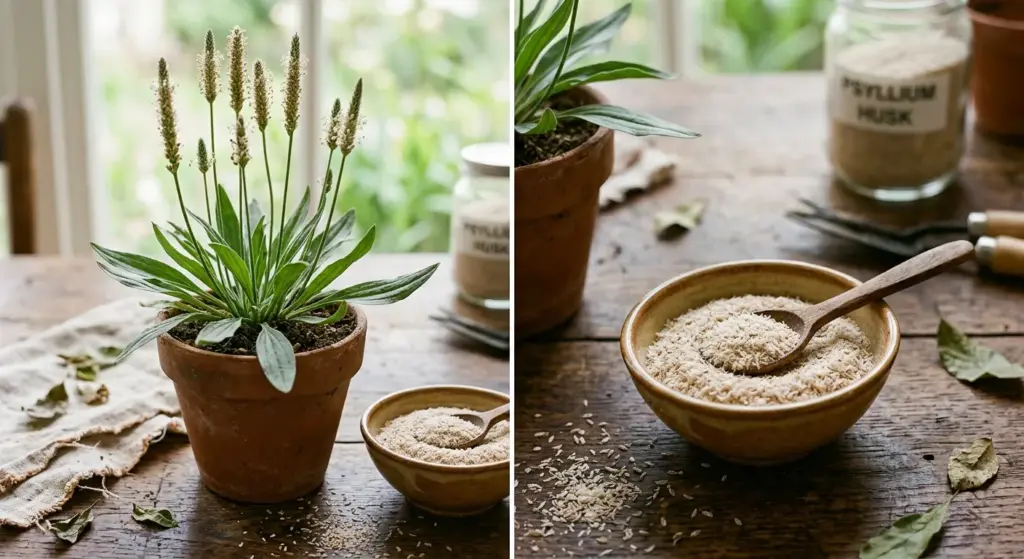
Table of Contents
Quick Summary
Key Therapeutic Benefits
Complete Digestive and Gut Restoration
-
The Ultimate Bowel Regulator: It absorbs water to make hard stool softer and easier to pass (proven to be over three times more effective than wheat bran for constipation). Conversely, it soaks up excess water to thicken loose stool, making it highly effective for treating diarrhea and fecal incontinence.
-
IBS and Acid Reflux Soother: Because it digests very slowly, it doesn’t cause the sudden bloating and gas associated with other fibers. It reliably stops abdominal cramps in IBS sufferers and relieves the upward abdominal pressure that triggers acid reflux (GERD).
-
Microbiome & Gut Barrier Booster: It acts as a premium “prebiotic,” feeding beneficial gut bacteria. This helps repair the microscopic seals in your intestinal lining, treating “leaky gut” and keeping the colon environment healthy enough to fight off stomach parasites.
Heart Health and Metabolic Mastery
-
Blood Sugar Control: By forming a thick gel in the stomach, it slows down the absorption of carbohydrates. This prevents blood sugar spikes after meals and significantly lowers long-term blood sugar levels (HbA1c) in those with Type 2 diabetes.
-
Comprehensive Cholesterol Management: It binds to cholesterol-rich bile in your gut, flushing it safely out of the body. To replace it, your liver pulls “bad” LDL cholesterol from your bloodstream. It even remodels dangerous, small cholesterol particles into larger, less harmful ones.
-
Appetite and Blood Pressure Control: Consuming it before meals naturally fills the stomach, keeping you full longer and aiding in weight loss. Additionally, daily use has been shown to gently lower systolic blood pressure by relaxing blood vessels.
Organ Protection and Natural Detoxification
-
Liver Shield & Hangover Relief: Extracts from the seeds boost the liver’s natural antioxidants, helping the organ repair itself from chemical damage. It can even slow alcohol absorption and reduce the toxic byproducts that cause hangovers and liver strain.
-
Kidney & Colon Defense: Psyllium encourages the body to flush out excess uric acid, protecting the kidneys. Furthermore, its fermentation byproducts in the gut have been shown in lab studies to trigger a self-destruct sequence in harmful colon cancer cells.
Cellular Healing and Soothing Relief
-
Wound and Bone Repair: Applied medically, it speeds up cellular repair and collagen production for stubborn wounds like diabetic ulcers. In cutting-edge biotechnology, scientists even use its sponge-like structure to help regrow damaged bone tissue.
-
Mucosal and Skin Protection: Psyllium syrups can significantly calm the internal inflammation that causes psoriasis and itchy skin. It is also formulated into soothing mouthwashes for chemo-induced mouth sores, and into gentle, natural eye drops for dry eyes.
Hormonal and Neurological Defense
-
PCOS and Women’s Health: By reducing internal inflammation and oxidative stress, it helps lower elevated testosterone levels, naturally supporting a better hormonal balance in Polycystic Ovary Syndrome (PCOS). It is also used to soothe inflammation in uncomplicated Pelvic Inflammatory Disease.
-
Brain Protection: In models of restricted blood flow to the brain, psyllium supplementation protected vital white matter from damage, suggesting it may play a future role in defending against age-related cognitive decline and vascular dementia.
How It Works (Phytochemistry)
- Arabinoxylan → Physical gel formation and water retention → Stool Softening & Laxative.
- 4-Hydroxyisoleucine → Activation of Akt phosphorylation and GLUT4 translocation → Glycemic Control & Insulin sensitivity.
- Beta-Sitosterol → Restoration of gap junctional intercellular communication and Cx43 expression → Anti-tumor & Pro-apoptotic.
- Mucopolysaccharides → Stimulation of macrophages and VEGF upregulation → Wound healing & Re-epithelialization.
- Chicoric Acid → Inhibition of NF-kappaB nuclear translocation → Anti-inflammatory & Immune Support.
- Isovaleric Acid → Competitive binding to androgen receptors and inhibition of 5-alpha reductase → PCOS & Hormone Balancing.
- Linoleic Acid → Regulation of hepatic cholesterol 7alpha-hydroxylase (CYP7A) mRNA → Hypolipidemic & Lipid Transport.
Traditional Knowledge
- Ayurveda: Known as Isabgol, it is traditionally utilized as a Deepana (digestive stimulant) and a carminative. It is the primary remedy for Prameha (early diabetes), obesity, and intestinal colic.
- Unani Medicine: Prized as Hulba, scholars consistently recommend the seeds for clearing internal obstructions, treating flatulence, and managing inflammatory joint swelling.
- Traditional Chinese Medicine (TCM): Designated as Hulu Ba, it is used to “clear heat and toxins,” dispel internal cold, and treat conditions like hernial pain and urinary tract stagnation.
- European Folk Medicine: Historically used as an emollient and demulcent “mother’s herb” to increase breast milk secretion and as a topical treatment for boils and skin eruptions.
Usage and Preparations
- Standardized Husk Powder: Consumed at 10–20 g daily in divided doses for constipation and cholesterol management.
- Standardized Capsules (500 mg): Taken twice daily before meals for the long-term management of Type 2 diabetes and PCOS.
- Hydrogel Scaffolds: Developed as a biotechnological carrier for bone tissue engineering and chronic wound care.
- Mouthwash Formulation: Prepared from hydrocolloids for the prevention and treatment of oral mucositis in chemotherapy patients.
- Ophthalmic Eye Drops: Formulated from mucilage for the relief of dry eye symptoms and ocular surface protection.
- Aqueous Infusion (Tea): Traditionally brewed (5 g dry seed) to suppress appetite and treat digestive colic.
Identity and Authentication
- Botanical Name: Plantago ovata Forssk. (Syn: P. psyllium).
- Family: Plantaginaceae.
- Common Names: Psyllium, Isabgol, Blond Psyllium, Indian Plantago.
- Morphology: A winter annual herb with narrow, linear leaves, branched erect stems, and small white flowers arranged in spikes.
- Plant Part Used: Dried Seed Husk, Seeds, and Leaves.
- Analytical Markers: Authenticated using HPLC-DAD and GC-MS for a specific ratio of arabinose to xylose and rosmarinic acid.
- Authentication: Characterized by a chromosome count of 2n=8 and the presence of specialized secretory cells that release mucilage upon hydration.
Dosage and Safety
- Dosage: Effective clinical oral doses range from 6 g to 20.4 g daily for metabolic health and bowel regulation. (Abutair, 2016; Wei, 2009)
- Side Effects: Generally well-tolerated; rare reports of abdominal distension, flatulence, nausea, and “maple syrup” body odor. (Noureddin, 2018; Agha, 2016)
- Toxicity: Classified as non-toxic; LD50 estimated at > 10 g/kg. No significant changes in liver biomarkers or body weight seen in subacute trials. (Erum, 2015; Irfan, 2021)
- Drug Interactions: May reduce the bioavailability of levodopa/carbidopa if taken simultaneously; may potentiate the effects of metformin and other hypoglycemics. (Fernandez, 2005; Diez-Laiz, 2015)
- Classification: Safe (Standard doses); Caution (Must be taken with at least 250 mL of water per dose to avoid intestinal/esophageal obstruction). (Shin, 2022; Tominaga, 2023)
FAQs
- Does Psyllium really work as well as prescription laxatives? Clinical trials show that psyllium is up to 3.4 times more effective than wheat bran and superior to sodium docusate for increasing stool output and moisture (McRorie, 2020; Przybyszewska, 2025).
- Can I take Psyllium for weight loss? Yes, systematic reviews indicate that psyllium significantly reduces body weight and BMI by enhancing satiety and inhibiting fat absorption in the intestines (Gibb, 2023; Bae, 2015).
- Is it safe to take Psyllium while on diabetes medication? Caution is advised. Psyllium has strong hypoglycemic properties that can potentiate the effects of metformin, potentially causing blood sugar to drop too low. Always consult your doctor (Diez-Laiz, 2015; Asadi, 2019).
- How long does it take for Psyllium to lower cholesterol? Significant reductions in LDL-cholesterol and total cholesterol are typically observed after 3 to 8 weeks of consistent daily use (Uehleke, 2008; Anderson, 2000).
- Can I give Psyllium to children for IBS? Yes, research shows that oral psyllium husk is effective and well-tolerated for reducing abdominal pain episodes in pediatric IBS patients (Menon, 2023; Shulman, 2017).
- Does Psyllium interact with Parkinson’s medication? Yes, psyllium can slow down the absorption of levodopa, providing more stable concentrations but potentially reducing the initial maximum peak (Fernandez, 2005; Garcia, 2005).
- Is Psyllium safe to use during breastfeeding? Yes, psyllium is not absorbed from the gastrointestinal tract into the bloodstream and therefore cannot enter breastmilk, making it acceptable for use (LactMed, 2006).
- Can Psyllium help with kidney health? Yes, it attenuates renal injury by improving the gut-kidney axis and reducing systemic inflammation and uremic toxins like indoxyl sulfate (Hu, 2023; Wu, 2025).
- Which is better: seed husk powder or whole seeds? Seed husk powder contains the highest concentration of soluble fiber (arabinoxylans) and provides the most consistent clinical results for metabolic health and laxation (Przybyszewska, 2024; Marlett, 2003).
- Can I use Psyllium for my pet’s constipation? Yes, psyllium is used in veterinary medicine for cats, dogs, and horses to manage constipation and sand enteropathy safely (Rochon, 2026; Kaikkonen, 2016).
References
- Anderson, J. W., et al. (2000). “Cholesterol-lowering effects of psyllium intake adjunctive to diet therapy in men and women with hypercholesterolemia.” Am J Clin Nutr 71(2): 472-479. PubMed: 10648260
- Marlett, J. A. and M. H. Fischer (2002). “A poorly fermented gel from psyllium seed husk increases excreta moisture and bile acid excretion in rats.” J Nutr 132(9): 2638-2643. DOI: 10.1093/jn/132.9.2638
- Ziai, S. A., et al. (2005). “Psyllium decreased serum glucose and glycosylated hemoglobin significantly in diabetic outpatients.” J Ethnopharmacol 102(2): 202-207. DOI: 10.1016/j.jep.2005.06.012
- Cicero, A. F., et al. (2007). “Different effect of psyllium and guar dietary supplementation on blood pressure control in hypertensive overweight patients.” Clin Exp Hypertens 29(6): 383-394. DOI: 10.1080/10641960701578378
- Diez, M. J., et al. (2008). “The hydrosoluble fiber Plantago ovata husk improves levodopa (with carbidopa) bioavailability after repeated administration.” J Neurol Sci 271(1-2): 15-20. DOI: 10.1016/j.jns.2008.03.003
- Sola, R., et al. (2010). “Soluble fibre (Plantago ovata husk) reduces plasma low-density lipoprotein (LDL) cholesterol, triglycerides, insulin, and systolic blood pressure.” Atherosclerosis 211(2): 630-637. DOI: 10.1016/j.atherosclerosis.2010.03.025
- Abutair, A. S., et al. (2016). “Soluble fibers from psyllium improve glycemic response and body weight among diabetes type 2 patients.” Nutr J 15(1): 86. DOI: 10.1186/s12937-016-0207-4
- Garg, P. (2017). “Psyllium Husk Should Be Taken at Higher Dose with Sufficient Water to Maximize Its Efficacy.” J Acad Nutr Diet 117(5): 681. DOI: 10.1016/j.jand.2017.02.003
- Jovanovski, E., et al. (2018). “Effect of psyllium (Plantago ovata) fiber on LDL cholesterol and alternative lipid targets.” Am J Clin Nutr 108(5): 922-932. DOI: 10.1093/ajcn/nqy115
- Lim, S. H., et al. (2019). “Intake of psyllium seed husk reduces white matter damage in a rat model of chronic cerebral hypoperfusion.” Nutr Res 67: 27-39. DOI: 10.1016/j.nutres.2019.03.007
- Lin, C. Y., et al. (2020). “Psyllium Husk has Protective Effects in a Murine Dextran Sulfate Sodium-Induced Colitis Model.” Curr Dev Nutr 4(11): nzaa159. DOI: 10.1093/cdn/nzaa159
- Ahmad, N., et al. (2021). “Antibiotic-Loaded Psyllium Husk Hemicellulose and Gelatin-Based Polymeric Films for Wound Dressing Application.” Pharmaceutics 13(2). DOI: 10.3390/pharmaceutics13020236
- Bacha, A. A., et al. (2022). “Effect of Psyllium husk fiber and lifestyle modification on human body insulin resistance.” Nutr Metab Insights 15. DOI: 10.1177/11786388221107797
- Menon, J., et al. (2023). “Efficacy of Oral Psyllium in Pediatric Irritable Bowel Syndrome: A Double-Blind Randomized Control Trial.” J Pediatr Gastroenterol Nutr 76(1): 14-19. DOI: 10.1097/MPG.0000000000003619
- Przybyszewska, J., et al. (2025). “Clinical use of Plantago ovata husk (psyllium husk) in the treatment of constipation and diarrhea.” Prz Gastroenterol 20(2): 121-126. DOI: 10.5114/pg.2024.137812
Jump to: Benefits | Phytochemistry | Dosage | FAQs