
Senna (Senna alexandrina): Pharmacology, Benefits, and Safety Guide
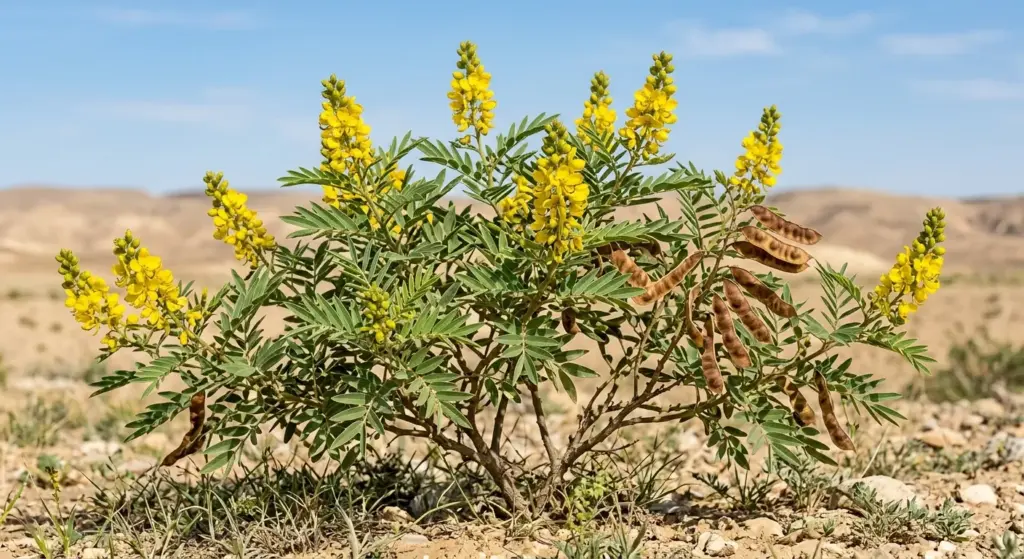
Table of Contents
Quick Summary
Senna alexandrina, a prominent medicinal plant of the Fabaceae family, is globally recognised for its potent laxative properties derived from bioactive sennosides. Beyond its traditional use in managing constipation, scientific evidence highlights its diverse therapeutic potential, including nephroprotective effects against heavy metal toxicity, antioxidant radical scavenging, and antimicrobial activity against multidrug-resistant pathogens. Traditionally revered in Ayurvedic, Unani, and Chinese medicine, it is commonly consumed as leaf infusions, pods, or standardized tablets. While highly effective for short-term digestive relief, long-term or high-dose usage requires caution due to potential enterohepatonephrotoxicity and genotoxic concerns associated with hydroxyanthracene derivatives. This monograph details the pharmacological mechanisms and safety profile of this ancient botanical.
Key Therapeutic Benefits
1. Digestive & Constipation Relief
-
Reliable Laxative Action: Active plant compounds called sennosides are converted by gut bacteria into active forms that stimulate the bowel wall and increase stool moisture to relieve constipation.
-
Localized Colon Activity: Because sennosides are poorly absorbed into the bloodstream, their laxative action stays focused directly within the intestinal tract.
-
Milder Natural Options: Related plants such as Senna obtusifolia and Cassia sieberiana provide gentler bowel stimulation, making them potential milder alternatives.
2. Liver Health & Fatty Liver Protection
-
Guards Against Toxin Damage: Senna leaf extract helps prevent toxic injury in liver tissue, reducing blood markers of liver stress and maintaining healthy cell balance.
-
Controls Fatty Liver & Fibrosis: In obesity models, senna leaf powder helps lower fat accumulation, prevents tissue scarring (fibrosis), and regulates fat-processing enzymes.
-
Cholesterol & Fat Reduction: Senna supplementation helps prevent unhealthy increases in total cholesterol and triglycerides.
3. Kidney Defense (Nephroprotection)
-
Protects Against Heavy Metal Toxicity: Pre-treatment with senna (Sana Makki) extract shields the kidneys from harmful metals like cadmium.
-
Lowers Kidney Stress Markers: It significantly decreases waste build-up markers like blood urea and creatinine, while lowering specific signs of kidney cell injury.
-
Prevents Kidney Cell Death: By boosting cell-survival proteins and suppressing cell-death pathways, senna helps preserve kidney structure.
4. Antioxidant & Free Radical Defense
-
Neutralizes Free Radicals: Methanol extracts of senna contain strong antioxidant properties (comparable to Vitamin C) that neutralize damaging reactive molecules.
-
Restores Cellular Balance: Compounds like rutin and other flavonoids boost the body’s natural defense enzymes (such as SOD and catalase) to keep cells healthy.
-
Reduces Oxidative Breakdown: Senna extracts help stop the breakdown of healthy fats (lipid peroxidation) and excess nitric oxide production in body tissues.
5. Inflammation Control & Immune Support
-
Suppresses Inflammatory Messengers: Senna extracts significantly reduce major pro-inflammatory markers (such as interleukin-1 beta and TNF-alpha).
-
Prevents Tissue Damage: By turning down chronic inflammatory responses, senna helps protect vital organs from long-term swelling and damage.
-
Stops Inflammatory Cell Infiltration: Research shows senna helps prevent harmful immune cells from flooding stressed organ tissues.
6. Antibacterial & Pathogen Defense
-
Fights Drug-Resistant Superbugs: Eco-friendly silver nanoparticles produced from senna leaves destroy hard-to-treat bacteria like MRSA and E. coli.
-
Direct Bacterial Inhibition: Active compounds weaken and break down the protective cell membranes of harmful bacteria.
-
Natural Antimicrobial Synthesis: Using senna to produce antimicrobial particles provides a biocompatible and green alternative to harsh chemical agents.
7. Antifungal & Antiparasitic Action
-
Clears Fungal Skin Rashes: Traditional leaf preparations of Senna alata effectively treat stubborn fungal skin conditions (like tinea imbricata), reducing itching and clearing rashes.
-
Controls Harmful Molds: Compounds and beneficial yeasts found on senna help suppress destructive fungi like Aspergillus flavus by damaging fungal hyphae and blocking spore growth.
-
Natural Deworming Power: Crude senna extracts damage the protective skin and internal structures of parasitic worms, leading to paralysis and death.
8. Blood Sugar & Metabolic Support
-
Slows Carbohydrate Breakdown: Senna leaf extracts inhibit key digestive enzymes (such as alpha-amylase and alpha-glucosidase) to help prevent sharp sugar spikes after meals.
-
Improves Insulin Pathways: Flower bud extracts from Senna (Cassia auriculata) enhance vital insulin-signaling genes, helping reverse and control blood sugar imbalances.
9. Bone Strength & Fracture Recovery
-
Stimulates Bone-Building Cells: Extracts from Senna occidentalis promote the growth and activity of osteoblasts (bone-forming cells).
-
Prevents Bone Loss: Active plant compounds inhibit bone resorption and help prevent osteoporosis caused by steroid medication.
-
Accelerates Fracture Healing: Stem extracts have been shown to speed up bone tissue regeneration at injury sites.
10. Cellular Protection & Personal Care
-
Blocks DNA Mutagens: Senna concentrates help neutralize cancer-causing toxins (like aflatoxin B1 and benzo[a]pyrene), protecting DNA from harmful mutations.
-
Anti-Cancer Potential: In preliminary lab assays, senna-synthesized silver nanoparticles have shown the ability to selectively target and kill breast cancer cells.
-
Hair Care & Sun Protection: Known cosmetically as “neutral henna” (Cassia obovata), senna binds to hair keratin to smooth frizz, strengthen hair strands, and provide a protective shield against ultraviolet (UV) sun damage.
How It Works (Phytochemistry)
- Sennoside A & B → Act as prodrugs converted to active rheinanthrone by gut flora → Stimulates peristalsis and fluid secretion for laxative effect.
- Aloe-emodin → Induces apoptosis in malignant cells and disrupts microbial membranes → Provides anticancer and antimicrobial benefits.
- Rhein → Inhibits pro-inflammatory cytokines like IL-1beta and TNF-alpha → Reduces systemic inflammation and tissue damage.
- Kaempferol-3-glucoside → Neutralises reactive oxygen species (ROS) and upregulates Nrf2 → Protects liver and kidney tissue from oxidative stress.
- Rutin → Inhibits alpha-glucosidase and provides radical scavenging → Aids in metabolic regulation and antioxidant defense.
- Chrysophanol → Exerts antifungal action against dermatophytes → Treats skin infections like tinea imbricata.
Traditional Knowledge
- Ayurveda: Utilized in numerous formulations as a Swarupa (purgative) and traditionally used in Andhra Pradesh for treating fractures and bone diseases.
- Unani: Highly valued as “Sana Makki,” it is considered a standard laxative and a blood purifier for detoxification.
- Traditional Nigerian Medicine: The roots and stem bark are frequently used as an affordable alternative for constipation management.
- T’boli Tribe (Philippines): A community-prepared leaf decoction is a standard treatment for tinea imbricata (fungal skin infection).
Usage and Preparations
- Leaf/Pod Infusion (Tea): Standard form for constipation relief and traditional weight loss aids.
- Standardized Tablets: Concentrated extracts (e.g., Senokot) used for clinical purgation and as a vegetable laxative.
- Aqueous Extract: Employed as a reducing agent for nanoparticle synthesis and as a wash for fungal skin infections.
- Ethanolic Extract: Used in studies for anthelmintic efficacy and anticancer activity.
- Leaf Powder: Supplemented in diet to manage steatosis and oxidative stress in metabolic disorders.
Identity and Authentication
- Botanical Name: Senna alexandrina Mill. (Synonyms: Cassia angustifolia Vahl., Cassia acutifolia Delile).
- Family: Fabaceae (subfamily Caesalpinioideae).
- Common Names: Indian Senna, Tinnevelly Senna, Alexandria Senna, Sana Makki.
- Morphology: A perennial drought-tolerant undershrub; leaves are paripinnately compound with lanceolate leaflets.
- Plant Part Used: Leaflets and pods (fruits).
- Analytical Markers: Sennosides A and B quantified via HPLC-UV; molecular authentication using ITS1 and matK DNA barcodes.
Dosage and Safety
- Dosage: Effective laxative activity is noted at 500 mg/kg in animal models; human use is typically based on sennoside titration.
- Side Effects: Diarrhea, abdominal cramps, and ruffled hair (in animal studies); potential anaphylaxis in rare cases.
- Toxicity: High doses (10 g/kg) cause enterohepatonephrotoxicity, macrocytic hypochromic anemia, and death. (Adam, 2001; El Sayed, 1983)
- Drug Interactions: Synergistic toxicity when combined with Citrullus colocynthis or Nerium oleander; potential interaction with metabolic activation of procarcinogens. (Al-Yahya, 2002; al-Dakan, 1995)
- Classification: Caution (Safe for short-term use; avoid long-term or high-dose consumption due to genotoxicity concerns). (Efsa, 2024)
FAQs
- What is the best form of Senna for constipation? Standardized tablets or leaf infusions are most reliable for ensuring a consistent dose of sennosides.
- Is Senna safe for long-term use? No, prolonged use can lead to bowel dependency and potential organ toxicity.
- Can Senna be used for weight loss? It is often found in weight-loss teas, but its effect is primarily water loss through its laxative action.
- Are there kidney risks? While high doses are toxic, moderate doses may offer nephroprotection against environmental toxins like cadmium.
- Does Senna interact with other herbs? Yes, it should not be mixed with Nerium oleander or Citrullus colocynthis as this increases the risk of death.
- How does Senna treat skin fungus? A leaf decoction applied topically has clinical evidence for reducing symptoms of tinea imbricata.
- Is Senna safe during pregnancy? It is generally contraindicated; however, related species like S. obtusifolia are being explored as milder alternatives.
- What is “Neutral Henna”? This is a cosmetic application of Cassia obovata used for hair conditioning without dyeing.
- Can Senna prevent DNA damage? Yes, it has antimutagenic properties that protect against H2O2-induced oxidative damage.
- How long does it take to work? Typically, the laxative effect occurs within 6 to 24 hours after oral administration.
References
- Christensen, B. V. & Abdel-Latif, I. A. (1949). A new spectrophotometric method of assay for Alexandria senna leaves. J Am Pharm Assoc, 38(11), 589-593.
- Forestier, J. P. (1981). A cosmetic senna, Cassia obovata: ‘neutral henna’. Int J Cosmet Sci, 3(5), 211-226. DOI: 10.1111/j.1467-2494.1981.tb00287.x
- al-Dakan, A. A., et al. (1995). Cassia senna inhibits mutagenic activities of benzo[a]-pyrene and aflatoxin B1. Pharmacol Toxicol, 77(4), 288-292. DOI: 10.1111/j.1600-0773.1995.tb01028.x
- Adam, S. E., et al. (2001). Combined toxicity of Cassia senna and Citrullus colocynthis in rats. Vet Hum Toxicol, 43(2), 70-72.
- Waltenberger, B., et al. (2008). Transport of sennosides and sennidines from Cassia angustifolia across Caco-2 monolayers. Phytomedicine, 15(5), 373-377. DOI: 10.1016/j.phymed.2008.02.015
- Silva, C. R., et al. (2008). Assessment of antimutagenic and genotoxic potential of senna aqueous extract. Toxicol In Vitro, 22(1), 212-218. DOI: 10.1016/j.tiv.2007.08.016
- Ajayi, C. O., et al. (2014). Laxative activities of Cassia sieberiana and Senna obtusifolia. Afr J Tradit Complement Altern Med, 11(4), 44-47.
- Seethapathy, G. S., et al. (2015). Assessing product adulteration in natural health products for laxative yielding plants. Int J Legal Med, 129(4), 693-700. DOI: 10.1007/s00414-014-1120-z
- Kundu, S., et al. (2017). Senna alexandrina Mill. induced ultrastructural changes on Hymenolepis diminuta. J Parasit Dis, 41(1), 147-154. DOI: 10.1007/s12639-016-0768-4
- Mishra, P., et al. (2018). Candidate DNA Barcode Tags for Authentication of Senna alexandrina Mill. Front Plant Sci, 9, 283. DOI: 10.3389/fpls.2018.00283
- Albasher, G., et al. (2020). Involvement of redox status and Nrf2 in protecting against cadmium-induced renal injury with Sana Makki. An Acad Bras Cienc, 92(2), e20191237. DOI: 10.1590/0001-3765202020191237
- Nayan, S. I., et al. (2021). Leaf powder supplementation of Senna alexandrina ameliorates oxidative stress and hepatic steatosis. PLoS One, 16(4), e0250261. DOI: 10.1371/journal.pone.0250261
- Alam, P., et al. (2022). RSM-Based Optimization of Ultrasound-Assisted Extraction of Sennosides from Senna alexandrina. Molecules, 27(1), 312. DOI: 10.3390/molecules27010312
- Alharbi, N. S., et al. (2023). Biosynthesis of silver nanoparticles using Senna alexandrina grown in Saudi Arabia. Saudi Pharm J, 31(6), 911-920. DOI: 10.1016/j.jsps.2023.04.011
- Irshad, S., et al. (2024). Chemical fingerprinting and antimicrobial potential of biogenic silver nanoparticles from senna leaves. Food Sci Nutr, 12(7), 4989-5006. DOI: 10.1002/fsn3.4149
Jump to: Benefits | Phytochemistry | Dosage | FAQs