Lemon Balm(Melissa officinalis): 25 Evidence-Based Health Benefits
Advertisement — Leaderboard (728x90)
Table of Contents
Advertisement — Leaderboard (728x90)
Quick Summary
Melissa officinalis L., universally recognized as Lemon Balm, is a lemon-scented perennial herb in the Lamiaceae family, indigenous to the Mediterranean and Western Asia. Valued for over two millennia in Traditional Chinese Medicine (TCM), Ayurvedic, and Persian healing systems, it is celebrated for its “heart-gladdening” and “mind-calming” nature. Modern scientific evidence validates its status as a multi-target therapeutic agent possessing potent anxiolytic, sedative, neuroprotective, and antiviral activities. Clinically, it is utilized to stabilize generalized anxiety disorder, improve sleep quality, and mitigate the cognitive decline associated with Alzheimer’s disease. Its therapeutic efficacy is primarily driven by bioactive rosmarinic acid, volatile citral, and triterpenoids. Commonly consumed as standardized capsules, essential oils, or aqueous infusions, it maintains an exceptional safety profile. However, it is classified as Caution for those on thyroid medications or central nervous system depressants due to potential synergistic inhibitory effects.
Key Therapeutic Benefits
- Clinical Alleviation of Generalized Anxiety Disorder (GAD) Melissa officinalis significantly reduces moderate-to-severe anxiety symptoms in adults by modulating GABAergic neurotransmission. It functions by inhibiting gamma-aminobutyric acid transaminase (GABA-T), effectively increasing inhibitory GABA levels in the synaptic cleft. Daily supplementation provides a “calming effect” that improves psychological well-being scores within three weeks. (Bano, 2023; Yalcin, 2025; Ibarra, 2010)
- Enhancement of Sleep Quality and REM Stabilization Oral administration of standardized extracts reduces sleep latency and improves total sleep duration in individuals with insomnia. It works by stabilizing the neurochemical pathways governing the sleep-wake cycle and decreasing nocturnal cortisol secretion. This provides a safe strategy for managing sleep disturbances associated with emotional distress. (Cases, 2011; Yalcin, 2025; Hajhashemi, 2015)
- Stabilization of Cognitive Function in Alzheimer’s Disease High-dose extracts serve as a potent cholinergic adjunct, significantly improving ADAS-cog scores in patients with mild-to-moderate dementia. It acts as a dual inhibitor of acetylcholinesterase (AChE) and amyloid-beta (Aβ) plaque aggregation, preserving hippocampal integrity. Regular treatment also has a positive effect on reducing neuropsychiatric agitation. (Dastmalchi, 2009; Ozarowski, 2016; Akhondzadeh, 2003)
- Normalization of Glycemic Indices in Type 2 Diabetes Melissa officinalis supplementation significantly lowers HbA1c and fasting blood glucose levels by increasing GLUT4 translocation. It functions by activating the Akt-dependent signaling pathway, enhancing insulin sensitivity in skeletal muscle and liver tissues. This metabolic support helps protect pancreatic beta-cell mass from glucose-induced oxidative damage. (Chung, 2010; Shin, 2021; Miraj, 2017)
- Comprehensive Regulation of Human Lipid Profiles Chronic administration facilitates a marked reduction in total cholesterol, triglycerides, and LDL levels while inhibiting hepatic SREBP-1c expression. It acts as a natural hypolipidemic agent by decreasing fatty acid synthesis and promoting bile acid biosynthesis. These effects are particularly beneficial for dyslipidemic patients at risk for coronary artery disease. (Javid, 2018; Peters, 2016; Bolkent, 2005)
- Clinical Alleviation of Stage 1 Hypertension Daily administration of the extract induces a significant reduction in systolic and diastolic blood pressure in hypertensive volunteers. It works through the modulation of voltage-gated calcium channels and the stimulation of endothelial nitric oxide (NO) synthesis. This hypotensive profile provides a safe, low-cost strategy for supporting cardiovascular homeostasis. (Dehnayebi, 2025; Yalcin, 2025; Baczek, 2022)
- Symptomatic Management of Benign Heart Palpitations Standardized leaf extracts effectively reduce the frequency and intensity of heart palpitation episodes associated with anxiety. It functions by activating cardiac M2 muscarinic receptors, inducing a negative chronotropic effect that stabilizes the heart’s rhythm. Patients report marked distress reduction and improved autonomic balance within two weeks. (Kheirkhah, 2021; Zam, 2022; Bounihi, 2013)
- Virucidal Inhibition of Herpes Simplex Virus (HSV-1 & HSV-2) Aqueous extracts and essential oils exhibit high virucidal activity, significantly reducing HSV plaque formation by blocking viral attachment. It interacts directly with free viral particles before adsorption, preventing penetration into the host cell. Topically applied glycerosomes containing the oil further enhance stability and anti-herpetic efficacy. (Moaca, 2018; Wolbling, 1994; Mazzanti, 2008)
- Clinical Resolution of Infantile Colic Symptoms Polyherbal mixtures containing Lemon Balm significantly reduce daily crying time in breastfed infants within one week. It acts through synergistic sedative and carminative actions, providing a safer alternative to synthetic simethicone. This treatment is well-tolerated and improves the overall home environment for colicky infants. (Martinelli, 2017; Ulbricht, 2005; Savino, 2005)
- Gastrointestinal Spasmolytic Relief of Digestive Colic Melissa officinalis exerts a potent spasmolytic effect on the ileum by inhibiting muscarinic receptors and calcium influx. It works as a natural antispasmodic, alleviating abdominal pain and gas in functional gastrointestinal disorders. This prokinetic activity accelerates gastric emptying and normalizes bowel movements in chronic colitis. (Aubert, 2019; Cimpeanu, 2026; Guginski, 2009)
- Neuroprotective Shielding Against Ischemic Brain Injury Ethanolic extracts protect cortical neurons from hypoxia-induced death by suppressing the gene expression of HIF-1α. It prevents caspase-3 activation and mitochondrial dysfunction, preserving neuronal viability after transient hippocampal ischemia. This molecular shield establishes a foundation for reducing progressive neural damage in stroke models. (Bayat, 2012; Yoo, 2015; Hassanzadeh, 2011)
- Hepatoprotective Defense Against Chemical and Drug Toxicity Administration of the extract attenuates liver damage induced by methotrexate or cholesterol-rich diets by restoring glutathione (GSH) levels. It works by downregulating iNOS and COX-2, reducing systemic oxidative stress and inflammatory infiltrate in hepatic tissue. Regular supplementation also decreases serum transaminase levels (ALT/AST). (Bolkent, 2005; Javid, 2018; Alijaniha, 2025)
- Targeted Cytotoxicity and Apoptosis in Breast Cancer Bioactive rosmarinic acid and essential oils induce caspase-dependent apoptosis and arrest the cell cycle in MCF-7 cell lines. It significantly suppresses the angiogenic factors (VEGF-A) and telomerase activity (hTERT) required for tumor migration. This selective activity restricts malignant cell survival while showing minimal toxicity to normal fibroblasts. (Jahanban-Esfahlan, 2015; Moaca, 2018; Saraydin, 2012)
- Inhibition of Colorectal Adenocarcinoma Proliferation Hot water extracts trigger ROS-mediated oxidative stress, leading to mitochondrial respiratory transport failure in colon cancer cells. It induces cell cycle arrest at the G2/M phase, restricting the invasion and survival of malignant colorectal tissues. This identifies Lemon Balm as a promising resource for managing aggressive colorectal cancer progression. (Encalada, 2011; Weidner, 2015; Kuo, 2022)
- Amelioration of Plaque Psoriasis Severity Standardized syrups significantly reduce pruritus intensity and PASI scores by inhibiting keratinocyte hyperproliferation. It functions by upregulating Nrf2 pathways and decreasing pro-inflammatory cytokines like IL-17A and IL-23. Regular oral intake reestablishes skin physiology and enhances barrier function in chronic skin disorders. (Dimitris, 2020; Yargholi, 2021; Laghezza, 2024)
- Mitigation of Visceral Hypersensitivity in IBS Treatment with GABA-enriched lemon balm products normalizes intestinal permeability and reduces abdominal withdrawal reflexes. It works by reinforcing the intestinal barrier (claudin-1) and suppressing spinal microglial reactivity. This significantly improves the anxiety and depression scores frequently comorbid with irritable bowel syndrome. (Dolatabadi, 2018; Zam, 2022; Lucarini, 2024)
- Clinical Relief of Primary Dysmenorrhea and PMS Melissa officinalis capsules are more effective than mefenamic acid in reducing the severity of postpartum and menstrual pain. It works through direct musculotropic relaxant effects on uterine smooth muscle while stabilizing emotional distress. High-school students report significant reductions in PMS intensity after three consecutive cycles of use. (Mirabi, 2017; Rabiei, 2025; Naderi Dastjerdi, 2019)
- Attenuation of Respiratory Allergic Asthma Symptoms Inhalation of the hydroalcoholic extract significantly reduces total white blood cell and eosinophil infiltration in the lungs. It functions by inhibiting the IL-4 and IL-17 cytokine pathways, thereby alleviating airway inflammation and mucosal damage. This anti-asthmatic potential is comparable to dexamethasone in reducing lung pathological changes. (Kim, 2026; Piao, 2017; Ehsani, 2024)
- Bactericidal Eradication of Multidrug-Resistant Pathogens Nano-encapsulated essential oils exhibit robust activity against MDR E. coli and K. pneumoniae. It works by disrupting the bacterial cell membrane and inhibiting critical efflux pump systems, restoring antibiotic efficacy. High antimicrobial efficiency is also recorded against clinical strains of methicillin-resistant S. aureus. (Ehsani, 2017; Lotfi, 2025; Abdellatif, 2021)
- Anti-angiogenic Regulation of Obesity and Adiposity The specialized extract ALS-L1023 reduces adipose tissue mass by inhibiting angiogenesis and matrix metalloproteinase (MMP) activity. It functions by upregulating fatty acid oxidation genes while suppressing the differentiation of preadipocytes into adipocytes. This metabolic intervention effectively prevents visceral weight gain without affecting appetite. (Lee, 2020; Yoon, 2011; Hong, 2011)
- Radioprotective Shielding Against Low-Dose Ionizing Radiation Daily consumption of lemon balm tea significantly improves antioxidant enzymes and reduces DNA damage in radiology staff. It functions by scavenging reactive oxygen species and reducing lipid peroxidation (MDA) in plasma and brain tissues. This provides a safe, dietary strategy for radiation protection in occupationally exposed subjects. (Kawara, 2024; Zeraatpishe, 2011; Brieskorn, 1974)
- Nootropic Enhancement of Memory and Working Accuracy High-dose encapsulated dried leaf improves working memory and the speed of mathematical processing in healthy young adults. It acts by binding to nicotinic and muscarinic receptors in the cerebral cortex, enhancing synaptic plasticity. Combinations with ginseng further potentiate the inhibition of AChE to boost cognitive behavioral scores. (Kennedy, 2003; Ozarowski, 2016; Mahboubi, 2016)
- Anti-wrinkle Protection Against UVB-induced Dermal Aging Topical leaf extracts promote Endo180 production in dermal fibroblasts, which facilitates the clearance of degraded collagen. It inhibits the UVB-triggered decline of Type I collagen and reduces the appearance of corner-eye wrinkles. Regular use in cosmetic formulations may prevent dermal thinning and premature aging of human skin. (Iwahashi, 2025; Fujita, 2011; Seker Karatoprak, 2023)
- Fungicidal Suppression of Oral and Vaginal Candidiasis Essential oils and hydrosols demonstrate potent activity against Candida albicans and Cryptococcus neoformans. It induces significant DNA damage and ROS production within the pathogen, effectively displacing fungal biofilms. This work highlights lemon balm’s potential as a novel antimicrobial therapy for mucosal candidiasis. (Cavalcanti, 2025; Serra, 2020; Patora, 2002)
- Endothelium-Dependent Vasorelaxation of the Thoracic Aorta Aqueous extracts facilitate significant vascular relaxation through the Nitric Oxide (NO) pathway. It works by involving prostacyclin and endothelium-derived hyperpolarizing factor (EDHF), shielding vascular walls from oxidative stress. This protective effect prevents heart remodeling and subsequent heart failure in myocarditis. (Ersoy, 2008; Zam, 2022; Sipos, 2021)
How It Works (Phytochemistry)
- Rosmarinic Acid → Inhibition of GABA transaminase (GABA-T) and NF-κB → Anxiolytic & Anti-inflammatory
- Citral (Geranial/Neral) → 5-HT3 receptor antagonism and membrane disruption → Anti-emetic & Antimicrobial
- Ursolic Acid → Activation of Nrf2/HO-1 signaling and caspase inhibition → Neuroprotective & Antioxidant
- Luteolin-3′-O-glucuronide → Suppression of pro-inflammatory cytokines (IL-6/TNF-α) → Anti-inflammatory
- Linalool → Modulation of NMDA receptors and GABA-A affinity → Sedative & Anxiolytic
- Caffeic Acid → Inhibition of protein biosynthesis and AChE → Cognitive Enhancing & Anticancer
- Oleanolic Acid → Blockade of voltage-gated calcium channels → Hypotensive & Vasorelaxant
- Citronellal → Inhibition of heart rate and muscle spasms via calcium modification → Anti-arrhythmic & Antispasmodic
Traditional Knowledge
Melissa officinalis has been a cornerstone of global healing systems for millennia, valued for its “fragrant” and “heart-strengthening” nature:
- Persian Medicine: Revered as Badranjboye, it is used to treat “melancholy” (depression) and as a premier cardiac tonic for heart palpitations and stroke recovery.
- Traditional Chinese Medicine (TCM): Designated as Xiecǎo, it is used to “clear heat,” dispel internal cold, and manage palpitations caused by restlessness of the mind.
- Unani Medicine: Prized as Hulba, scholars consistently recommend the infusion for clearing hepatic obstructions and treating flatulence and arthritis.
- European Folk Medicine: Historically used as “Melissengeist” or a “mother’s herb” for relaxation, teething infants, and as an antiseptic for infectious skin diseases.
Usage and Preparations
- Standardized Capsules (300–1200 mg): Administered daily for the clinical management of anxiety, GAD, and PMS symptoms.
- Standardized Essential Oil (MEO): Used topically for HSV lesions or inhaled in aromatherapy to reduce dementia agitation.
- Aqueous Infusion (Tea): Traditionally brewed (2–4 g dry herb) twice daily to improve salivary antioxidant status in smokers and radiology staff.
- Tincture (1:5): Taken as 60 drops/day for the adjuvant treatment of mild-to-moderate depression and Alzheimer’s symptoms.
- Topical Hydrogel (1% RA): Applied to the skin for burn wound healing and protection against UVB-induced dermal aging.
- Mouthwash/Hydrosol: Utilized as a natural antiseptic to manage oral candidiasis and halitosis.
Identity and Authentication
- Botanical Name: Melissa officinalis L.
- Family: Lamiaceae (Mint family).
- Common Names: Lemon Balm, Badranjboye, Honey Balm, Bee Balm.
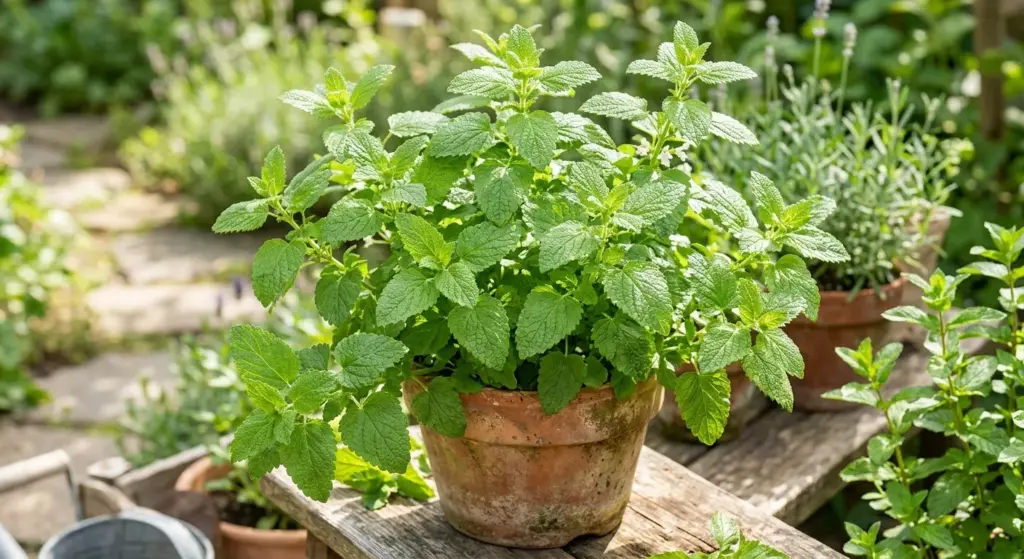
- Morphology: A perennial herb with square stems, opposite ovate leaves with crenate margins, and a distinct lemon-scented aroma.
- Plant Part Used: Dried Leaves, flowering tops, and essential oil.
- Analytical Markers: Authenticated using HPLC-DAD and GC-MS for rosmarinic acid (> 3%) and volatile monoterpenes like citral.
- Authentication: Distinguished from M. romana by the presence of peltate hairs and long-stalked capitate glandular trichomes.
Dosage and Safety
- Dosage: Effective clinical oral doses range from 300 mg to 1200 mg daily for mood; infusions are typically 2 cups/day. (Asadi, 2019; Cases, 2011; Yalcin, 2025)
- Side Effects: Generally well-tolerated; rare reports include headache, dizziness, and mild somnolence. (Bano, 2023; Akbarzadeh, 2015)
- Toxicity: Classified as non-toxic; LD50 estimated at > 3 g/kg for aqueous extracts in subacute trials. (Lobach, 2024; Stojanovic, 2019)
- Drug Interactions: May potentiate the effects of sedatives (pentobarbital) and theoretically interact with thyroid hormones. (Abo-Zaid, 2023; Soulimani, 1991)
- Classification: Safe (Standard doses); Caution (Avoid medicinal doses during pregnancy and monitor when combined with other CNS depressants).
FAQs
- Does Lemon Balm really work as well as prescription anxiety medication? Clinical trials show that standardized extracts have an anxiolytic profile similar to diazepam but without the risk of physical dependence (Ibarra, 2010; Mathews, 2024).
- Can I take Lemon Balm for a cold sore? Yes, research confirms that its essential oil is highly virucidal against HSV-1, significantly reducing healing time when applied in the early stages (Schnitzler, 2008; Wolbling, 1994).
- Is Lemon Balm safe to use for my child’s colic? Yes, polyherbal mixtures containing lemon balm are proven to significantly reduce crying time in infants and are safer than standard synthetic treatments (Martinelli, 2017; Savino, 2005).
- How long does it take for Lemon Balm to help with sleep? Improvements in sleep latency and quality are typically established within 15 days of consistent daily administration (Cases, 2011; Yalcin, 2025).
- Can Lemon Balm interact with my thyroid medication? Caution is advised. Some evidence suggest it may influence TSH levels and should be used with medical supervision in patients with thyroid disorders (Abo-Zaid, 2023; Ulbricht, 2005).
- Does Lemon Balm help with weight loss? Systematic studies show that the ALS-L1023 fraction significantly decreases visceral fat by inhibiting the angiogenesis that supports adipose tissue growth (Lee, 2020; Yoon, 2011).
- Is Lemon Balm safe to take every day? Yes, a 90-day repeated dose oral toxicity study confirmed its safety at therapeutic levels, with no adverse clinical or hematological effects (Lobach, 2024).
- Can I use Lemon Balm tea for memory? Yes, clinical data show that high-dose capsules (1600 mg) improve Accuracy of Attention and memory performance in healthy individuals (Kennedy, 2003).
- Which is better: the fresh tea or capsules? Standardized capsules provide consistent levels of rosmarinic acid for clinical anxiety, while tea is excellent for general relaxation and antioxidant support (Cases, 2011; Bakhtiari, 2020).
- Does Lemon Balm help with menstrual cramps? Yes, it acts as a musculotropic relaxant that is clinically proven to reduce the intensity of postpartum after-pains and primary dysmenorrhea (Mirabi, 2017; Rabiei, 2025).
- Can I drive after taking Lemon Balm? While it has less somnolence than synthetic drugs, it can induce mild sedation. It is best to assess your tolerance before operating heavy machinery (Soulimani, 1991; Bano, 2023).
- Does it interact with blood sugar medication? Caution is advised. Lemon balm has strong hypoglycemic properties that can potentiate the effects of drugs like Metformin (Asadi, 2019; Shin, 2021).
References
- Wolbling, R. H. and K. Leonhardt (1994). “Local therapy of herpes simplex with dried extract from Melissa officinalis.” Phytomedicine 1(1): 25-31.
- Akhondzadeh, S., et al. (2003). “Melissa officinalis extract in the treatment of patients with mild to moderate Alzheimer’s disease: a randomised trial.” J Neurol Neurosurg Psychiatry 74(7): 863-866. DOI: 10.1136/jnnp.74.7.863
- Ibarra, A., et al. (2010). “Effects of chronic administration of Melissa officinalis L. extract on anxiety-like reactivity in mice.” Phytomedicine 17(6): 397-403. DOI: 10.1016/j.phymed.2010.01.012
- Cases, J., et al. (2011). “Pilot trial of Melissa officinalis L. leaf extract in the treatment of stressed volunteers.” Med J Nutrition Metab 4(3): 211-218. PubMed: 22116033
- Asadi, A., et al. (2019). “Efficacy of Melissa officinalis L. extract on glycemic control in individuals with type 2 diabetes.” Phytother Res 33(3): 651-659. DOI: 10.1002/ptr.6254
- Shin, Y., et al. (2021). “The herbal extract ALS-L1023 from Melissa officinalis reduces weight gain and glucose levels in rats.” J Ethnopharmacol 264: 113360. DOI: 10.1016/j.jep.2020.113360
- Bano, A., et al. (2023). “The calming effect of subchronic supplementation of a standardised Melissa officinalis L. extract.” Front Pharmacol 14: 1250560. DOI: 10.3389/fphar.2023.1250560
- Lobach, A. R., et al. (2024). “Toxicological safety evaluation of an aqueous lemon balm (Melissa officinalis) extract.” Food Chem Toxicol 187: 114565. DOI: 10.1016/j.fct.2024.114565
- Mathews, I. M., et al. (2024). “Clinical Efficacy and Tolerability of Lemon Balm (Melissa officinalis L.) in Psychological Well-Being: A Review.” Nutrients 16(20). DOI: 10.3390/nu16203536
- Dehnayebi, M. J., et al. (2025). “Comparison of the effects of Melissa officinalis on hypertension.” Complement Ther Med 95: 103266. DOI: 10.1016/j.ctim.2024.103266
- Iwahashi, H., et al. (2025). “Lemon Balm (Melissa officinalis L.) Leaf Extract has Antiwrinkle Effect on Human Skin.” Photodermatol Photoimmunol Photomed 41(2): e70006. DOI: 10.1111/phpp.70006
- Yalcin, A., et al. (2025). “Protective effect of Melissa officinalis essential oil inhalation on neuromodulators regulating the sleep/wake cycle.” Iran J Basic Med Sci 28(2): 264-272. DOI: 10.22038/IJBMS.2024.78652.17066
Jump to: Benefits | Phytochemistry | Dosage | FAQs