
Asoca (Saraca asoca): Women Health, 20+ Benefits & More
Advertisement — Leaderboard (728x90)
Table of Contents
Advertisement — Leaderboard (728x90)
Quick Summary
Saraca asoca (Roxb.) de Wilde, popularly known as Ashoka or the “Sorrowless Tree,” is a sacred evergreen tree belonging to the Fabaceae family. It is celebrated in Ayurvedic medicine as a premier uterine tonic, clinically effective for managing gynecological conditions such as Polycystic Ovarian Syndrome (PCOS), menorrhagia, and leucorrhea. Modern scientific evidence validates its role as a multi-functional therapeutic agent possessing potent anti-inflammatory, anticancer, antioxidant, and neuroprotective activities, primarily driven by its rich content of catechins, flavonoids, and tannins. Beyond women’s health, it is studied for its cardioprotective potential and ability to mitigate chronic stress-induced depression. Commonly utilized as bark decoctions, Ashokarishta (fermented preparation), and seed extracts, it maintains a strong safety profile. However, due to its estrogenic potency, it is classified as Caution during pregnancy and is highly prone to adulteration with Polyalthia longifolia.
Key Therapeutic Benefits
- Normalization of Hormonal Profiles in PCOS Saraca asoca extracts significantly reduce elevated levels of serum testosterone, insulin, and luteinizing hormone in metabolic disorder models. It works by normalizing the perturbed hormonal profile and improving ovulation status by decreasing cystic follicles. (Bu, 2023; Swar, 2017; Himaja, 2025)
- Antiproliferative Control of Endometrial Thickening The methanolic bark extract effectively inhibits estrogen-induced endometrial thickening and keratinizing metaplasia. It functions through its anti-estrogenic and anti-inflammatory properties, reducing the stratified epithelial layers and diminishing serum estrogen levels. (Ahmad, 2016; Shahid, 2015; Bu, 2023)
- Traditional Efficacy for Uterine Disorders and Menorrhagia As a primary ingredient in Asokarishta, this herb is extensively used as a uterine tonic to treat dysfunctional uterine bleeding. It stabilizes the uterine endometrium and provides relief from dysmenorrhea and leucorrhea through its potent phytochemical markers. (Bu, 2023; Urumarudappa, 2023; Hegde, 2018)
- Chemopreventive Suppression of Skin Carcinogenesis Topical pretreatment with flavonoid fractions causes a significant reduction in the number of tumors and delays the latency period of tumor appearance. It increases levels of reduced glutathione and catalase while significantly decreasing lipid peroxidation in skin tissues. (Arathi, 2025; Saravanan, 2011; Cibin, 2012)
- Robust Antibacterial Action against Biofilm-Producing Bacteria Green-synthesized nanoparticles from the leaves exhibit excellent antibiofilm activity against pathogens like Bacillus subtilis. It impairs the bacterial cell membrane, causing nearly 83% suppression of biofilm development at minimum inhibitory concentrations. (Agrawal, 2023; Shahid, 2007; Jain, 2018)
- Alleviation of Chronic Stress-Induced Depression Methanolic bark extracts significantly reduce immobility time in forced-swim tests and increase sucrose preference in stress models. It alleviates symptoms of depression by reducing oxidative stress and restoring endogenous antioxidant levels in the brain. (Gill, 2018; Shahid, 2018; Arathi, 2025)
- Sustainable Reduction of Induced Pyrexia Acetone extracts of the seeds demonstrate significant antipyretic activity in yeast-induced pyrexia models. It contains saponins and tannins that inhibit fever, providing therapeutic efficacy comparable to standard pharmacological agents like aspirin. (Ahmad, 2016; Sasmal, 2012; Gahlaut, 2013)
- Anti-inflammatory Mitigation of Adjuvant-Induced Arthritis Regular treatment with seed extracts reduces paw edema and ankle joint inflammation by attenuating inflammatory responses. It restores body weight and improves hematological parameters like RBC and hemoglobin while decreasing pro-inflammatory prostaglandin levels. (Gupta, 2014; Saravanan, 2011; Agrawal, 2023)
- Enhancement of Male Aphrodisiac Potential Bark extracts play a significant role in enhancing sexual behavior by increasing mount and intromission frequencies. It improves male sexual potential without causing reproductive toxicity, affecting sperm count or morphology negatively. (Gill, 2018; Mishra, 2016; Swar, 2017)
- Restoration of Trace Element Homeostasis in Leishmaniasis Seed extract treatment recovers imbalances in essential trace elements such as Zinc, Iron, and Bromine during visceral leishmaniasis. It restores blood levels to a nearly normal range, potentially countering the immunodeficiency associated with the disease. (Agrawal, 2023; Singh, 2009; Lahiry, 2020)
- Hepatoprotective Shielding via Antioxidant Enzyme Activation Ethanolic extracts protect the liver from oxidative damage by increasing the levels of superoxide dismutase and catalase. It lowers elevated liver function markers and prevents malonaldehyde accumulation, shielding the organ from chemical toxicity. (Bu, 2023; Shirolkar, 2013; Gupta, 2014)
- Chemopreventive Efficacy in Acute Myeloid Leukemia Natural catechins isolated from the bark show a chemopreventive effect by upregulating p53 and p21 cell cycle regulatory proteins. It reduces DNA fragmentation and improves hematological counts in Acute Myeloid Leukemia models. (Mukhopadhyay, 2017; Shahid, 2018; Dhanani, 2017)
- Cardioprotective Potential through ACE Inhibition Bioactive compounds in the plant function as natural ACE inhibitors, making them effective in treating and preventing cardio-related disorders. Its rich antioxidant profile provides a tonic effect that supports systemic cardiovascular health. (Agrawal, 2023; Prasad, 2024; Hegde, 2017)
- Molecular Inhibition of PGH2 Synthetase for Menorrhagia Bark extracts and pure procyanidin dimers inhibit the conversion of arachidonic acid by the PGH2 synthetase enzyme complex. This biochemical action explains its traditional use in managing excessive menstrual bleeding or menorrhagia. (Middelkoop, 1985; Sumangala, 2013; Ali, 2020)
- Antimutagenic Protection against DNA Damage Bark extracts reveal significant antigenotoxic properties against cyclophosphamide-induced damage. It scavenges free radicals and inhibits chromosomal aberrations, providing a genoprotective shield for cellular DNA integrity in vulnerable tissues. (Ahmad, 2016; Nag, 2015; Gautam, 2023)
- Eco-friendly Larvicidal Activity against Dengue Vectors Aqueous extracts serve as efficient, accessible, and eco-friendly larvicides against Aedes aegypti larvae. It achieves significant mortality rates, offering a sustainable option for the management of mosquito-borne diseases in endemic regions. (Joshi, 2016; Sharma, 2019; Bu, 2023)
- Synergistic Potentiation of Beta-Lactam Antibiotics The compound (+)-pinitol isolated from the bark shows an eight-fold reduction in the required doses of beta-lactam antibiotics. It exhibits a synergistic effect by binding to the same site as the antibiotics, enhancing their bactericidal efficacy. (Ahmad, 2016; Shahid, 2018; Cibin, 2012)
- Endophytic Antimicrobial Defense against MRSA Endophytic fungi resident in leaf tissues produce 2,4-di-tert-butyl phenol, which possesses excellent antioxidant and antibacterial activity. It is particularly effective against Methicillin-resistant Staphylococcus aureus (MRSA), providing a novel source of natural antibiotics. (Jain, 2018; Nishad, 2021; Ali, 2021)
- Photocatalytic Degradation of Hazardous Organic Dyes Leaf extracts facilitate the fabrication of magnetic nanocomposites that catalyze the photo-degradation of hazardous organic dyes. It achieves a 94% degradation rate, serving as an efficient and removable photocatalyst for environmental detoxification. (Gautam, 2023; Shirolkar, 2013; Mittal, 2013)
- Acaricidal Control of Bovine Tick Infestations Methanolic leaf extracts demonstrate high acaricidal activity against the bovine tick Rhipicephalus microplus. It induces high mortality rates and inhibits oviposition, offering a natural alternative to synthetic chemical agents in veterinary care. (Kumar, 2023; Singh, 2009; Gahlaut, 2013)
- Hypoglycemic Stabilization via Bark Phytochemicals The bark-derived compound (+)-pinitol is a well-known bioactive for its hypoglycemic activity. It facilitates blood sugar regulation and provides an anti-inflammatory benefit, supporting metabolic health in chronic disease models. (Ahmad, 2016; Sumangala, 2025; Hegde, 2018)
- Management of Leucorrhea and Genito-Urinary Infections Stem bark preparations are widely prescribed for leucorrhea and haematuria. It addresses infections and inflammatory conditions of the female genitourinary system through its bioactive flavanol glycosides and astringent properties. (Mathew, 2005; Urumarudappa, 2016; Bu, 2023)
- Attenuation of Systemic Inflammatory Cytokine Levels Methanol extracts significantly reduce the levels of pro-inflammatory cytokines in chronic inflammatory disorders. It nearly normalizes the histological architecture of joints and tissues by suppressing the systemic cascade of inflammation. (Gupta, 2014; Saravanan, 2011; Ahmad, 2016)
- Molluscicidal Action against Disease-Carrying Snails Bark powder and purified saponins exhibit potent molluscicidal activity against Lymnaea acuminata. It acts in a time-dependent manner, serving as a powerful biological agent for controlling freshwater snail populations involved in parasitic transmission. (Joshi, 2016; Singh, 2009; Ali, 2020)
- Estrogenic Potency via Phytoestrogenic Bioactives The presence of quercetin, kaempferol, and beta-sitosterol contributes to the plant’s strong estrogenic potential. These phytoestrogens support uterine weight and glycogen content, justifying its traditional use as a premier female reproductive tonic. (Himaja, 2025; Swar, 2017; Bu, 2023)
How It Works (Phytochemistry)
- Catechin → Upregulation of p53/p21 proteins → Chemopreventive & Anticancer
- (+)-Pinitol → Synergistic binding with beta-lactams → Antidiabetic & Antibiotic Augmentation
- Procyanidin B2 → Inhibition of aromatase enzymes → Infertility & PCOS Management
- Gallic Acid → Radical scavenging and DNA protection → Antimutagenic & Antioxidant
- Lyoniside → Response surface methodology optimization → Anti-inflammatory & Lignan Support
- E,E-alpha-Farnesene → Major sesquiterpene hydrocarbon component → Aromatic & Antimicrobial
Traditional Knowledge
Saraca asoca is a plant of significant medicinal and cultural value in Indian tradition, revered as a sacred tree by Hindus and Buddhists.
- Ayurveda: Known as Ashoka, it is considered a premier remedy for gynecological disorders. The juice of the flowers is traditionally consumed as a tonic for uterine health, while the bark is used to balance various internal ailments.
- Specific Uses: It is held in high esteem for treating menorrhagia (excessive bleeding), leucorrhea, and inflammatory conditions of the female reproductive tract.
Usage and Preparations
- Bark Decoction: Traditionally used for menorrhagia and uterine pain.
- Asokarishta: A fermented preparation used as a uterine tonic to treat endometrial thickening.
- Flower Juice: Consumed as a traditional tonic for women with reproductive issues.
- Leaf Extract Paste: Applied topically or used as an acaricide for bovine ticks.
- Seed Powder: Evaluated for its antipyretic and anti-arthritic activities.
Identity and Authentication
- Botanical Name: Saraca asoca (Roxb.) de Wilde.
- Family: Fabaceae (Subfamily Detarioideae).
- Common Names: Ashoka, Asoka, Sorrowless Tree.
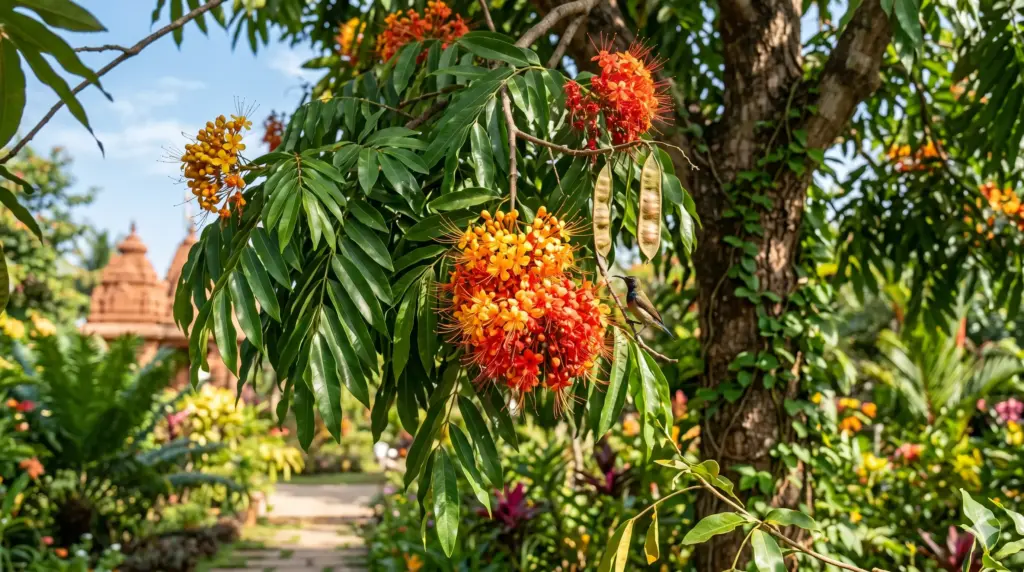
- Morphology: A perennial evergreen tree with fragrant flowers that change color from yellow to scarlet; native to the Western Ghats.
- Plant Part Used: Stem Bark (primary), Flowers, Seeds, and Leaves.
- Analytical Markers: Authenticated using HPLC for catechin, epicatechin, and gallic acid.
Dosage and Safety
- Dosage: Effective oral doses in studies range from 100 mg/kg to 500 mg/kg of bark or seed extract.
- Side Effects: No significant mortality or morbidity observed in subacute toxicity studies at doses up to 1000 mg/kg.
- Toxicity: Generally considered non-toxic; however, market samples are often adulterated (up to 80%), posing risks.
- Drug Interactions: Synergistic with beta-lactam antibiotics; may interact with hormonal therapies due to phytoestrogen content.
- Classification: Caution (Strictly avoid during pregnancy and ensure authenticity).
FAQs
- Does Saraca asoca help with PCOS? Yes, research shows it normalizes testosterone and insulin levels while improving ovulation and reducing ovarian cysts.
- What is the best form of Ashoka to take? Bark extracts and fermented Asokarishta are the most scientifically supported forms for gynecological health.
- Is Ashoka safe for long-term use? Studies for up to 8 weeks showed no toxic symptoms, but it should be used under supervision due to its estrogenic nature.
- Can Ashoka be used for joint pain? Yes, it has significant anti-arthritic properties that reduce joint swelling and inflammatory cytokines.
- Why is Ashoka called the “uterine tonic”? It contains catechins and pinitol that stabilize the uterine endometrium and inhibit excessive bleeding.
- Does Ashoka interact with antibiotics? It can actually enhance the effects of beta-lactam antibiotics, potentially allowing for lower required doses.
- Is Ashoka effective for depression? Preclinical studies suggest it reduces oxidative stress in the brain, alleviating symptoms of stress-induced depression.
- Can I take Ashoka during pregnancy? No, it should be avoided due to its traditional use as a uterine stimulant and identified phytoestrogenic activity.
- How do I know if my Ashoka powder is genuine? Genuine Ashoka is often adulterated with Polyalthia longifolia. Authentication requires HPLC markers or DNA barcoding.
- Does Ashoka help with skin cancer? Flavonoids from the flowers show chemopreventive activity by delaying tumor appearance and increasing skin antioxidants.
References
- Middelkoop, T. B. and R. P. Labadie (1985). Z Naturforsch C Biosci, 40(7-8), 523-526. PubMed: 2933758
- Singh, A. and V. K. Singh (2009). Vet Parasitol, 164(2-4), 206-210. DOI: 10.1016/j.vetpar.2009.05.011
- Saravanan, S., et al. (2011). Inflammopharmacology, 19(6), 317-325. DOI: 10.1007/s10787-010-0056-y
- Cibin, T. R., et al. (2012). Integr Cancer Ther, 11(3), 279-286. DOI: 10.1177/1534735411425114
- Mittal, A., et al. (2013). ISRN Pharm, 2013, 293935. DOI: 10.1155/2013/293935
- Gupta, M., et al. (2014). ISRN Rheumatol, 2014, 959687. DOI: 10.1155/2014/959687
- Nag, D., et al. (2015). Toxicol Ind Health, 31(8), 696-703. DOI: 10.1177/0748233713475517
- Ahmad, F., et al. (2016). J Asian Nat Prod Res, 18(2), 172-183. DOI: 10.1080/10286020.2015.1077335
- Urumarudappa, S. K., et al. (2016). Int J Legal Med, 130(6), 1457-1470. DOI: 10.1007/s00414-016-1411-z
- Swar, G., et al. (2017). J Ethnopharmacol, 195, 324-333. DOI: 10.1016/j.jep.2016.11.026
- Gill, M., et al. (2018). Neuroreport, 29(2), 134-140. DOI: 10.1097/WNR.0000000000000942
- Agrawal, A., et al. (2023). Environ Sci Pollut Res Int, 30(36), 86328-86337. DOI: 10.1007/s11356-023-28495-9
- Bu, N., et al. (2023). ACS Omega, 8(45), 42586-42597. DOI: 10.1021/acsomega.3c05342
- Arathi, S., et al. (2025). Fitoterapia, 182, 106459. DOI: 10.1016/j.fitote.2024.106459
- Himaja, K., et al. (2025). J Biomol Struct Dyn, 43(12), 5645-5660. DOI: 10.1080/07391102.2024.2341255
Jump to: Benefits | Phytochemistry | Dosage | FAQs