
Andrographis paniculata: Liver Support and 18+ Evidence-Based Health Benefits
Advertisement — Leaderboard (728x90)
Table of Contents
Advertisement — Leaderboard (728x90)
Quick Summary
Andrographis paniculata (Burm. f.) Nees, universally celebrated as the “King of Bitters” or Kalmegh, is an annual herbaceous plant in the Acanthaceae family, native to India and Sri Lanka. A cornerstone of Ayurvedic and Traditional Chinese Medicine (TCM) for centuries, it is classified as a premier “heat-clearing” agent used to treat fevers, respiratory infections, and liver disorders. Modern scientific evidence validates its role as a potent immunomodulator, anti-inflammatory, and broad-spectrum antiviral agent, primarily driven by its unique labdane diterpenoids, specifically andrographolide. It is clinically celebrated for reducing the severity of upper respiratory tract infections, managing Type 2 diabetes, and providing neuroprotection against Alzheimer’s disease. Commonly found as standardized tablets, leaf powders, and aqueous decoctions, it maintains a strong safety profile at recommended doses. However, a critical safety note indicates potential antifertility effects in males and a contraindication during pregnancy due to its traditional use as an abortifacient.
Key Therapeutic Benefits
- Clinical Alleviation of Upper Respiratory Tract Infections (URTI) Andrographis paniculata standardized extracts significantly reduce the prevalence and intensity of common cold symptoms, including sore throat, nasal secretion, and cough. It works by enhancing the body’s non-specific immune response and shortening the recovery time compared to placebo groups. (Coon, 2004; Saxena, 2010; Melchior, 1997)
- Molecular Inhibition of SARS-CoV-2 and Viral Replication Bioactive andrographolide and its derivatives serve as potent inhibitors against the SARS-CoV-2 main protease (Mpro) and PLpro. They effectively block viral entry into host cells by preventing the spike protein from binding to the ACE2 receptor, providing a natural pharmacological basis for managing respiratory pandemics. (Intharuksa, 2022; Sukardiman, 2020; Hiremath, 2021)
- Hepatoprotective Shielding Against Chemical-Induced Damage Andrographis paniculata shields the liver from damage induced by carbon tetrachloride, paracetamol, and thioacetamide by augmenting endogenous antioxidants. It normalizes serum transaminases and reduces lipid peroxidation in hepatocytes through the activation of the Nrf2 signaling cascade. (Abdulaziz Bardi, 2014; Pekthong, 2009; Handa, 1990)
- Clinical Improvement in Glycemic and Insulin Sensitivity Daily supplementation with Kalmegh powder significantly lowers HbA1c and fasting serum insulin in Type 2 diabetic patients. It works by up-regulating GLUT4 expression, inhibiting alpha-glucosidase enzymes, and protecting pancreatic beta-cells from oxidative stress. (Agarwal, 2005; Nugroho, 2012; Jaiyesimi, 2020)
- Neuroprotective Shielding in Alzheimer’s and Memory Loss Aqueous and ethanolic extracts alleviate scopolamine-induced amnesia by inhibiting acetylcholinesterase (AChE) and BACE1 activity. It reduces amyloid-beta deposition and protects hippocampal neurons from neuroinflammation via the p62-Keap1-Nrf2 pathway, restoring spatial learning and memory. (Gu, 2020; Sani, 2019; Adedayo, 2021)
- Antihypertensive Modulation via ACE2 Activation Aqueous extracts exhibit a dose-dependent hypotensive effect by reducing circulating ACE levels and free radical damage in the kidneys. It induces vascular smooth muscle relaxation and significantly lowers systolic blood pressure (SBP) specifically in hypertensive states without affecting normotensive baselines. (Bhaskar, 2012; Zhang, 1996; Amtaghri, 2022)
- TLR4/NF-kappaB Suppression for Systemic Inflammation Ethyl acetate fractions exert potent anti-inflammatory effects by directly inhibiting the NF-kappaB transactivation pathway. This action reduces the secretion of pro-inflammatory cytokines like TNF-alpha and IL-6, effectively calming chronic inflammatory conditions such as rheumatoid arthritis. (Chao, 2011; Xia, 2022; Jiao, 2019)
- Anticancer Apoptosis Induction in Solid Tumors The diterpene lactone andrographolide exerts cytotoxic effects against breast, colon, and prostate cancer lines by triggering intrinsic apoptosis. It induces mitochondrial dysfunction, increases ROS production, and arrests the cell cycle at the G0/G1 phase while sparing healthy fibroblasts. (Islam, 2018; Suriyo, 2014; Geethangili, 2008)
- Broad-Spectrum Antimicrobial Synergism Against Pathogens Andrographis paniculata extracts demonstrate robust bactericidal action against MRSA, E. coli, and S. aureus. It disrupts bacterial cell wall integrity and works synergistically with standard antibiotics to inhibit biofilm formation, overcoming the challenges of antimicrobial resistance. (Abass, 2022; Pholphana, 2004; Leelarasamee, 1990)
- Adjuvant Neutralization of Cobra and Scorpion Venom Standardized leaf extracts serve as potent supplements to anti-snake venom (ASV), effectively neutralizing acetylcholinesterase and hyaluronidase in Naja naja venom. It also provides a survival benefit in models of red scorpion envenoming by stabilizing hemostatic parameters and macroglobulins. (Premendran, 2011; Nayak, 2022; Brahmane, 2011)
- Nephroprotective Defense against Cisplatin-Induced Injury Ethanolic extracts display dose-dependent protection against cisplatin-induced acute kidney injury (AKI). It significantly reduces serum creatinine and BUN levels by activating the Nrf2 pathway and downregulating the kidney injury marker KIM-1 in renal tissues. (Adeoye, 2018; Purena, 2018; Malik, 2016)
- Anti-asthmatic Modulation of Airway Remodeling Standardized 50% ethanol extracts prevent house dust mite-induced airway inflammation and hyperreactivity. It downregulates Th2-related genes (IL-4, IL-13) and the oxidative stress enzyme Duox1, thereby abrogating mucus over-secretion and pulmonary eosinophilia. (Jian, 2024; Sulaiman, 2024; Huang, 2025)
- Clinical Reduction of Fatigue in Multiple Sclerosis A 12-month double-blind study demonstrates that Andrographis dried extract significantly reduces fatigue severity scores (FSS) in patients with Relapsing-Remitting Multiple Sclerosis (RRMS). Supplementation was well-tolerated and showed a 44% reduction in perceived fatigue compared to placebo. (Bertoglio, 2016; Worakunphanich, 2021; Gabrielian, 2002)
- Bactericidal Control of Dental Biofilms Methanolic extracts demonstrate antimicrobial efficacy against S. aureus and C. albicans equal to or superior to sodium hypochlorite when used as root canal irrigants. It disrupts established biofilm architectures and prevents bacterial adherence to tooth surfaces with high biocompatibility. (Dedhia, 2018; Sah, 2020; Nasim, 2022)
- Male Reproductive Contraception via Androgen Suppression Oral administration of leaf powder induces the cessation of spermatogenesis and regressive changes in the seminiferous tubules. It functions as a potential natural male contraceptive by reducing serum testosterone levels and sperm motility without inducing systemic oxidative stress. (Akbarsha, 1990; Ogundola, 2021; Zoha, 1989)
- Reduction of Hyperuricemia and Gouty Inflammation Ethanolic extracts exert anti-gout effects by lowering serum uric acid levels and reducing liver xanthine oxidase (XO) activity. It inhibits the synthesis of NLRP3 and MyD88 proteins, effectively suppressing the inflammation induced by monosodium urate crystals in joints. (Rahmi, 2021; Alagesaboopathi, 1999; Jiao, 2019)
- Anti-aging Mitigation of UV-Induced Skin Damage Topical Andrographis extract supports skin homeostasis by enhancing epidermal stem cell proliferation and niche stability. It upregulates integrin beta1 and Collagen IV while decreasing MMP-9 expression to protect the skin barrier from photo-damage and photo-aging. (You, 2015; Mussard, 2020; Deng, 2024)
- Antimalarial Synergism with Standard Treatments The bioactive andrographolide exhibits potent antiplasmodial activity and works synergistically with curcumin and artesunate against P. falciparum. Combination therapy reduces the risk of fetal abnormalities in placental malaria models when used as an adjunct to conventional drugs. (Mishra, 2011; Zein, 2013; Bastiana, 2021)
- Radioprotective Shielding of DNA and Tissues Polysaccharides and diterpenoids protect liver mitochondria from gamma-radiation-induced oxidative damage. It reduces chromosomal damage and suppresses radiation-induced cellular transformation through the inhibition of the STAT3 signaling pathway. (Gautam, 2013; Nantajit, 2017; Kumar, 2021)
- Intestinal Homeostasis and IBD Symptom Relief Andrographis paniculata extracts significantly improve the clinical and histological remission of Ulcerative Colitis. It inhibits the proliferation of T-cells and reduces the production of pro-inflammatory Th1/Th17 cytokines, providing a unique add-on approach to conventional gastrointestinal therapies. (Michelsen, 2013; Sandborn, 2013; Tyagi, 2025)
- Restoration of Osteoporotic Bone Mineral Density Andrographis paniculata treatment reverses the osteoporotic phenotype in estrogen-deficient models by directing BMSC fate toward osteoblasts. It upregulates BMP, osteocalcin, and alkaline phosphatase gene expression to enhance bone tissue regeneration and repair. (Huang, 2024; Song, 2023; Li, 2022)
- Hookworm and Giardia Antiparasitic Efficacy Leaf extracts demonstrate significant ovicidal and larvicidal activities against field isolates of human hookworms. It also induces cell death and morphological alterations in Giardia trophozoites by inhibiting their adherence and increasing ROS generation, providing a natural therapeutic solution. (Banerjee, 2019; Vilvest, 2024; Haldar, 2024)
- Viral HBV Replication and HCC Progression Control Flavonoid components regulate Hepatitis B Virus (HBV) pathogenesis by disrupting the interaction between HBx and HBXIP. This molecular stabilization decreases intracellular viral DNA and inhibits the progression of Hepatocellular Carcinoma, offering potential as a safe antiviral candidate. (Patil, 2025; Chi, 2023; Siridechakorn, 2023)
- Pro-apoptotic Induction in Myeloma and Myeloid Leukemia Extracts trigger intrinsic apoptosis in AML and multiple myeloma cells by inducing mitochondrial membrane depolarization and caspase-3/7 activation. It selectively targets malignant cells by enhancing ROS production without causing significant toxicity to healthy somatic cell representatives. (Aldurrah, 2023; Wang, 2022; Doi, 2021)
- Accelerated Dermal Wound Healing via TGF-beta1 Topical application of leaf extracts significantly enhances wound contraction and re-epithelialization. It upregulates the expression of TGF-beta1 and VEGF, which are essential for collagen fiber deposition and angiogenesis, facilitating faster repair than standard synthetic treatments. (Al-Bayaty, 2012; Selvaraj, 2022; Okonogi, 2023)
How It Works (Phytochemistry)
- Andrographolide → Inhibition of NF-kappaB and BACE1 enzymes → Anti-inflammatory & Alzheimer’s Support.
- 14-Deoxy-11,12-didehydroandrographolide → Blockade of voltage-operated calcium channels → Hypotensive & Vasorelaxant.
- Neoandrographolide → Scavenging of superoxide radicals and suppression of NO production → Antioxidant & Anti-inflammatory.
- Andrograpanin → Specific enhancement of CXCR4-mediated leukocyte chemotaxis → Immunomodulatory.
- Arabinogalactan Proteins → Restoration of intestinal IgA and Muc-2 expression → Gut Mucosal Defense.
Traditional Knowledge
Andrographis paniculata is foundational to global healing systems for its intense bitterness and detoxifying nature:
- Ayurveda: Known as Kalmegh, it is revered as a vital Medhya Rasayana and Yakrit-Uttejaka (liver stimulant). It is traditionally used to balance Pitta and Kapha doshas and treat Jwara (chronic fevers), jaundice, and skin diseases.
- Traditional Chinese Medicine (TCM): Known as Chuan Xin Lian, it is utilized for its “heat-clearing” and “detoxifying” properties, especially in treating lung inflammations and urinary infections.
- Unani: Referred to as a powerful blood purifier, it is used to treat chronic fevers and debility.
- Tribal Medicine: Historically used by the Malayali tribals in Tamil Nadu as an antidote for snake-bite and poisonous insect bites.
Usage and Preparations
- Standardized Tablet (KalmCold): Administered at 200-1200 mg/day for managing colds and respiratory symptoms.
- Leaf Churna (Powder): Taken at 600 mg to 1.8 grams daily for Type 2 Diabetes and liver support.
- Aqueous Decoction: Prepared as a bitter tea to treat fever, diarrhea, and digestive disorders.
- Topical Paste: Formulated at 4-10% concentration to accelerate wound healing and treat skin roughness.
- Intracanal Irrigant: Used in dentistry at concentrations reaching 25,000 mg/L to eradicate persistent biofilms.
Identity and Authentication
- Botanical Name: Andrographis paniculata (Burm. f.) Nees.
- Family: Acanthaceae.
- Common Names: King of Bitters, Kalmegh, Chuan Xin Lian, Hempedu Bumi, Green Chiretta.
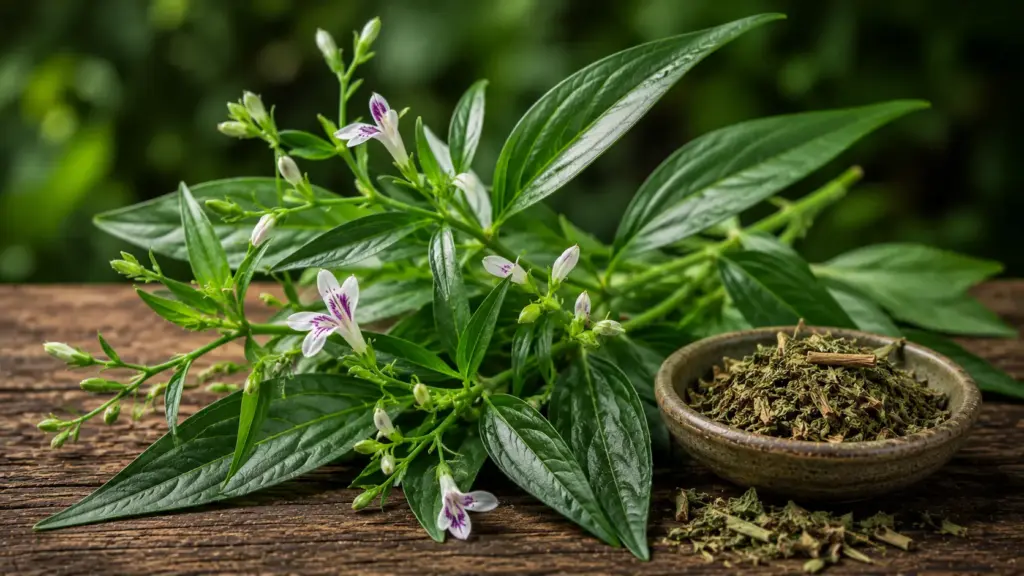
- Morphology: An annual erect herb with slender four-angled stems, lanceolate leaves, and small white flowers with purple spots.
- Plant Part Used: Leaves (primary), Stems, and Roots.
- Analytical Markers: Authenticated using HPLC and HPTLC for signature lactones andrographolide, neoandrographolide, and 14-deoxyandrographolide.
Dosage and Safety
- Dosage: Effective clinical oral doses range from 60 mg andrographolide three times daily to 6 g of raw leaf powder.
- Side Effects: Generally safe; rare mild side effects include diarrhea, transient skin rash, and loss of appetite.
- Toxicity: LD50 of alcoholic extract is > 5000 mg/kg; no-observed-adverse-effect level (NOAEL) is 900 mg/kg.
- Drug Interactions: Potently inhibits CYP3A4 and CYP2C9, potentially interacting with Warfarin, Theophylline, and Glipizide.
- Classification: Safe (standard doses); Caution (Strictly Avoid during pregnancy and by those on blood-thinning medications).
FAQs
- Does Andrographis help with the common cold? Yes, clinical trials show it significantly reduces symptoms like sore throat and cough, especially when taken within 72 hours of onset.
- Is it safe to take Andrographis long-term? Animal studies suggest 12-month use is safe, but human clinical data on duration over 4 months is limited; monitor liver markers.
- Why is it called the “King of Bitters”? It contains high levels of andrographolide, one of the bitterest substances known in the botanical world, used to stimulate digestion.
- Can I use Andrographis for COVID-19? While it inhibits viral entry and reduces inflammation in early stages, it should be used as an adjuvant rather than a primary treatment.
- Does it interact with my blood pressure medicine? Yes, it has a natural hypotensive effect and may lower blood pressure too much if combined with existing antihypertensives.
- Can I take Andrographis while pregnant? No. Traditional and modern data show anti-implantation and potential teratogenic risks that can terminate a pregnancy.
- Is Andrographis good for the liver? Yes, it is a potent hepatoprotective herb that restores liver enzymes and protects against toxins like alcohol and heavy metals.
- How long does it take for Andrographis to work? Acute respiratory symptom relief is usually felt within 2 to 5 days of consistent use at high doses.
- Can it help with memory loss? Yes, by inhibiting acetylcholinesterase and reducing neuroinflammation, it is shown to reverse scopolamine-induced cognitive deficits.
- Does Andrographis affect male fertility? Yes, research indicates it can cause a reversible reduction in sperm count and testosterone; it is studied as a potential natural male contraceptive.
- Is Andrographis better as a powder or extract? Standardized extracts (e.g., 30% andrographolides) are preferred for clinical results as they ensure consistent delivery of bioactive compounds.
- Can it be used for joint pain? Yes, its ability to inhibit NF-kappaB and inflammatory cytokines makes it effective for managing rheumatoid arthritis and gout.
- Does it cause any stomach issues? While it is gastroprotective, some individuals may experience mild diarrhea or loss of appetite at very high doses.
- Is Andrographis safe for children? Yes, clinical trials in children (ages 4-11) for URTIs have shown it to be safe and effective at adjusted pediatric dosages.
- Does it help with skin aging? Yes, topical use promotes epidermal stemness and niche stability, protecting the skin barrier from photo-damage and photo-aging.
References
- Chakravarti, R. N. and D. Chakravarti (1951). Ind Med Gaz 86(3): 96-97.
- Handa, S. S. and A. Sharma (1990). Indian J Med Res 92: 276-283.
- Burgos, R. A., et al. (1997). J Ethnopharmacol 58(3): 219-224.
- Coon, J. T. and E. Ernst (2004). Planta Med 70(4): 293-298. PubMed: 15095142
- Saxena, R. C., et al. (2010). Phytomedicine 17(3-4): 178-185. DOI: 10.1016/j.phymed.2009.12.001
- Bertoglio, J. C., et al. (2016). BMC Neurol 16: 77. DOI: 10.1186/s12883-016-0595-3
- Nayak, A. G., et al. (2022). 3 Biotech 12(11): 310. DOI: 10.1007/s13205-022-03367-2
- Huang, H., et al. (2025). Plant J 123(3): e70419. DOI: 10.1111/tpj.17041
Jump to: Benefits | Phytochemistry | Dosage | FAQs