
Brahmi (Bacopa monnieri): 15+ Science-Backed Benefits for Memory, Focus & Brain Health
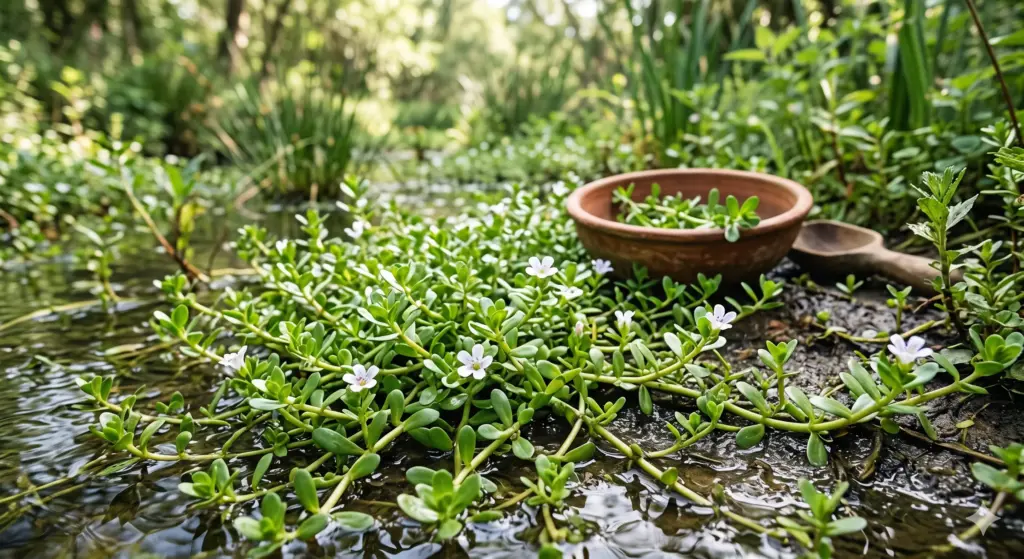
Table of Contents
Quick Summary
Bacopa monnieri (L.) Pennell, universally known as Brahmi or Water Hyssop, is a perennial succulent herb belonging to the Scrophulariaceae (and recently Plantaginaceae) family. Indigenous to the wetlands of the Indian subcontinent, it has been a cornerstone of Ayurvedic medicine for over 3,000 years, classified as a premier Medhya Rasayana (intellect rejuvenator). Modern scientific evidence validates its role as a potent nootropic and neuroprotective agent, primarily driven by its unique reservoir of bacosides (triterpenoid saponins). It is clinically celebrated for enhancing memory retention, reducing cortisol-mediated stress, and protecting neurons from oxidative toxicity. Commonly consumed as a standardized extract, leaf powder (Churna), or herbal tea, it maintains an excellent safety profile with high therapeutic indices. However, a critical safety note indicates potential drug-herb interactions with muscarinic agonists and possible reduced fertility in males, requiring clinical supervision.
Key Therapeutic Benefits
- Enhancement of Delayed Recall and Memory Retention Bacopa monnieri significantly improves the retention of new information by decreasing the rate of forgetting. Clinical trials in elderly populations demonstrate enhanced Rey Auditory Verbal Learning Test (AVLT) scores, specifically in delayed word recall performance. It facilitates synaptic communication and strengthens neural circuitry required for long-term memory consolidation. (Calabrese, 2008; Roodenrys, 2002; Aguiar, 2013)
- Molecular Inhibition of BACE1 for Alzheimer’s Therapy Bioactive bacopasides serve as natural inhibitors of the BACE1 enzyme, which initiates the production of toxic amyloid-beta plaques. It effectively prevents amyloid-beta(42) aggregation and clears existing neurofibrillary tangles by modulating GSK-3beta signaling. This targeted action prevents the pathological cascade that leads to cognitive decline and erratic behavior. (Ahmad, 2025; Sangeet, 2025; Dubey, 2019)
- Clinical Management of Pediatric ADHD Symptoms Standardized extracts (e.g., BacoMind) reduce symptoms of Attention-Deficit Hyperactivity Disorder in children aged 6 to 12 years. It significantly alleviates restlessness, learning problems, and impulsivity by improving self-control and attention spans. The treatment is well-tolerated, providing a natural alternative to conventional psychostimulants with fewer side effects. (Dave, 2014; Walker, 2025; Kean, 2022)
- Reversal of Positive and Negative Symptoms in Schizophrenia Phytochemicals in Brahmi reverse cognitive and behavioral deficits in schizophrenia models by modulating the glutamatergic and GABAergic pathways. It increases the density of VGLUT1 and VGLUT2 transporters in the prefrontal cortex and hippocampus, restoring reality perception. This neuro-pharmacological benefit helps maintain neuronal density and slows acetylcholinesterase activity. (Alharbi, 2022; Piyabhan, 2013; Ayilara, 2025)
- Nitric Oxide-Mediated Increase in Cerebral Blood Flow Chronic administration of Bacopa monnieri induces vasodilation of the cerebral arteries, increasing cerebral blood flow (CBF) by approximately 25%. This mechanism is independent of systemic blood pressure and is mediated via the nitric oxide (NO) pathway. Improved hemodynamics ensure optimal oxygen and nutrient delivery to the brain, accounting for its profound nootropic effects. (Kamkaew, 2013; Peth-Nui, 2012; Aguiar, 2013)
- Neuroprotective Rescue in Autism Spectrum Disorder (ASD) Bacopa monnieri extract ameliorates social deficits and repetitive behaviors in valproic acid-induced autism models. It works by down-regulating the expression of AMPA receptors in the prefrontal cortex and hippocampus while reducing neuroinflammation. Luteolin and apigenin within the plant act as AMPA receptor antagonists, supporting its potential for managing ASD symptoms. (Abhishek, 2022; Sanyal, 2022; Indika, 2025)
- Adaptive Reduction of Salivary Cortisol and Stress Acute and chronic supplementation reduces self-reported stress reactivity and mental fatigue during cognitively demanding tasks. It functions as an adaptogen by lowering salivary cortisol levels and stabilizing mood following multi-tasking framework stressors. This physiological mechanism helps the body cope with adverse environmental conditions and prevents burnout. (Benson, 2014; Walker, 2025; Hazra, 2017)
- Prevention of Glutamate-Induced Excitotoxicity Hexane extracts of the plant protect hippocampal neurons from glutamate toxicity by reducing reactive oxygen species (ROS) production. It prevents mitochondrial and ER stress, effectively increasing cellular longevity and preserving the structural integrity of the brain. This “nerve-shielding” effect is critical for preventing neurodegeneration and brain injuries. (Brimson, 2020; Sharma, 2022; Limpeanchob, 2008)
- Dopaminergic Protection in Parkinson’s Models Bacopa monnieri prevents the selective death of dopaminergic neurons by inhibiting the aggregation of alpha-synuclein. It restores depleted dopamine levels in the striatum and enhances levels of glutathione and antioxidant vitamins in the brain. Regular administration improves motor coordination and reduces bradykinesia and tremors. (Goyal, 2022; Singh, 2021; Hosamani, 2016)
- Selective Apoptosis in Hepatocellular Carcinoma (HCC) Ethanolic extracts exert potent anti-cancer effects by inducing caspase-mediated apoptosis in HepG2 cells. It inhibits cell viability and colony formation while downregulating pro-inflammatory markers like TNF-alpha and iNOS. High concentrations of total phenolics and tannins provide a strong antioxidant potential that treats liver damage associated with malignancy. (Altaf, 2025; Sadaqat, 2023; Ghosh, 2021)
- Amelioration of Acetic Acid-Induced Ulcerative Colitis Standardized extracts and saponin-rich fractions significantly attenuate colonic inflammation and reduce myeloperoxidase (MPO) levels. It protects the colonic mucus barrier by inhibiting the NF-kappaB signaling pathway and restoring redox balance. This prevents the macroscopic mucosal damage and bleeding associated with chronic Ulcerative Colitis. (Devi, 2024; Williams, 2014; Costantini, 2023)
- Antihyperglycemic Activity via Alpha-Glucosidase Inhibition Bacopa monnieri juice and its bioactive bacosine significantly lower blood glucose levels by inhibiting the alpha-glucosidase enzyme. It mimics insulin action by increasing peripheral glucose utilization in the diaphragm and restoring beta-cell functionality. Regular consumption helps manage Type 2 Diabetes and prevents the elevation of glycosylated hemoglobin. (Faisal, 2022; Jana, 2025; Ghosh, 2011)
- Abrogation of Alcohol Abstinence-Induced Anxiety Ethanolic extracts alleviate anxiety-like behavior escalated during alcohol withdrawal by regulating GABA(A) receptor gene expression. it reverses the downregulation of Gabra1 and Gabra4 subunits in the hippocampus and amygdala. Furthermore, it normalizes liver biomarkers (ALT, AST) elevated during chronic alcohol ingestion. (Gupta, 2019; Shahid, 2017; Rauf, 2012)
- Antagonism of Cisplatin-Induced Emesis (Nausea) N-butanol fractions of Brahmi effectively reduce chemotherapy-induced retching and vomiting by modulating serotonin and dopamine upsurges. It acts on the area postrema and brain stem to stabilize central neurotransmitters during emetogenic treatment. Its anti-emetic potency is comparable to the standard pharmaceutical agent palonosetron. (Emran, 2015; Ullah, 2017; Nemetchek, 2017)
- Acceleration of Peripheral Nerve Regeneration Electrofortified scaffolds functionalized with Bacopa monnieri promote axonal development and myelination following sciatic nerve injury. Bioactive bacosides enhance the survival of neural stem cells and mitigate oxidative stress at the crush site. This dual-functional approach improves motor-sensory function recovery significantly faster than traditional autografts. (Ghosh, 2025; Sanyal, 2022; Hoveizi, 2025)
- Dermal Wound Contraction via Integrin Activation Topical application of Brahmi extracts enhances the migration and proliferation of human dermal fibroblasts. It upregulates TGF-beta1 expression and modulates focal adhesions through alpha5beta1 integrin activation. This facilitates rapid wound closure and collagen fiber cross-linking in traumatic and surgical dermal lesions. (Costantini, 2023; Zirmire, 2024; Sharath, 2010)
- Amelioration of Cypermethrin-Induced Hypothyroidism Bacopa monnieri extract mitigates the thyroid toxicity caused by pyrethroid pesticides like cypermethrin. It restores serum levels of T3 and T4 and normalizes TSH levels by regulating TSHr and THR beta-1 receptor expression. This protects the thyroid follicles from vacuolation and epithelial flattening induced by oxidative assault. (Chourasiya, 2025; Shinomol, 2012; Ahire, 2018)
- Nephroprotective Defense in Diabetic Nephropathy Treatment with hydroalcoholic extracts prevents mesangial expansion and glomerular basement membrane thickening in the kidneys. It reduces serum urea and creatinine while inhibiting the formation of Advanced Glycation End Products (AGEs). By increasing SIRT1/2 expression, it preserves renal architecture from damage induced by chronic hyperglycemia. (Kishore, 2016; Pandey, 2015; Boronetti, 2023)
- Stabilization of Transthyretin for Amyloidosis Inhibition Bacopa monnieri extract mitigates the dissociation of folded transthyretin (TTR) tetramers into monomers, preventing TTR amyloidosis. It binds at the thyroxine-binding site, enhancing the quaternary structural stability of the native protein. This represents a promising therapeutic resource for preventing debilitating and fatal misfolding disorders. (Eze, 2019; Varma, 2020; Jeyasri, 2020)
- Restoration of Neurogenesis in Hepatic Encephalopathy Standardized extracts (e.g., CDRI-08) restore hippocampal adult neurogenesis in subjects with chronic liver failure. It recovers the levels of BDNF-TrkB signaling players and stimulates the proliferation of neuronal stem cells (NSCs). This molecular modulation reverses the memory impairment and cerebellar dysfunction associated with Hepatic Encephalopathy. (Mallick, 2024; Sivasangari, 2020; Mondal, 2015)
- Mast Cell Stabilization and Anti-Allergic Activity Methanolic fractions of Brahmi exhibit potent mast cell stabilizing activity, comparable to disodium cromoglycate. It significantly inhibits the release of histamine and pro-inflammatory cytokines like IL-1beta from activated immune cells. This polarization toward a regulatory immune phenotype makes it effective for managing acute pain and systemic inflammation. (Dinh, 2024; Samiulla, 2001; Priyanka, 2013)
- Broad-Spectrum Antifungal Action Against Alternaria Phytochemicals like wogonin and oroxindin from the plant display significant growth inhibition against Alternaria alternata and Fusarium fusiformis. It disrupts fungal cell wall integrity and inhibits root growth germination of wheat seeds by 100%. This antimicrobial potential is enhanced when extracts are elicited through biotechnological hairy root propagation. (Chaudhuri, 2004; Sanyal, 2022; Jasim, 2016)
- Integrative Clinical Management of Premenstrual Syndrome (PMS) Brahmi tablets used as an adjunct to Cognitive Behavioral Therapy (CBT) significantly reduce the severity of physical and psychological PMS symptoms. It helps support emotional balance and reduces functional disability during the luteal phase. High-dose administration improves quality of life scores and reduces menopause-related anxiety. (Khan, 2025; Walker, 2025; Gosciniak, 2025)
- Amelioration of Lead-Induced Hematological Toxicity Bacopa monnieri extract mitigates the blood poisoning effects of lead acetate by restoring hemoglobin (Hb) and red blood cell counts. It is more effective than standard synthetic antioxidants in reversing MCV and MCH alterations. This potent antioxidant profile renders it a therapeutic agent for individuals in heavy metal endemic regions. (Mishra, 2006; Shah, 2025; Srivastava, 2024)
- Bactericidal Control of Pathogenic Staphylococcus aureus Ethanolic leaf extracts exhibit remarkable minimum inhibitory concentrations (MIC) against clinical isolates of S. aureus. Bioactive luteolin has been identified as a potent antimicrobial compound with high specificity toward the DNA gyrase binding site. It disrupts bacterial biofilm formation, making it a viable candidate for treating multidrug-resistant urinary tract infections. (Emran, 2015; Shahid, 2017; Kumar, 2025)
How It Works (Phytochemistry)
- Bacoside A3 → Binding at alpha-glucosidase and TAS2R14 receptors → Antidiabetic & Taste Perception.
- Bacopaside I → P-Akt mediated activation of Nrf2 axis → Hepatoprotective & Neuroprotective.
- Bacopaside II → Selective blockade of Aquaporin-1 (AQP1) water channels → Anti-metastatic (Colon Cancer).
- Oroxindin → High-affinity binding to MARK4 catalytic pocket → Alzheimer’s Tau Suppression.
- Bacosine → Increase in peripheral glucose consumption → Insulin-like Activity.
- Stigmasterol → Inhibition of cerebroside sulfotransferase (CST) → Leukodystrophy Management.
- Apigenin → Competitive antagonism at AMPA receptor sites → Autism & Schizophrenia Support
Traditional Knowledge
- Ayurveda: Revered as Brahmi (after Brahma, the creator), it is the premier Medhya Rasayana used to sharpen intellect, treat Apasmara (epilepsy), and Unmada (insanity). It is used to balance all three doshas, but primarily Vata and Pitta.
- Unani: Employed as a nerve tonic and sedative to treat insomnia and chronic mental fatigue.
- Chinese Medicine: Utilized for its effect on the nervous, digestive, and circulatory systems to improve immunity and exercise capacity.
- Folk Medicine: Traditionally used as a crushed paste for traumatic wounds and as a dietary vegetable in Vietnam to improve intelligence.
Usage and Preparations
- Standardized Extract (CDRI-08 / BacoMind): Administered at 225 mg to 450 mg daily for ADHD, memory, and Parkinson’s.
- Leaf Churna (Powder): Taken at 1% to 2% of the diet for oxidative stress modulation and neuroprotection.
- Jal Brahmi Tisane (Herbal Tea): Fortified with pepper or ginger to provide bacoside A (0.036 mg/100ml) for daily cognitive health.
- Ethanolic Root Paste: Topically applied for wound healing and inflammatory skin diseases.
- Transdermal Microneedle Patch: Advanced delivery system under development for bloodless Parkinson’s management.
- Brahmi Vati / Ghrita: Traditional polyherbal formulations used for seizures and cognitive enhancement.
Identity and Authentication
- Botanical Name: Bacopa monnieri (L.) Pennell.
- Family: Scrophulariaceae (traditionally) / Plantaginaceae.
- Common Names: Brahmi, Water Hyssop, Aindri, Herb of Grace, Indian Pennywort (often confused with Centella asiatica).
- Morphology: A creeping, succulent perennial with small, oblanceolate, fleshy leaves and actinomorphic white or pale-blue flowers.
- Analytical Markers: Authenticated using HPLC-ELSD and LC-ESI-QTOF-MS for bacoside A, bacopaside I, and apigenin.
- Microscopy: Distinguished by gandular trichomes and wavy epidermal cells (compared to Centella asiatica).
- Genetics: Authenticated via the Ycf1 chloroplast gene barcode.
Dosage and Safety
- Dosage: Effective clinical oral doses range from 300 mg to 600 mg daily of standardized extract for 12 weeks.
- Side Effects: Generally well-tolerated; mild gastrointestinal complaints (nausea, abdominal cramps, increased stool frequency) and headaches are reported.
- Toxicity: LD50 of enriched extract is 2,400 mg/kg in rats; no-observed-adverse-effect level (NOAEL) is 500 mg/kg.
- Drug Interactions: Interacts with Cevimeline (muscarinic agonist), causing suspected cholinergic toxicity. It inhibits CYP3A4, CYP2C9, and CYP2C19, potentially altering the half-life of many conventional drugs.
- Classification: Safe (culinary/standard doses); Caution (during pregnancy, breastfeeding, and for those on muscarinic agonists).
FAQs
- Does Bacopa monnieri really work for memory? Yes, clinical trials confirm it improves delayed word recall and memory retention by slowing the rate of forgetting after 12 weeks of use.
- How long does it take for Brahmi to work? While some acute effects on attention are seen within 1 to 2 hours, significant cognitive and anti-stress benefits typically require 12 weeks of daily intake.
- Is Brahmi safe to take during pregnancy? No. Data on its safety during pregnancy is inadequate, and some studies suggest potential cognitive decline in offspring or interference with development.
- Can I take Bacopa with my ADHD medication? Standardized extracts are effective for ADHD, but you must consult a doctor before combining it with stimulants due to potential CYP450 enzyme inhibition.
- Does it interact with heart or thyroid medication? Yes. It has been shown to interact with thyroid markers and may potentiate the effects of drugs that affect the cholinergic system.
- Will Bacopa help with weight loss? While it has anti-obesity potential in models by reducing neutral lipids, it is not primarily used as a weight-loss supplement.
- Does it cause liver damage? No. Clinical data has not linked Bacopa to liver injury; in fact, it is frequently shown to be hepatoprotective against drug toxins.
- Is it better to take Bacopa in the morning or night? It can be taken at either time, but its anxiolytic (calming) effect may be beneficial in the evening for those with insomnia.
- What is the difference between Brahmi and Centella asiatica? Though both are called “Brahmi,” they are different species. Bacopa is a Scrophulariaceae member with small fleshy leaves, while Centella has kidney-shaped leaves and belongs to Apiaceae.
- Does Bacopa affect male fertility? Animal studies show a reduction in fertility (sperm count/motility) in rats, though libido remains unaffected; this effect is likely reversible.
References
- Roodenrys, S., et al. (2002). Neuropsychopharmacology 27(2): 279-281.
- Calabrese, C., et al. (2008). J Altern Complement Med 14(6): 707-713.
- Limpeanchob, N., et al. (2008). J Ethnopharmacol 120(1): 112-117.
- Morgan, A. and J. Stevens (2010). J Altern Complement Med 16(7): 753-759.
- Aguiar, S. and T. Borowski (2013). Rejuvenation Res 16(4): 313-326.
- Ullah, I., et al. (2017). J Pharmacol Sci 133(4): 232-239.
- Abhishek, M., et al. (2022). J Ethnopharmacol 293: 115199. DOI: 10.1016/j.jep.2022.115199
- Altaf, A., et al. (2025). PLoS One 20(4): e0321445. DOI: 10.1371/journal.pone.0321445
- Ayilara, G. O. and B. V. Owoyele (2025). Nutr Neurosci 28(7): 788-795. DOI: 10.1080/1028415X.2024.2335128
- Ahmad, S. R., et al. (2025). J Mol Graph Model 140: 109135. DOI: 10.1016/j.jmgm.2024.109135
Jump to: Benefits | Phytochemistry | Dosage | FAQs