
Aloe Vera: 18+ Science-Backed Benefits for Skin, Immunity, Gut & More
Advertisement — Leaderboard (728x90)
Table of Contents
Advertisement — Leaderboard (728x90)
Quick Summary
Aloe vera (L.) Burm.f. (syn. Aloe barbadensis Miller), universally known as the “Plant of Immortality” or Ghritkumari, is a succulent plant belonging to the Amaryllidaceae (formerly Liliaceae or Asphodelaceae) family, native to the Arabian Peninsula. Celebrated for over 5,000 years in Ayurvedic, Chinese, and Unani traditional medicine, it is a premier Rasayana utilized for its cooling and rejuvenating properties. Modern scientific evidence validates its status as a multi-functional therapeutic agent possessing potent anti-inflammatory, antihyperglycemic, antimicrobial, and wound-healing activities. These effects are primarily driven by a unique reservoir of bioactives, including the polysaccharide acemannan, and anthraquinones like aloin and aloe-emodin. Clinically, it is utilized to manage metabolic syndrome, accelerate burn recovery, and support periodontal health. While generally recognized as safe, oral forms should be used with caution due to rare instances of liver injury, and it should be avoided by patients on blood thinners like warfarin.
Key Therapeutic Benefits
- Normalization of Postprandial Glycemia in Type 2 Diabetes Aloe vera leaf gel powder significantly reduces fasting blood glucose and HbA1c levels in diabetic subjects. It works by inhibiting starch-digesting enzymes like alpha-amylase and alpha-glucosidase, thereby slowing glucose absorption in the small intestine. (Araya-Quintanilla, 2021; Dick, 2016; Huseini, 2012; Suksomboon, 2016)
- Clinical Regulation of Triglycerides and LDL-Cholesterol Daily supplementation with Aloe vera improves the systemic atherogenic index by significantly reducing total cholesterol, LDL-C, and triglycerides. It elevates beneficial HDL-C levels and modulates hepatic enzymes involved in lipid metabolism to prevent cardiovascular complications. (Alinejad-Mofrad, 2015; Huseini, 2012; Rajasekaran, 2006; Zhang, 2016)
- Gastroprotective Amelioration of Active Ulcerative Colitis Oral administration of Aloe vera gel induces significant clinical and histological remission in patients with mildly to moderately active ulcerative colitis. It works by potentiating the colon mucus barrier and suppressing pro-inflammatory mediators like IL-6, IL-1beta, and TNF-alpha. (Langmead, 2004; Babalola, 2022; Bahrami, 2020; Shi, 2021)
- Acceleration of Dermal Wound Contraction and Healing Topical and oral applications significantly increase the rate of wound contraction and re-epithelialization by upregulating TGF-beta1 and VEGF. It enhances collagen turnover and cross-linking, which ultimately improves the tensile strength of the newly formed tissue. (Ali, 2021; Chithra, 1998; Oryan, 2016; Wahedi, 2017)
- Potent Healing Efficacy in Second-Degree Burn Injuries Aloe vera gel is significantly more effective than silver sulfadiazine in reducing the duration of wound healing and relieving pain in second-degree burns. It facilitates rapid epithelialization and restores cutaneous microcirculation by inhibiting inflammatory leukocyte adhesion. (Huang, 2024; Levin, 2022; Sharma, 2022; Somboonwong, 2000)
- Neuroprotective Shielding Against Protein Fibrillation Bioactive components and the anthraquinone aloin promote the structural stability of proteins and inhibit the formation of amyloid fibrils. It provides significant protection to neuronal cells against oxidative toxicity, suggesting a potential therapeutic role in Alzheimer’s and Parkinson’s diseases. (Jain, 2025; Guven, 2016; Rathor, 2014; Yuksel, 2016)
- Bactericidal Defense Against Multi-Drug Resistant MRSA Ethanolic and aqueous extracts demonstrate robust antimicrobial action against Methicillin-resistant Staphylococcus aureus (MRSA). It disrupts bacterial cell wall integrity and inhibits biofilm formation, making it an effective agent for preventing persistent infections. (Arbab, 2021; Gyamerah, 2025; Haque, 2019; Saddiq, 2018)
- Antifungal Suppression of MDR Candida Germ Tube Formation Crude leaf extracts and the protein fraction of Aloe vera inhibit the growth and germ tube formation of Candida albicans. It is particularly effective against multi-drug resistant (MDR) strains, providing a promising non-toxic alternative for managing mucosal fungal infections. (Bernardes, 2012; Das, 2011; Nabila, 2020; Saniasiaya, 2017)
- Periodontal Improvement of Gingival and Plaque Indices Mouthwashes and dentifrices containing Aloe vera are equally effective as chlorhexidine in reducing plaque accumulation and gingival inflammation. As an adjunct to scaling and root planing, it significantly improves probing pocket depth and clinical attachment levels. (Ajmera, 2013; Al-Maweri, 2020; Ashifa, 2025; Vangipuram, 2016)
- Alleviation of Pain and Healing of Minor Aphthous Stomatitis Topical application of Aloe vera 2% oral gel significantly decreases the duration of complete healing and the pain score of recurrent aphthous ulcers. It is superior to placebo and comparable to standard pharmaceutical pastes like amlexanox in reducing ulcer size and erythema. (Babaee, 2012; Bhalang, 2013; Tariq, 2024; Yousef, 2022)
- Adjuvant Therapeutic Regression of Oral Submucous Fibrosis Aloe vera gel, when combined with oral physiotherapy, significantly improves mouth opening and reduces the burning sensation in patients with Oral Submucous Fibrosis (OSMF). Its efficacy is comparable to standard medicinal treatments using intralesional injections of hyaluronidase and dexamethasone. (Alam, 2013; Anuradha, 2017; Bohra, 2021; Sudarshan, 2012)
- Management of Symptomatic Outbreaks in Oral Lichen Planus Topical application of Aloe vera gel is statistically significantly more effective than placebo and comparable to triamcinolone acetonide in inducing clinical improvement of Oral Lichen Planus (OLP). It enhances the total quality of life score by reducing pain and lesion severity without the adverse effects associated with corticosteroids. (Ali, 2017; Bhatt, 2022; Choonhakarn, 2008; Mansourian, 2011)
- Prevention of Chemotherapy-Induced Oral Mucositis in Children In pediatric patients with acute lymphoblastic leukemia, topical Aloe vera solution significantly reduces the severity and occurrence of chemotherapy-induced oral mucositis (CIOM). It begins managing the degrees of severe mucositis sooner than traditional agents like sodium bicarbonate, improving the quality of life during cancer treatment. (Alkhouli, 2021; Cassia-Santos, 2025; Mansouri, 2016)
- Prophylactic Reduction of Radiation-Induced Dermatitis Severity Prophylactic use of Aloe vera-based creams is effective in delaying the incidence and reducing the average grade of ionizing radiation-induced dermatitis. It significantly reduces the intensity of moderate to severe erythematous skin reactions and instances of moist desquamation in cancer patients undergoing radiotherapy. (Haddad, 2013; Rao, 2017; Tungkasamit, 2022; Wang, 2022)
- Systemic Anti-inflammatory Suppression of NF-kappaB Signaling Aloe vera leaf extracts exert potent anti-inflammatory effects by inhibiting the NF-kappaB, p38, and JNK signaling pathways. This results in a dose-dependent reduction of pro-inflammatory cytokines, including TNF-alpha, IL-6, and IL-1beta, in human macrophages. (Altincik, 2014; Budai, 2013; Habeeb, 2007; Vijayalakshmi, 2012)
- Immunomodulatory Stimulation of NK and T-Cell Activity Polysaccharide fractions (e.g., Aloeride and PAC-I) act as potent immunostimulants, increasing the counts of Natural Killer (NK) cells and inducing macrophage activation. It enhances antibody production and cell-mediated immunity, providing a better defense against viral infections and tumors. (Im, 2010; Leung, 2004; Liu, 2006; Pugh, 2001)
- Hepatoprotective Shielding via Nrf2 Signaling Activation Pre-treatment with Aloe vera gel extract shields the liver from damage induced by paracetamol, carbon tetrachloride, and heavy metals. It normalizes serum transaminases (ALT, AST) and restores endogenous antioxidant enzymes by activating the Nrf2 signaling cascade. (Anilakumar, 2010; Hassan, 2025; Nahar, 2013; Sehitoglu, 2019)
- Nephroprotective Defense Against Diabetic Nephropathy Oral administration of whole leaf extract prevents the development of diabetic nephropathy by reducing renal oxidative stress and lipid alterations. It restores renal function parameters, such as BUN and creatinine, and ameliorates pyknotic nuclei in renal epithelial cells. (Arora, 2019; Bolkent, 2004; Baradaran, 2014; Iftkhar, 2015)
- Osteoconductive Promotion of Bone Tissue Regeneration The polysaccharide acemannan stimulates the proliferation and differentiation of bone marrow stromal cells (BMSCs) into osteoblasts. It significantly increases bone mineral density and facilitates faster bone healing in mandibular and tibial defect models. (Bai, 2023; Boonyagul, 2014; Jittapiromsak, 2010; Mehrabani, 2024)
- Reproductive Protection of Ovarian Follicles and Stromal Cells Aloe vera extract protects ovarian follicles and stromal density against degeneration induced by chemotherapy drugs like doxorubicin. It enhances the expression of mRNA for antioxidant enzymes (SOD, CAT) and modulates the inflammatory status of ovarian tissues to preserve fertility. (Assis, 2025; Azevedo, 2022; de Assis, 2025)
- Selective Cytotoxic Apoptosis in Malignant Cancer Cells Aloe vera extracts and aloe-emodin induce programmed cell death in breast, lung, colorectal, and leukemia cancer lines. It selectively targets malignant cells by decreasing ATP concentration and enhancing ROS production while sparing healthy fibroblasts. (Majumder, 2020; Tong, 2021; Xie, 2021; Lee, 2000)
- Anti-aging Mitigation of UVB-Induced Facial Wrinkles Dietary intake of aloe sterols (lophenol and cycloartanol) significantly reduces the depth of facial wrinkles and improves arm skin hydration. It stimulates the production of collagen and hyaluronic acid in human dermal fibroblasts while inhibiting the expression of collagen-degrading MMPs. (Cho, 2009; Tanaka, 2015; Yao, 2016; Saito, 2016)
- Cardiovascular Defense and Improvement in Systolic Heart Failure Oral supplementation with Aloe vera capsules significantly improves the quality of life and NYHA functional class in patients with systolic heart failure. It alleviates diabetes-induced cardiotoxicity by reducing oxidative stress markers (TBARS) and maintaining the activity of cellular antioxidants in heart tissue. (Sabbaghzadegan, 2023; Jain, 2010; Kaithwas, 2014; Kooshki, 2024)
- Gastroprotective Mitigation of Indomethacin-Induced Gastropathy Aloe vera attenuates gastric injury and erosion scores by reducing mucosal oxidative stress and inflammation (inhibiting IL-18). It inhibits gastric acid secretion and is endowed with anti-secretory activity, protecting the mucosa against offensive agents like alcohol and NSAIDs. (Mohamed, 2024; Werawatganon, 2014; Park, 2011; Yusuf, 2004)
- Prebiotic Promotion of Probiotic Short-Chain Fatty Acids Polysaccharides in Aloe vera (fructans and acemannan) selectively stimulate the growth of beneficial gut bacteria like Bifidobacterium and Lactobacillus. This colonic fermentation results in an increased production of short-chain fatty acids (SCFAs), which support overall gastrointestinal health and satiety. (Quezada, 2017; Gullon, 2015; Tornero-Martinez, 2019; Pogribna, 2008)
How It Works (Phytochemistry)
- Acemannan → Activation of macrophage cytokine production and stimulation of BMSC differentiation → Immunomodulatory & Osteogenic.
- Aloin (Barbaloin) → Competitive inhibition of alpha-glucosidase and reduction of protein fibrillation → Antidiabetic & Neuroprotective.
- Aloe-emodin → Induction of mitochondrial dysfunction and caspase-mediated apoptosis → Anticancer.
- Lophenol & Cycloartanol → Ligands for PPAR receptors that reduce visceral fat mass and glucose levels → Antiobesity & Antidiabetic.
- Isoorientin → Upregulation of epidermal involucrin and hyaluronan synthesis → Skin Moisturization.
- Aloesin (Aloeresin B) → Mixed-type inhibition of tyrosinase enzyme activity → Skin Depigmentation.
- Gallic Acid → Inhibition of MMP-3 and stimulation of insulin secretion → Wound Healing & Antidiabetic.
Traditional Knowledge
Aloe vera is a cornerstone of global healing systems for its cooling, detoxifying, and rejuvenating nature:
- Ayurveda: Known as Ghritkumari or Ela, it is classified as a premier Rasayana and Bhedaniya (laxative). It is traditionally used to treat Prameha (diabetes), Kushtha (skin diseases), and to balance Pitta and Kapha doshas.
- Chinese Medicine: Known as Lu Hui, it is utilized for its heat-clearing and fire-purging properties, specifically for treating constipation, parasitic infestations, and childhood convulsions.
- Unani: Referred to as Musabbar, it is valued as a purgative, appetizer, and a remedy for liver and spleen obstructions and chronic fevers.
- Ethnomedicine: Historically used in Mexico and the Caribbean for its anti-inflammatory effects on arthritis and burns, and in Uganda for management of malaria and abdominal pains.
Usage and Preparations
- Leaf Gel (Fillet): Consumed orally as juice (30-100 mL/day) for managing diabetes and gastrointestinal inflammation.
- Leaf Powder (Churna): Taken at 100-200 mg daily for regulating lipid profiles and metabolic syndrome.
- Topical Gel/Cream: Applied at concentrations of 0.5-80% for burns, psoriasis, and chronic ulcers.
- Oral Mucoadhesive Gel: Formulated with 0.5% w/w for management of aphthous stomatitis.
- Kumariasava: A traditional Ayurvedic fermented liquid containing Aloe vera used for digestive and blood disorders.
- Denture Disinfectant: 100% gel or ethanolic extract used for soaking to prevent Candida adherence.
Identity and Authentication
- Botanical Name: Aloe vera (L.) Burm.f.
- Family: Amaryllidaceae (Order: Asparagales).
- Common Names: Aloe vera, Gharikumari, Ghrit-kumari, Gwarpatha, Barbados Aloe, Burn Plant, Elephant’s Gall.
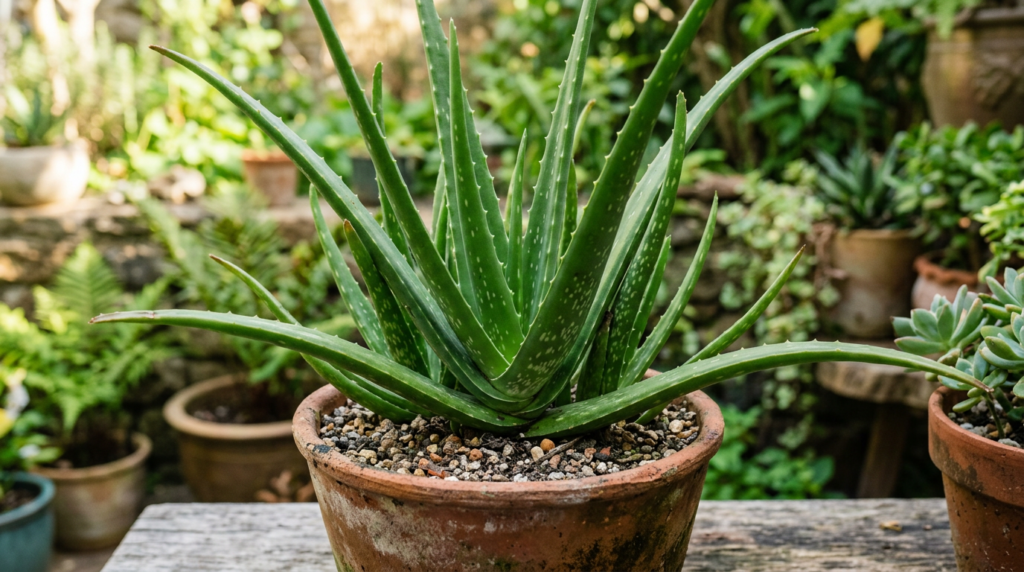
- Morphology: A perennial succulent with large, clear mesophyll cells (up to 1000 µm diameter) and fleshy leaves containing a viscous liquid gel.
- Analytical Markers: Authenticated using 1H NMR and HPLC for acemannan (aloverose), aloin A/B, and aloe-emodin.
- Geographical Fingerprint: Sichuan (China) and South Indian samples show distinct metabolite profiles using LC-HRMS.
Dosage and Safety
- Dosage: Effective clinical oral doses range from 300-600 mg of standardized extract or 30-100 mL of juice daily.
- Side Effects: Generally safe; excessive oral intake may cause diarrhea, abdominal cramps, and electrolyte imbalance.
- Toxicity: Oral NOAEL for purified gel is > 2000 mg/kg/day. However, non-decolorized whole leaf extract is classified as a Group 2B possible carcinogen (in rats only) due to high aloin content.
- Drug Interactions: Potentiates the effects of Metformin (hypoglycemia) and may interact with blood thinners (bleeding risk) and Sevoflurane.
- Classification: Safe (purified gel); Caution (Avoid high medicinal doses in pregnancy and by patients on blood-thinners).
FAQs
- Does Aloe vera really help with weight loss? Yes, clinical studies and animal models show that Aloe sterols reduce visceral fat mass and body weight by stimulating energy expenditure.
- Can I drink Aloe juice for my stomach ulcers? Yes, Aloe vera inhibits gastric acid secretion and mitigates mucosal inflammation, helping to heal lesions caused by alcohol or NSAIDs.
- Is it safe to use Aloe vera during pregnancy? Caution is advised. While food amounts are safe, medicinal doses should be avoided due to potential anti-implantation and teratogenic effects in early development.
- Which is better for my skin: fresh gel or store-bought? Both are effective, but fresh gel ensures the preservation of acemannan structure, whereas store-bought products are often standardized and safer (decolorized).
- How long does it take to see results for diabetes? Clinical trials indicate significant reductions in HbA1c and fasting glucose typically occur after 8 to 12 weeks of daily use.
- Does Aloe vera interact with any medications? Yes, it can potentiate diabetes drugs (lowering blood sugar too much) and may increase bleeding risk if taken with blood thinners.
- Can I use Aloe vera for my dog’s skin? Yes, research shows it increases canine fibroblast migration, but you should consult a vet regarding oral intake.
- Does Aloe vera cause liver damage? There are rare cases of clinically apparent liver injury linked to oral herbal mixtures containing Aloe; monitor liver markers if using long-term.
- Can Aloe help with radiation therapy side effects? Yes, prophylactic application of Aloe-based creams significantly delays and reduces the severity of radiation-induced dermatitis.
- Is Aloe vera a good mouthwash? Yes, clinical trials show it is as effective as chlorhexidine for plaque and gingivitis but with fewer side effects like tooth staining.
References
- Araya-Quintanilla, F., et al. (2021). Diabetes Metab Syndr 15(6): 102292. DOI: 10.1016/j.dsx.2021.102292
- Huseini, H. F., et al. (2012). Planta Med 78(4): 311-316. DOI: 10.1055/s-0031-1298130
- Langmead, L., et al. (2004). Aliment Pharmacol Ther 19(7): 739-747. DOI: 10.1111/j.1365-2036.2004.01902.x
- Tanaka, M., et al. (2015). Clin Cosmet Investig Dermatol 8: 95-104. DOI: 10.2147/CCID.S75408
- Tong, X., et al. (2021). J Ethnopharmacol 280: 114434. DOI: 10.1016/j.jep.2021.114434
- Wahedi, H. M., et al. (2017). Phytomedicine 28: 19-26. DOI: 10.1016/j.phymed.2017.02.006
- Xie, C., et al. (2025). J Evid Based Dent Pract 25(4): 102167. DOI: 10.1016/j.jebdp.2024.102167
Jump to: Benefits | Phytochemistry | Dosage | FAQs