
Saw palmetto (Serenoa repens): 25 Evidence-Based Health Benefits
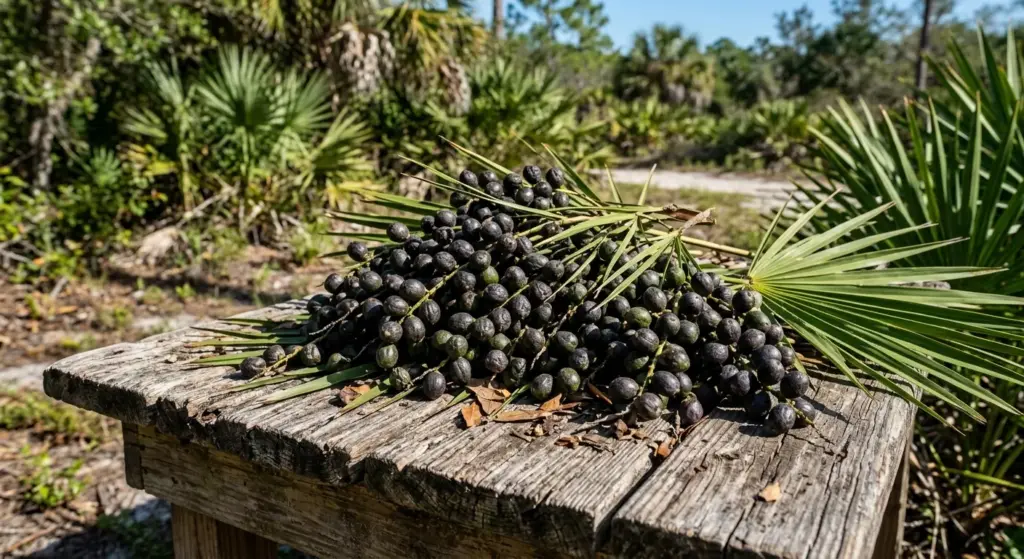
Table of Contents
Quick Summary
Serenoa repens (W. Bartram) Small, universally recognized as Saw Palmetto, is a small, low-shrubby palm native to the Southeastern United States and the West Indies. Belonging to the Arecaceae family, it has been utilized for centuries by Native American Indians for its “tonifying” effect on the genitourinary system. Modern scientific evidence validates its role as a multi-target therapeutic agent possessing potent anti-androgenic, anti-inflammatory, pro-apoptotic, and anti-proliferative activities. These effects are primarily driven by a rich complex of bioactives, including free fatty acids (lauric and oleic acids), phytosterols (beta-sitosterol), and acylglycerides. Clinically, it is celebrated for significantly reducing lower urinary tract symptoms (LUTS) associated with benign prostatic hyperplasia (BPH), improving urinary flow rates, and promoting hair regeneration in androgenetic alopecia. Commonly consumed as hexanic lipidosterolic extracts (Permixon), ethanolic extracts, or standardized capsules, it maintains an excellent safety profile. However, it is classified as Caution for pediatric use, as rare cases of endocrine disruption have been reported in children.
Key Therapeutic Benefits
- Clinical Alleviation of BPH-Related Urinary Symptoms Serenoa repens extract significantly reduces the severity of moderate-to-severe lower urinary tract symptoms in adult male patients. It works by antagonizing androgen receptors and inhibiting the binding of dihydrotestosterone to cytosolic receptors within the prostate. Long-term therapy is effective for stabilizing symptom scores and improving patient quality of life without the side effects of alpha-blockers. (Alcaraz, 2022; Plosker, 1996; Ye, 2019)
- Symptomatic Management of Chronic Prostatitis (CP/CPPS) Administration of standardized extracts leads to a statistically significant improvement in the National Institutes of Health-Chronic Prostatitis Symptom Index (NIH-CPSI) total scores. It functions by reducing the intensity of the inflammatory process in the prostatic tissue and decreasing localized pelvic pain. Significant improvements are typically established within two weeks of the first dose. (Cai, 2016; Zhang, 2021; Lok, 2022)
- Promotion of Terminal Hair Count in Androgenetic Alopecia Oral supplementation with saw palmetto bioactive fatty acids significantly increases terminal hair count in both men and women with thinning hair. It works by inhibiting 5-alpha reductase enzymes (Types I and II) at the hair follicle level, which prevents the conversion of testosterone into hair-thinning dihydrotestosterone. This treatment achieves a substantial reduction in hair shedding over a 90-day period. (Ablon, 2025; Rossi, 2012; Zhu, 2018)
- Reduction of Perioperative Bleeding during TURP Pre-treatment with saw palmetto for at least eight weeks significantly reduces perioperative bleeding during transurethral resection of the prostate (TURP). It works by decreasing the density of blood vessels (microvessel density) in the prostatic stromal and suburethral tissues. This leads to a shorter duration of postoperative catheterization and a decreased need for blood transfusions. (Anceschi, 2010; Pecoraro, 2004; Blair, 2022)
- Growth Arrest and Apoptosis of Human Glioma Cells Bioactive constituents in saw palmetto effectively inhibit the growth of malignant glioma cells and induce apoptosis in a dose-dependent manner. It works by down-regulating the phosphorylated form of STAT3 signaling and increasing the expression of cleaved-PARP and Caspase-3. This molecular targeting restricts tumor proliferation while identifying potential for adjunctive oncology therapies. (Che, 2009; Zhou, 2015; Iguchi, 2001)
- Inhibition of Pro-inflammatory Leukocyte Infiltration Hexanic lipidosterolic extracts impede the attraction and adherence of monocytes and T-cells by downregulating the expression of MCP-1/CCL2 and VCAM-1. This molecular shield protects the prostate from the pervasive inflammatory infiltrates that drive BPH progression. This anti-inflammatory action is more efficient than supercritical carbon dioxide extraction methods. (Latil, 2012; Sirab, 2013; Bernichtein, 2015)
- Selective Relaxation of Prostatic Smooth Muscle The fatty acid components of saw palmetto extract cause significant inhibition of prostatic smooth muscle contractions via a non-specific mechanism. It acts as a natural antispasmodic, complementing the relaxation induced by conventional alpha-blockers to provide rapid symptom relief. This helps alleviate the “dynamic” component of urinary obstruction in patients with an enlarged prostate. (Chua, 2014; Tamalunas, 2022; Governa, 2016)
- Clinically Significant Reduction in Nocturia Frequency Meta-analyses of clinical trials demonstrate that saw palmetto is significantly more effective than placebo in reducing the number of nocturnal voids. It stabilizes the bladder detrusor muscle and reduces nighttime urinary urgency, allowing for more restorative sleep. This benefit is observed in both short-term and long-term (72-week) study designs. (Boyle, 2004; Tacklind, 2012; Novara, 2016)
- Molecular Reinforcement of Hair Follicle Stemness Proprietary fatty acid extracts prolong the anagen phase of the hair cycle and enhance epithelial hair follicle stem cell (eHFSC) niche markers. It works independently of 5-alpha reductase inhibition by modulating pathways integral to hair shaft lipids and matrix keratinocyte proliferation. This reinforcement of stemness suggests potential for treating diverse hair loss disorders beyond androgenetic alopecia. (Bassino, 2019; Broadley, 2025; Namdar, 2025)
- Dual Inhibition of 5-Alpha Reductase Isoenzymes Standardized extracts serve as effective dual inhibitors of both Type I and Type II 5-alpha reductase activity in human prostatic tissue. By blocking the primary enzyme responsible for prostate growth, it significantly reduces the synthesis of dihydrotestosterone within the gland. Unlike synthetic inhibitors, it achieves this without interfering with the cellular capacity to secrete PSA. (Bayne, 1999; Wilt, 2002; Scaglione, 2008)
- Uroflowmetry Improvement and Increased Peak Flow Rate Supplementation with 320 mg daily of USP-verified saw palmetto extract reveals significant increases in the maximum urinary flow rate (Qmax). It facilitates better bladder emptying and reduces post-void residual urine volume by alleviating infravesical obstruction. Patients with mild-to-moderate symptoms report better clinical outcomes established within 12 weeks. (Winograd, 2024; Ye, 2019; Giannakopoulos, 2002)
- Anti-Androgenic Binding to Cellular Steroid Receptors Saw palmetto extract exhibits competitive binding to androgen receptors, effectively displacing dihydrotestosterone in prostatic cells. It also displays anti-estrogenic activity by significantly reducing the concentration of nuclear estrogen receptors in hyperplastic tissue. This multi-site hormonal modulation helps restore cellular homeostasis in the aging prostate. (Habib, 2005; Sultan, 1984; Plosker, 1996)
- Activation of the Intrinsic Mitochondrial Apoptotic Pathway The lipidosterolic extract selectively induces apoptotic cell death in prostate cancer cells by opening the permeability transition pore (PTP). It causes mitochondrial depolarization and the release of cytochrome c into the cytosol, followed by caspase 9 activation. This selective cytotoxicity restricts the survival of hormone-independent malignant cells. (Baron, 2009; Vacherot, 2000; Petrangeli, 2009)
- Inhibition of 5-Lipoxygenase and Leukotriene B4 Production Saw palmetto significantly inhibits the production of 5-lipoxygenase metabolites, specifically the potent chemotactic factor leukotriene B4 (LTB4). By antagonizing arachidonate metabolism, it reduces the infiltration of inflammatory cells into the prostate. This contributes to its therapeutic activity on the inflammatory component of chronic prostatic conditions. (Paubert-Braquet, 1997; Saponaro, 2020; Squadrito, 2011)
- Modification of the Pro-Apoptotic Bax/Bcl-2 Index Treatment with Permixon significantly increases the Bax-to-Bcl-2 expression ratio in prostatic tissue from BPH patients. This molecular shift toward a pro-apoptotic state reawakens the body’s ability to clear excess hyperplastic cells. This is further evidenced by increased caspase-3 activity observed in tissue samples following three months of supplementation. (Vela-Navarrete, 2005; Minutoli, 2013; Squadrito, 2011)
- Antioxidant Protection against Lipid Peroxidation in Follicles Bioactive saw palmetto extracts prevent lipid peroxidation and reduce the secretion of pro-inflammatory cytokines like interleukin 1-beta in dermal papilla cells. It upregulates endogenous antioxidant defenses, protecting the hair follicle from oxidative stress-induced damage. This molecular protection is vital for maintaining the paracrine communication required for healthy hair regeneration. (Bassino, 2019; Zhu, 2018; Petrangeli, 2009)
- Inhibition of Cariogenic Adherent Oral Pathogens Polar extracts obtained through subcritical water extraction demonstrate robust antimicrobial efficacy against Gram-positive and Gram-negative bacterial strains. It disrupts the formation of biofilms and inhibits the metabolic activity of pathogens involved in oral infections. This suggests new perspective applications for saw palmetto residues in the cosmeceutical and oral hygiene fields. (Massironi, 2024; Sereda, 2022; Stamova, 2025)
- Reversal of Pro-inflammatory Phenotypes in Macrophages Co-incubation with saw palmetto extract inhibits the inflammatory cascade in peritoneal macrophages stimulated by lipopolysaccharides (LPS). It reduces the expression of COX-2, iNOS, and TNF-alpha while increasing the stability of IkappaB-alpha. This reversal of the pro-inflammatory phenotype helps mitigate systemic and localized prostate inflammation. (Bonvissuto, 2011; Sirab, 2013; Latil, 2015)
- Synergistic Efficacy in Combination with Alpha-Blockers The combination of saw palmetto hexanic extract with alfuzosin or tamsulosin is significantly more effective than monotherapy in relieving storage and voiding symptoms. It complements the relaxation of smooth muscle by reducing persistent prostatic inflammatory status (PIS). This dual approach achieves Consistently lower IPSS scores and greater benefits for nocturia relief. (Bevilacqua, 2025; Zong, 2019; Ryu, 2015)
- Improvement of Urinary Quality of Life in Healthy Adults Saw palmetto fruit extract significantly improves daytime urinary frequency scores in healthy Japanese adults who are not diagnosed with BPH but experience urgency. It reduces the “symptom bother” and stress associated with frequent urination during daily life. This demonstrates a preventive and quality-of-life-enhancing role for saw palmetto in the general aging population. (Kimura, 2025; Ye, 2019; MacDonald, 2012)
- Urokinase-Type Plasminogen Activator (uPA) Inhibition Saw palmetto extract specifically inhibits the activity of uPA, an enzyme necessary for the migration and invasion of human urological cancer cells. By suppressing the invasion activity into Matrigel, it restricts the spread of aggressive malignant cell lines like PC-3. This specific enzyme inhibition highlights its potential for therapeutic treatment in advanced prostate cancer stages. (Ishii, 2001; Sirab, 2013; Zhou, 2015)
- Stabilization of Prostate-Specific Antigen (PSA) Utility Unlike synthetic 5-alpha reductase inhibitors, saw palmetto does not suppress basal PSA secretion or interfere with its expression utility as a biomarker. It inhibits the enzyme activity without inhibiting the binding of the androgen receptor to the PSA gene promoter. This permits the continued use of PSA measurements for accurate prostate cancer screening during treatment. (Habib, 2005; Pytel, 2002; Ye, 2019)
- Reduction of T-Cell and B-Cell Inflammatory Infiltration Administration of saw palmetto significantly reduces the density of T-leucocytes (CD3, CD4, CD8) and B-leucocytes (CD20) in prostatic tissue samples. Histological assessment confirms a marked decrease in the extension and grading of inflammation (flogosis) following six months of therapy. This histological recovery is closely correlated with the clinical improvement of dysuria. (Gravas, 2019; Sirab, 2013; Latil, 2015)
- Inhibition of Vascular Endothelial Growth Factor (VEGF) Saw palmetto extracts suppress the expression of VEGF and Epidermal Growth Factor (EGF) in hyperplastic prostates. By inhibiting these key growth factors, it restricts the “trophic” support for prostatic tissue enlargement and abnormal vascularization. This mechanism is particularly effective in reducing prostate weight and volume in obese models of hyperplasia. (Colado-Velazquez, 2015; Minutoli, 2013; Di Silverio, 1998)
- Reduction of Tissue Dihydrotestosterone (DHT) Concentrations Long-term treatment with lipidosterolic extracts significantly reduces DHT concentrations, particularly in the periurethral region of the prostate. This regional reduction is vital, as periurethral enlargement is primarily responsible for urinary obstruction. By lowering localized DHT while increasing testosterone, saw palmetto induces tissue atrophy in the central area of the gland. (Di Silverio, 1998; Strauch, 1994; Plosker, 1996)
How It Works (Phytochemistry)
- Lauric Acid → Inhibition of 5-alpha reductase Types I and II → Anti-androgenic & BPH Relief
- Beta-Sitosterol → Reduction of MCP-1/CCL2 expression and T-cell infiltration → Anti-inflammatory
- Myristoleic Acid → Induction of apoptosis and necrosis in LNCaP cells → Anti-tumor
- Oleic Acid → Upregulation of TGF-beta signaling pathways → Hair Regeneration
- Lupenone → Inhibition of basic fibroblast growth factor (b-FGF) induced proliferation → Anti-proliferative
- Hexacosanol → Suppression of epidermal growth factor (EGF) activity → Tissue Atrophy
- Quercetin-3-(6”-malonyl)-Glucoside → Significant inhibitory potential against CDK2 → Cell Cycle Arrest
Traditional Knowledge
- Native American Indians: Traditionally used the berries to treat urological disorders, male reproductive weakness, and as a general tonic for wasting diseases.
- Early American Medicine: Prized as a “nutritive tonic” and diuretic, historically recommended for enlarging the breast in women and treating “senile” prostate conditions.
- European Phytotherapy: Widely integrated into German and French clinical guidelines as a “well-established medical use” product for the symptomatic treatment of BPH.
Usage and Preparations
- Botanical Name: Serenoa repens (W. Bartram) Small.
- Family: Arecaceae (Palmae).
- Common Names: Saw Palmetto, Sabal, Dwarf Palm, American Dwarf Palm.
- Morphology: A low-growing palm with creeping rhizomes, fans-shaped (palmate) leaves with sharp-toothed petioles, and black-to-blue ovoid berries.
- Plant Part Used: Dried Ripe Fruit (Berries) and Seeds.
- Analytical Markers: Authenticated using GC-FID and LC-MS for a specific ratio of lauric, oleic, and myristic acids (> 80% free fatty acids).
- Authentication: Identified by the presence of a ligneous seed-coat and 3D imaging of metabolite distribution in tissue domains.
- Adulteration Warning: Frequently adulterated with cheaper fatty acids of animal origin (meat fats) to mimic the phytochemical profile.
Identity and Authentication
- Dosage: Effective clinical oral doses are standardized at 320 mg per day (as monotherapy) or 160 mg twice daily (Alcaraz, 2020; Ye, 2019).
- Side Effects: Generally well-tolerated; rare reports of abdominal pain, nausea, diarrhea, and headache (Agbabiaka, 2009).
- Toxicity: Classified as non-toxic in humans; however, rare case reports link it to cholestatic hepatitis (Singh, 2007; Lapi, 2010).
- Drug Interactions: No evidence of clinically relevant interactions with Cytochrome P450 (3A4, 2D6) or Warfarin was found in systematic reviews (Markowitz, 2003; Agbabiaka, 2009).
- Classification: Safe (at standard doses); Caution (Avoid in children and pregnant women; monitor closely in patients with liver disease). (Miroddi, 2012; Morabito, 2015)
Dosage and Safety
- Does saw palmetto really work as well as prescription BPH drugs? Clinical trials show that standardized hexanic extracts (Permixon) have efficacy similar to tamsulosin and finasteride in improving urinary flow and reducing symptoms, but with far fewer sexual side effects (Alcaraz, 2021; Novara, 2016).
- Is it safe to give saw palmetto to children for hair loss? Caution is advised. Cases of hot flashes and early menarche have been reported in children using saw palmetto supplements, suggesting it may act as an endocrine disruptor (Miroddi, 2012; Morabito, 2015).
- Can saw palmetto interact with my blood thinners? While earlier concerns existed, systematic reviews found no evidence for drug interactions with saw palmetto. However, you should always consult your doctor before combining it with anticoagulants (Agbabiaka, 2009).
- How long does it take for saw palmetto to help with hair growth? Preliminary results from 90-day studies show significant improvements in terminal hair count and a reduction in shedding after 3 months of consistent use (Ablon, 2025).
- Can I use saw palmetto for chronic pelvic pain? Yes, research shows it is clinically superior to placebo for improving scores in Chronic Prostatitis/Chronic Pelvic Pain Syndrome, often within the first two weeks of treatment (Zhang, 2021).
- Does saw palmetto help with weight loss? Saw palmetto is not a weight-loss herb; however, it is highly effective at reducing prostate weight and hyperplasia in obese models where hormonal support for prostate growth is elevated (Colado-Velazquez, 2015).
- Is it safe to take saw palmetto while on BPH medication? Yes, combination therapy with alpha-blockers is proven to be safe and more effective than monotherapy in reducing storage symptoms and improving quality of life (Ryu, 2015; Zong, 2019).
- Will saw palmetto affect my sex drive? Unlike synthetic drugs, saw palmetto has a very limited impact on sexual function, including ejaculation and libido, making it a preferred choice for men wanting to avoid these side effects (Novara, 2016; Paulis, 2021).
- Which is better: liquid extract or powder capsules? Hexanic lipidosterolic extracts provide the most consistent clinical results for BPH, while standardized fatty acid extracts are preferred for androgenetic alopecia (Ablon, 2025; Blair, 2022).
- Does saw palmetto mask prostate cancer? No. Unlike other treatments, saw palmetto does not significantly suppress PSA levels, which means it does not interfere with the utility of PSA as a screening marker for prostate cancer (Habib, 2005).
FAQs
- Strauch, G., et al. (1994). “Comparison of finasteride (Proscar) and Serenoa repens (Permixon) in the inhibition of 5-alpha reductase in healthy male volunteers.” Eur Urol 26(3): 247-252.
- Plosker, G. L. and R. N. Brogden (1996). “Serenoa repens (Permixon). A review of its pharmacology and therapeutic efficacy in benign prostatic hyperplasia.” Drugs Aging 9(5): 379-395.
- Di Silverio, F., et al. (1998). “Effects of long-term treatment with Serenoa repens (Permixon) on the concentrations and regional distribution of androgens and epidermal growth factor in benign prostatic hyperplasia.” Prostate 37(2): 77-83.
- Bayne, C. W., et al. (1999). “Serenoa repens (Permixon): a 5alpha-reductase types I and II inhibitor-new evidence in a coculture model of BPH.” Prostate 40(4): 232-241. DOI: 10.1002/(sici)1097-0045(19990801)40:4<232::aid-pros4>3.0.co;2-p
- Vela-Navarrete, R., et al. (2005). “Serenoa repens treatment modifies bax/bcl-2 index expression and caspase-3 activity in prostatic tissue from patients with benign prostatic hyperplasia.” J Urol 173(2): 507-510. DOI: 10.1097/01.ju.0000140417.84277.63
- Novara, G., et al. (2016). “Efficacy and Safety of Hexanic Lipidosterolic Extract of Serenoa repens (Permixon) in the Treatment of Lower Urinary Tract Symptoms Due to Benign Prostatic Hyperplasia: Systematic Review and Meta-analysis of Randomized Controlled Trials.” Eur Urol Focus 2(5): 553-561. DOI: 10.1016/j.euf.2016.04.002
- Ye, Z., et al. (2019). “Efficacy and Safety of Serenoa repens Extract Among Patients with Benign Prostatic Hyperplasia in China: A Multicenter, Randomized, Double-blind, Placebo-controlled Trial.” Urology 129: 172-179. DOI: 10.1016/j.urology.2019.02.030
- Zhang, K., et al. (2021). “The efficacy and safety of Serenoa repens extract for the treatment of patients with chronic prostatitis/chronic pelvic pain syndrome: a multicenter, randomized, double-blind, placebo-controlled trial.” World J Urol 39(9): 3489-3495. DOI: 10.1007/s00345-021-03657-3
- Ablon, G. (2025). “The Safety and Efficacy of a Proprietary Bioactive Fatty Acids Extract From Saw Palmetto (Serenoa repens) for Promoting Hair Growth and Reducing Hair Loss in Adults With Self-Perceived Thinning Hair: 90-Day Results.” J Cosmet Dermatol 24(12): e70585. DOI: 10.1111/jocd.17025
- Bevilacqua, G., et al. (2025). “Efficacy of Serenoa repens Extract Combined With Alfuzosin Versus Alfuzosin Alone in Men With Lower Urinary Tract Symptoms Due to Benign Prostatic Hyperplasia: A Multicenter Randomized Study.” Prostate. DOI: 10.1002/pros.24838
Jump to: Benefits | Phytochemistry | Dosage | FAQs