St. John’s Wort (Hypericum perforatum): 25 Evidence-Based Health Benefits
Advertisement — Leaderboard (728x90)
Table of Contents
Advertisement — Leaderboard (728x90)
Quick Summary
Hypericum perforatum L., universally recognized as St. John’s Wort or the “Living Fossil,” is a perennial herbaceous plant belonging to the Hypericaceae family. Native to Europe and Asia, it is esteemed for over 2,000 years in Traditional Chinese Medicine (TCM), Greek, and Persian healing systems as a premier remedy for “heat-clearing,” wound management, and jaundice. Modern scientific evidence validates its status as a multi-functional therapeutic agent possessing potent antidepressant, anti-inflammatory, antiviral, and neuroprotective activities. These effects are primarily driven by a unique reservoir of bioactives, including the naphthodianthrone hypericin, the lipophilic phloroglucinol hyperforin, and various flavonoids like quercetin and rutin. Clinically, it is noted for alleviating mild-to-moderate depression, accelerating diabetic wound healing, and inhibiting viral replication of pathogens such as SARS-CoV-2. Commonly consumed as standardized capsules, oil macerates, or tinctures, it maintains a complex safety profile due to potent drug-drug interactions mediated by CYP3A4 induction.
Key Therapeutic Benefits
- Clinical Alleviation of Mild-to-Moderate Depression Hypericum perforatum demonstrates clinical efficacy comparable to standard selective serotonin reuptake inhibitors (SSRIs) in treating depressive episodes. It works by inhibiting the reuptake of neurotransmitters like serotonin, norepinephrine, and dopamine while significantly reducing patient dropout rates due to fewer side effects. (Crupi, 2013; Ng, 2017; Barnes, 2019)
- Acceleration of Excisional and Surgical Wound Healing The plant’s oil macerates and ointments significantly enhance re-epithelialization, neovascularization, and collagen bundle synthesis. It facilitates faster wound closure by increasing the number of polygonal fibroblasts and enhancing tissue hydroxyproline levels, making it a superior agent for post-surgical recovery. (Capar, 2026; Suntar, 2010; Dikmen, 2011)
- Molecular Inhibition of SARS-CoV-2 Viral Replication Bioactive extracts rich in hypericin and pseudohypericin demonstrate potent virucidal activity against human coronaviruses. It works by creating a direct virus-blocking effect that interferes with the attachment and entry of different variants, including Delta and Omicron, into host cells. (Bajrai, 2022; Yalcin, 2021; Mohamed, 2022)
- Renoprotective Mitigation of Diabetic Nephropathy (DN) Regular administration attenuates diabetic kidney injury by reducing oxidative/nitrosative stress and inflammatory cytokines. It protects the renal architecture by downregulating NF-kappaB, iNOS, and COX-II while enhancing endogenous antioxidant defenses like superoxide dismutase (SOD). (Abd El Motteleb, 2017; You, 2024; Savici, 2026)
- Neuroprotective Shielding in Alzheimer’s Disease Models Hypericum perforatum extracts improve cognitive function by attenuating amyloid-beta (Abeta) accumulation and hippocampal pathology. It acts as a dual inhibitor of AChE and BACE1, effectively calming neuroinflammatory cascades and restoring redox balance in the brain. (Cao, 2017; Zou, 2010; Guo, 2018)
- Clinical Management of Postmenopausal Hot Flashes Treatment with standardized tablets significantly reduces the frequency and intensity of hot flashes and menopausal symptoms. It proves more effective than placebo in treating psychological domains of menopause without the risks associated with synthetic hormone replacement therapy. (Eatemadnia, 2019; Rapp, 2018; Liu, 2014)
- Bactericidal Eradication of MRSA and S. aureus Hydroalcoholic extracts and green-synthesized silver nanoparticles exhibit robust antimicrobial efficacy against methicillin-resistant Staphylococcus aureus. It disrupts bacterial cell membranes and inhibits biofilm architectures, providing a potent alternative for treating antibiotic-resistant skin infections. (Delcanale, 2020; Sevinc-Sasmaz, 2025; Bahmani, 2019)
- Neurovascular Restoration Following Acute Ischemic Stroke Administration within days of onset improves neurological motor function by reducing brain infarct volume. It promotes axonal remodeling and endogenous neurogenesis by activating the Akt/GSK-3beta signaling pathway, facilitating faster behavioral recovery. (Feng, 2021; Yang, 2025; Li, 2018)
- Clinical Alleviation of Chronic Tinnitus Loudness Standardized extracts provide a significant reduction in the loudness and annoyance of chronic tinnitus. It is particularly beneficial for patients with normal hearing or when the condition co-occurs with dementia, improving overall patient quality of life. (Amiri, 2025; Sereda, 2022; Barth, 2021)
- Normalization of Glycemic Indices in Type 2 Diabetes Chronic supplementation induces a significant reduction in fasting blood glucose and improves insulin sensitivity. It works by inhibiting the PTP1B enzyme in skeletal muscle and enhancing glucose uptake, helping to reverse diet-induced obesity complications. (Arokiyaraj, 2011; Zhu, 2022; Tian, 2015)
- Comprehensive Regulation of Dyslipidemic Profiles Daily intake of the extract significantly lowers total cholesterol, LDL-C, and triglycerides while elevating beneficial HDL-C. It works by inhibiting hepatic HMG-CoA reductase and reestablishing gut microbial profiles to manage metabolic fatty liver disease. (Asgary, 2012; Salih, 2023; Chen, 2021)
- Neuroprotective Restoration in Parkinson’s Disease Models Bioactive hyperforin and quercetin halt the deleterious toxic effects of neurotoxins on dopaminergic neurons. It reduces astrogliosis and inflammation in the substantia nigra, improving motor coordination and preventing progressive neuronal death. (Gomez del Rio, 2013; Kiasalari, 2016; Liu, 2025)
- Clinical Amelioration of Oral Mucositis during Chemotherapy Topical and systemic administration of the extract expedites the healing of oral mucositis induced by chemotherapy agents like 5-fluorouracil. It significantly reduces pain and inflammatory cell infiltration in buccal lesions, outperforming standard gel bases. (Altan, 2018; Tanideh, 2014; Antoniadou, 2023)
- Management of Symptoms in Polycystic Ovarian Syndrome (PCOS) The extract normalizes sex hormone binding globulin (SHBG) levels and corrects hyperandrogenemia in metabolic models. It facilitates the reduction of cystic follicles and regulates redox balance, making it a promising adjunct for PCOS-induced infertility. (Okay, 2024; Demirci, 2019; Bu, 2023)
- Attenuation of Episiotomy and Cesarean Pain Topical ointments significantly reduce perineal pain and improve wound healing scores following episiotomy or cesarean section. It minimizes hypertrophic scar formation, pigmentation, and pruritus during the 40-day postpartum recovery period. (Hajhashemi, 2018; Vakili, 2018; Samadi, 2010)
- Gastroprotective Mitigation of Gastric Mucosal Injury Aqueous extracts provide significant protection against ethanol-induced ulcers by inhibiting H+/K+ ATPase (the proton pump). It strengthens the mucosal barrier and reduces oxidative damage, showing efficacy comparable to the drug esomeprazole. (Birdane, 2007; Sofi, 2020; Cicek, 2023)
- Therapeutic Recovery from Experimental Burn Injuries Application of the extract four times daily is significantly superior to silver sulfadiazine in managing second-degree burns. It protects hair follicles and sebaceous glands from degeneration while markedly increasing epidermal thickness and neovascularization. (Kiyan, 2015; Seyhan, 2020; Hamedi, 2024)
- Anti-inflammatory Suppression in Plaque Psoriasis Topical ointments reduce PASI scores (erythema, scaling, and thickness) by significantly lowering tissue TNF-alpha levels. Its anti-proliferative and anti-inflammatory properties provide a non-steroidal alternative for mild-to-moderate psoriatic lesions. (Mansouri, 2017; Najafizadeh, 2012; Singh, 2024)
- Amelioration of Irritable Bowel Syndrome (IBS) Motility In stress-induced models, the extract inhibits small bowel and colonic transit acceleration. It diminishes the recruitment of inflammatory cells and myeloperoxidase activity in the intestine, showing effects similar to the drug loperamide. (Mozaffari, 2011; Zirak, 2019; Fu, 2017)
- Radioprotective Shielding of DNA and Peripheral Blood Oral supplementation significantly reduces the frequency of chromosomal aberrations and micronuclei induced by radiation. It exerts an antimutagenic effect that accelerates the recovery of lymphocyte counts and protects cellular DNA integrity. (Joksic, 2009; Sharma, 2005; Dardano, 2012)
- Neurotrophic Support and Cognitive Enhancement Chronic treatment improves spatial working memory and working memory tasks by modulating cortical plasticity. It increases brain levels of BDNF (brain-derived neurotrophic factor) while preventing stress-induced decreases in hippocampal cell proliferation. (Hasanein, 2011; Valvassori, 2018; Concerto, 2018)
- Management of Physical Withdrawal in Opioid Dependence The hydro-ethanol extract significantly attenuates stereotype jumps and wet dog shakes in opium-dependent models. It possibly works through direct or indirect interaction with opioid receptors, reducing the physiological severity of withdrawal syndrome. (Khan, 2014; Zirak, 2019; Bahmani, 2019)
- Clinical Relief of Trigeminal Neuralgia Pain Homeopathic and herbal preparations have been reported to dramatically relieve the unbearable, “jabbing” pain of trigeminal neuralgia. Its neurotransmitter inhibitory profile and anti-oxidant effects provide a therapeutic alternative for challenging nerve pain. (Assiri, 2017; Stojanovic, 2016; Galeotti, 2017)
- Bactericidal Control of Periodontal Pathogens The extract significantly inhibits major dental pathogens like Streptococcus mutans and Porphyromonas gingivalis. Used as an adjuvant in oral health products, it lowers plaque index and gingival bleeding without toxic effects on gingival fibroblasts. (Jamali, 2026; Paterniti, 2010; Bagheri, 2022)
- Chemopreventive Suppression of Skin and Thyroid Carcinogenesis Extracts induce caspase-dependent apoptosis and arrest the cell cycle in various malignant lines. It significantly curtails the metastasis and invasion of cancer cells by upregulating p53 and p21 regulatory proteins while increasing antioxidant defenses. (Gokcek-Sarac, 2025; Xiong, 2025; Brankiewicz, 2023)
How It Works (Phytochemistry)
- Hypericin → Inhibition of neurotransmitter reuptake and viral main protease → Antidepressant & Antiviral.
- Hyperforin → Modulation of TRPC6 channels and PXR activation → Neurotrophic & Anti-obesity.
- Quercetin → Scavenging of reactive oxygen species (ROS) and PTP1B inhibition → Antioxidant & Antidiabetic.
- Amentoflavone → Binding to GABAA receptors and H+/K+ ATPase alpha inhibition → Anxiolytic & Gastroprotective.
- Pseudohypericin → Synergistic inhibition of LPS-induced macrophage inflammation → Anti-inflammatory.
- Chlorogenic acid → Regulation of shoot and root morphogenesis and antioxidant signaling → Tissue Regeneration.
- Biapigenin → Inhibition of alpha-glucosidase and maintenance of calcium homeostasis → Hypoglycemic & Neuroprotective.
Traditional Knowledge
Hypericum perforatum has been a cornerstone of global healing for millennia, valued for its “blood-invigorating” and “heat-clearing” nature:
- Ancient Greece: Recorded by Dioscorides and Galen for treating fevers, burns, and as a diuretic. It was historically called “St. John’s” as it blossoms around the Baptist’s feast day.
- Traditional Chinese Medicine (TCM): Known as Guan Ye Lian Qiao, it is used to “invigorate blood,” stop bleeding, and clear internal heat associated with infections.
- Persian Medicine: Prize as a carminative and a “choleretic” medication to treat jaundice and liver obstructions.
- European Folk Medicine: Widely used as a “nerve tonic” and an antiseptic oily extract for topical skin wounds and sciatic pain.
Usage and Preparations
- Standardized Extract (LI 160 / Ze 117): Administered in 300-900 mg daily doses for depression and metabolic support.
- Oil Macerate (Red Oil): Prepared by sun-maceration in olive or sesame oil for treating burns, wounds, and pressure sores.
- Vaginal Gel: Applied nightly for seven days to manage vulvovaginal candidiasis (VVC).
- Homeopathic Potency (C200): Used for unbearable, shooting nerve pain and post-operative dental care.
- Niosomal Gel / Nanoemulsion: Advanced delivery systems under development for enhanced skin penetration in psoriasis and chronic wounds.
Identity and Authentication
- Botanical Name: Hypericum perforatum L.
- Family: Hypericaceae.
- Common Names: St. John’s Wort, Guan Ye Lian Qiao, Bilsaan, Amber, Goatweed.
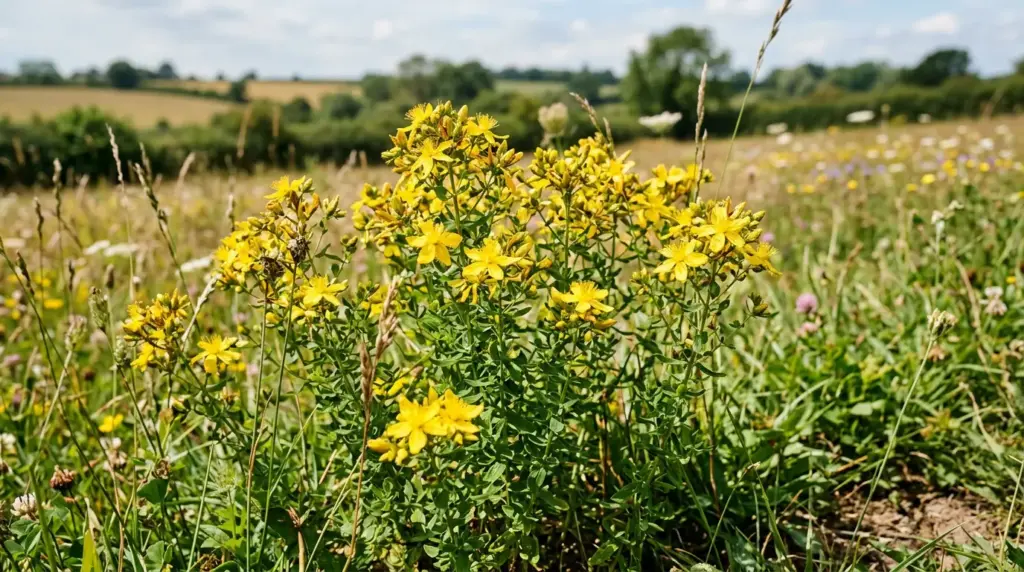
- Morphology: Perennial with opposite leaves characterized by translucent and black glands (oil reservoirs); yellow flowers with five petals.
- Plant Part Used: Aerial parts (flowering tops), Leaves, and Stems.
- Microscopy: Distinguished by the presence of secretory ducts in the mesophyll and unique petal rotatory chirality.
- Analytical Markers: Authenticated using HPLC-DAD and LC-MS/MS for the ratio of rutin to hyperforin and content of hypericins (>0.3%).
Dosage and Safety
- Dosage: Effective oral doses range from 300 mg to 1500 mg of powder daily or standardized extracts (0.3% hypericin). Topical gels are typically 5-10%.
- Side Effects: Generally well-tolerated; rare reports of photosensitivity (erythema upon light exposure), GI upset, and transient psychosis in predisposed individuals.
- Toxicity: LD50 in animal models is approximately 695 mg/kg; high doses may cause ovarian failure or embryotoxicity.
- Drug Interactions: Potent inducer of CYP3A4 and P-glycoprotein; significantly reduces the blood concentration of Warfarin, Everolimus, Rivaroxaban, and Clozapine.
- Classification: Caution (Strongly avoid during pregnancy and lactation; avoid concurrent use with oral contraceptives or blood thinners).
FAQs
- Does St. John’s Wort really work as well as Prozac? Clinical meta-analyses show that for mild-to-moderate depression, it is as effective as standard antidepressants like fluoxetine but with significantly fewer side effects and dropouts.
- Is it safe to take this with my birth control? No. It induces enzymes that speed up the metabolism of oral contraceptives, potentially leading to breakthrough bleeding or unplanned pregnancy.
- Why does it make skin sensitive to the sun? Bioactive hypericin is a powerful photosensitizer; when absorbed into the skin, it can react with UV light to cause redness, stinging, or rashes.
- Can I use it for my stomach ulcers? Yes, research shows it acts as a natural proton pump inhibitor, protecting the stomach lining as effectively as some prescription drugs.
- Is it safe to use on a baby’s diaper rash? While traditionally used for skin, clinical evidence for infants is limited. For adults, it is proven safe for cesarean and episiotomy wounds.
- Does it interact with blood pressure medicine? Yes, it can improve vascular function but may also reduce the effectiveness of certain cardiovascular drugs like Nifedipine.
- How long does it take to work for depression? Like most antidepressants, it typically requires 4 to 8 weeks of consistent daily use to reach full therapeutic effect.
- Can St. John’s Wort cause kidney damage? While it usually protects the kidneys in diabetes, case reports have linked excessive tea consumption to rare acute kidney injury.
- What is the best form for wound healing? Sun-macerated oily extracts (Red Oil) in olive or sesame oil provide the highest synergy of bioactives for tissue regeneration.
- Is it safe to eat the seeds? No, raw seeds are not recommended for consumption and may contain viruses; the flowers and leaves are the primary medicinal parts.
References
- Zakay-Rones, Z., et al. (1995). J Altern Complement Med 1(4): 361-369.
- Crupi, R., et al. (2013). CNS Neurol Disord Drug Targets 12(4): 474-486.
- Tanideh, N., et al. (2014). Int J Oral Maxillofac Surg 43(10): 1286-1292. DOI: 10.1016/j.ijom.2014.05.016
- Ng, Q. X., et al. (2017). J Affect Disord 210: 211-221. DOI: 10.1016/j.jad.2016.12.048
- Barnes, J., et al. (2019). J Pharm Pharmacol 71(1): 1-3. DOI: 10.1111/jphp.13054
- Scholz, I., et al. (2021). Br J Clin Pharmacol 87(3): 1466-1474. DOI: 10.1111/bcp.14551
- Yalcin, S., et al. (2021). Curr Pharmacol Rep 7(2): 42-48. DOI: 10.1007/s40495-021-00254-9
- Mohamed, F. F., et al. (2022). Pharmaceuticals (Basel) 15(5). DOI: 10.3390/ph15050604
- Okay, G., et al. (2024). Med Princ Pract 33(4): 385-391. DOI: 10.1159/000539106
- Capar, C., et al. (2026). Turk J Med Sci 56(2): 570-584. DOI: 10.55730/1300-0144.5796
Jump to: Benefits | Phytochemistry | Dosage | FAQs