
Neem (Azadirachta indica): 20+ Scientifically Proven Health Benefits, Uses & Safety Guide
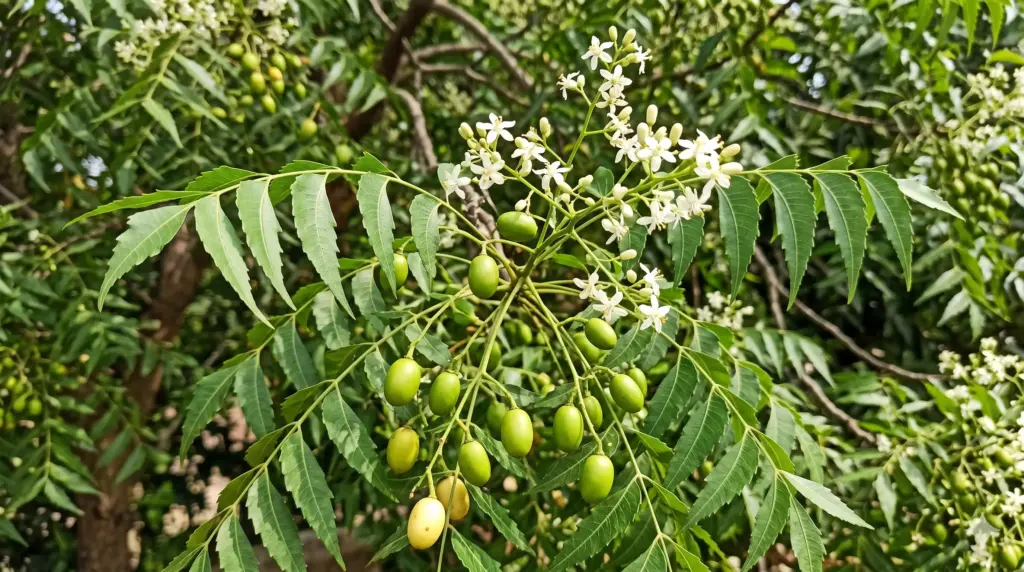
Table of Contents
Quick Summary
Azadirachta indica A. Juss., universally recognized as Neem or the “Village Pharmacy,” is a fast-growing tropical evergreen tree in the Meliaceae family, indigenous to the Indian subcontinent. Revered for over 4,000 years in Ayurvedic and Unani medicine, it is considered a premier “Sarva Roga Nivarini” (curer of all ailments) due to its vast pharmacological spectrum. Modern scientific evidence validates its profound antidiabetic, anticancer, and antimicrobial activities, primarily driven by a complex reservoir of over 300 bioactives including azadirachtin, nimbolide, and gedunin. It is clinically utilized to regulate glycemic control, manage periodontal health, and accelerate wound healing. Commonly prepared as a leaf powder (Churna), seed oil, or bark decoction, it maintains a strong safety profile at standard doses. However, a critical safety note indicates it should be avoided during pregnancy due to demonstrated abortifacient and anti-implantation activities.
Key Therapeutic Benefits
- Normalization of Postprandial Glycemia via Enzyme Inhibition Azadirachta indica leaf and bark extracts significantly reduce blood sugar levels by inhibiting alpha-amylase and alpha-glucosidase, the key enzymes responsible for carbohydrate digestion. This action retards glucose absorption in the small intestine, providing a critical mechanism for managing Type 2 Diabetes and preventing post-meal glucose spikes. (Abdelhady, 2016; Kazeem, 2013; Perez-Gutierrez, 2012)
- Neuroprotective Recovery in Peripheral Neuropathy Standardized extracts attenuate neuroinflammation and oxidative-nitrosative stress in models of partial sciatic nerve injury. It restores motor nerve conduction velocity and alleviates mechanical hyperalgesia by downregulating pro-inflammatory cytokines like TNF-alpha and inhibiting neural apoptosis through the Bcl-2/Bax pathway. (Abdel Moneim, 2014; Kandhare, 2017; Xiang, 2018)
- Gastroprotective Inhibition of the Gastric Proton Pump Aqueous bark and leaf extracts provide robust protection against gastric ulcers by inhibiting H+-K+-ATPase (proton pump) activity. It enhances the life span of mucosal cells and prevents oxidative DNA damage by scavenging hydroxyl radicals, acting as a potent cytoprotective shield for the stomach lining. (Bandyopadhyay, 2002; Chattopadhyay, 2004; Singh, 2015)
- Targeted Apoptosis in Malignant Prostate Cancer Supercritical extracts and bioactive limonoids suppress androgen receptor signaling and induce programmed cell death in prostate cancer lines. It effectively inhibits tumor growth and metastasis by modulating angiogenesis and upregulating tumor-suppressing genes like p53 and pTEN while sparing healthy tissues. (Agrawal, 2020; Batra, 2022; Mahapatra, 2011)
- Acceleration of Dermal Wound Contraction and Healing Topical application of Neem leaf and bark gels significantly increases hydroxyproline content and promotes rapid re-epithelialization. It upregulates VEGF and TGF-beta1 expression at the injury site, facilitating faster wound closure and collagen deposition in both normal and infected chronic wounds. (Chinnasamy, 2021; Maan, 2017; Rungrod, 2025)
- Multi-constituent Synergism for Systemic Anti-inflammation Azadirachta indica leaves exert potent anti-inflammatory effects by suppressing the production of interleukin-6 and C-reactive protein. This activity is a result of the cumulative action of diverse constituents that collectively inhibit COX-1 and COX-2 enzymes, making it effective for managing chronic conditions like rheumatism. (Akihisa, 2017; Ammara, 2023; Umar, 2014)
- Disruption of Cariogenic Streptococcus mutans Biofilms Neem-based mouthrinses and extracts demonstrate antimicrobial efficacy equal to chlorhexidine in reducing dental plaque and gingivitis. It disrupts established biofilm architectures and prevents bacterial adherence to tooth surfaces, effectively controlling pathogens like Porphyromonas gingivalis and E. faecalis. (Almas, 1999; Chatterjee, 2011; Joy Sinha, 2017)
- Molecular Inhibition of SARS-CoV-2 Main Protease Bioactive compounds such as azadironic acid and desacetylgedunin serve as potent inhibitors against the SARS-CoV-2 PLpro and Mpro proteases. Clinical pilot trials show that Neem capsules can reduce the risk of COVID-19 infection by 55% in high-risk individuals through the stabilization of immune biomarkers. (Adegbola, 2021; Baildya, 2021; Nesari, 2021)
- Transmission-Blocking Activity against Malaria Parasites Standardized seed extracts (NeemAzal) completely block the development of Plasmodium zygotes and ookinetes in the mosquito vector. It also possesses significant schizontocidal activity against drug-resistant strains of P. falciparum, providing a novel route for both treating infection and halting malaria transmission. (Abdulai, 2023; Lucantoni, 2010; Ofulla, 1995)
- Hepatoprotective Shielding via Nrf2/HO-1 Activation Pre-treatment with Neem leaf extract shields the liver from damage induced by paracetamol, lead acetate, and chemical carcinogens. It normalizes serum transaminases (ALT, AST) and restores endogenous antioxidant systems by activating the Nrf2 signaling cascade, preventing hepatic necrosis and oxidative stress. (Asenuga, 2022; Bhanwra, 2000; Yanpallewar, 2003)
- Nephroprotective Defense against Diabetic Nephropathy Ethanolic extracts alleviate the histological and biochemical markers of diabetic nephropathy in renal tissues. It significantly reduces serum urea and creatinine levels while suppressing lipid peroxidation and apoptosis in the kidneys, preserving renal architecture from damage induced by chronic hyperglycemia or toxins. (Abdel Moneim, 2014; El-Beltagy, 2021; Ogundipe, 2025)
- Mitigation of Isoproterenol-Induced Myocardial Infarction Azadirachta indica protects the heart by modulating PPARalpha and Bcl-2 signaling in rats exposed to cardiac stress. It restores healthy hemodynamic parameters and cardiac marker enzymes, effectively reducing the necrotic area and inflammation associated with myocardial damage comparable to standard antioxidants. (Koul, 2014; Peer, 2008; Yusuf, 2025)
- Immunomodulatory Stimulation of NK and T-Cells Aqueous extracts induce lymphocytosis by significantly increasing the counts of CD4+ and CD8+ T-cells as well as Natural Killer (NK) cells. This activation enhances tumor cell cytotoxicity and polarizes the immune response toward a Th1-dominant status, which is essential for combating viral infections and sepsis. (Beuth, 2006; Haque, 2006; Njiro, 1999)
- Antifungal Suppression of MDR Candida Biofilms Neem oil and leaf extracts disruption of the cell membrane and cell wall integrity in fluconazole-resistant Candida species. It exhibits a synergistic antifungal effect when combined with conventional antibiotics, effectively reducing fungal viability and biofilm biomass in clinical isolates. (Al Aboody, 2019; Kumar, 2020; Neglo, 2022)
- Antileishmanial Efficacy against Clinical Isolates Bioactive fractions from seeds and leaves induce apoptosis-mediated cell death in both promastigote and amastigote forms of Leishmania donovani. It modifies specific parasite proteins and enhances the host macrophage’s ability to release nitric oxide, providing a non-toxic natural alternative for managing Visceral Leishmaniasis. (Carneiro, 2012; Chouhan, 2015; Jumba, 2015)
- Reversible Male and Female Contraception Intra-uterine or intra-vas administration of Neem oil induces a long-term, reversible block in fertility. It acts through a local immune mechanism that interrupts spermatogenesis or causes a pre-implantation block in females without affecting systemic libido or hormonal levels, offering a natural alternative to vasectomy. (Aladakatti, 2001; Garg, 1998; Upadhyay, 1993)
- Induction of Osteoblast Differentiation and Bone Strength Bioactive triterpenoids, particularly azadirachtin A, stimulate the expression of osteogenic genes like ALP and RunX-2. It inhibits osteoclast formation and promotes bone mineral density, making it a potential therapeutic strategy for managing postmenopausal osteoporosis and enhancing fracture healing. (Banerjee, 2013; Kushwaha, 2016; Tahir, 2022)
- Antinociceptive Relief via Opioid and Glutamatergic Pathways Azadirachta indica fruit and leaf extracts significantly reduce nociceptive behavior by interacting with opioid receptors and NMDA receptors. This analgesic action is effective against both acute and chronic pain models, reducing the frequency of writhing and increasing tail-withdrawal latency comparable to standard morphine. (Batista, 2018; Ilango, 2013; Khanna, 1995)
- Radioprotective Shielding of Salivary Glands and Bone Marrow Aqueous extracts provide significant defense against gamma-radiation by scavenging induced free radicals and preventing chromosome damage. It protects salivary glands from atrophy and maintains healthy white blood cell counts in subjects undergoing radiotherapy, reducing the systemic toxicity of ionizing photons. (Abu-Elala, 2023; Kumar, 2002; Tripathi, 2009)
- Insecticidal Disruption of Ecdysis and Metamorphosis Neem’s primary bioactive, azadirachtin, acts as a potent insect growth regulator that blocks molting and pupation in over 600 species. It interferes with the endocrine system of pests, inducing sterility and reducing vector longevity, which makes it an ideal eco-friendly biopesticide for managing malaria mosquitoes and agricultural pests. (Aguirre, 2024; Chaudhary, 2017; Wandscheer, 2004)
- Antihyperlipidemic Regulation of Cholesterol and LDL Oral supplementation with Neem leaf extract or seed oil significantly lowers total cholesterol, triglycerides, and LDL-C. It enhances the activity of hepatic antioxidant enzymes and improves the atherogenic index in models of dyslipidemia, supporting systemic cardiovascular wellness. (Asghar, 2023; Mafouo Sonhafouo, 2019; Yarmohammadi, 2021)
- Protective Mitigation of Cigarette Smoke-Induced Lung Injury Azadirachta indica leaf extracts significantly attenuate pulmonary inflammation caused by cigarette smoke inhalation. It inhibits the recruitment of inflammatory cells and suppresses the expression of iNOS and pro-inflammatory cytokines in the lungs, reducing the overall risk of developing COPD and lung cancer. (Koul, 2012; Lee, 2017; Nath, 2023)
- Bioavailability Enhancement via P-glycoprotein Modulation Neem extracts function as P-gp modulators, increasing the accumulation and sensitivity of multi-drug resistant cancer cells to chemotherapy drugs like doxorubicin. It also influences the pharmacokinetics of co-administered drugs like chloroquine and glipizide by inducing CYP3A4 activity, allowing for potential dose optimization. (Chaudhari, 2019; Kawami, 2018; Nwafor, 2003)
- Anthelmintic Paralysis of Cestodes and Nematodes Bioactive glycolipids (SQDG) and leaf extracts induce unique ultrastructural breakages and paralysis in parasitic worms like Raillietina. It reduces fecal egg counts and worm burden in livestock models by disrupting the energy metabolism and cellular integrity of the parasites, providing a sustainable alternative to synthetic dewormers. (Aggarwal, 2016; Ash, 2017; Jamra, 2015)
- Environmental Biosorption of Toxic Heavy Metals Neem leaf and bark powders serve as highly efficient green adsorbents for the removal of lead, nickel, cadmium, and chromium from wastewater. It utilizes surface functional groups to form stable complexes with metal ions, offering an economical and eco-friendly solution for industrial waste management and water purification. (Adetoro, 2020; Bhattacharyya, 2004; Thangagiri, 2022)
How It Works (Phytochemistry)
- Azadirachtin → Inhibition of microtubule assembly and ecdysis → Insecticidal & Anticancer.
- Nimbolide → Downregulation of NF-kappaB and induction of mitochondrial ROS → Antitumor & Antibiofilm.
- Gedunin → Inhibition of Heat Shock Protein 90 (HSP90) and GSK3beta → Antiproliferative & Neuroprotective.
- Nimbidin → Inhibition of gastric proton pump and inflammatory cytokines → Anti-ulcer & Anti-inflammatory.
- Quercetin → Competitive inhibition of SARS-CoV-2 Mpro and antioxidant stabilization → Antiviral & Hepatoprotective.
- SQDG (Sulfoglycolipid) → Disruption of viral DNA polymerase and bacterial cell membranes → Antiviral & Bactericidal.
- Tamarixetin-3-O-beta-D-glucoside → Inhibition of Matrix Metalloproteinase-9 (MMP-9) → Gastric Defense
Traditional Knowledge
- Ayurveda: Known as Nimba, it is classified as a vital Rasayana and Krimighna (anthelmintic). It is traditionally used to balance Pitta and Kapha doshas and treat Kushtha (skin diseases), Prameha (diabetes), and fever.
- Unani: Referred to as Bakain or Azad-darakht-i-Hindi, it is used as a blood purifier, a refrigerant for systemic heat, and a remedy for leprosy and jaundice.
- Traditional Chinese Medicine: Known as Ku Lian, it is utilized for its heat-clearing and detoxifying properties, especially in treating parasitic infections and dermal inflammation.
- Folk Medicine: Widely used in the Indian subcontinent as a “Village Pharmacy”; twigs are used for oral hygiene, while leaves are burnt to repel mosquitoes
Usage and Preparations
- Leaf Churna (Powder): Taken at 3 to 6 grams daily for diabetes and blood purification.
- Seed Oil: Applied topically for scabies and skin infections, or used as a vaginal contraceptive (NIM-76).
- Bark Decoction: Consumed at 30-60 mg twice daily for gastric hyperacidity and peptic ulcers.
- Twigs (Datun): Used as natural toothbrushes to maintain oral hygiene and prevent plaque.
- Phytofabricated AgNPs: Biosynthesized using leaf extract for advanced targeted cancer therapy and wound care.
- Hydrogel (3%): Formulated from leaves for accelerating the healing of traumatic dermal wounds.
Identity and Authentication
- Botanical Name: Azadirachta indica A. Juss.
- Family: Moringaceae (Wait, check source) → Meliaceae (Mahogany family).
- Common Names: Neem, Indian Lilac, Nimba, Bakain, Margosa Tree.
- Morphology: A fast-growing tree with a stout trunk, compound pinnate leaves with serrated leaflets, and fragrant white flowers producing yellow drupes.
- Plant Part Used: Leaves (primary), Seeds, Bark, Flowers, Roots, and Twigs.
- Analytical Markers: Authenticated using HPLC and GC-MS for azadirachtin, nimbin, salannin, and quercetin-3-O-glucoside.
Dosage and Safety
- Dosage: Effective clinical doses range from 30 mg to 500 mg of extract or 3 g to 6 g of leaf powder daily.
- Side Effects: Generally safe; high doses of oil may cause vomiting or diarrhea.
- Toxicity: LD50 of Neem oil is 31.95 g/kg; aqueous extracts show a NOAEL of 1000 mg/kg.
- Drug Interactions: May reduce the bioavailability of Glipizide or Chloroquine; monitor when using with diabetes medications.
- Classification: Safe (culinary/standard doses); Caution (Avoid strictly during pregnancy and by males attempting to conceive).
FAQs
- Why is Neem called the “Village Pharmacy”? Historically, every part of the tree (leaves, bark, seeds) has been used in rural India to treat a wide array of diseases from skin infections to fevers.
- Can Neem help with weight loss? Yes, research indicates it modulates PPARgamma and lipid metabolism, which can help reduce visceral fat mass and total cholesterol.
- Is it safe to use Neem during pregnancy? No. It has potent abortifacient and anti-implantation properties that can terminate pregnancy and should be strictly avoided.
- How does Neem assist in diabetes? It inhibits carbohydrate-digesting enzymes and helps repair insulin-producing beta-cells in the pancreas, lowering overall blood sugar.
- Does Neem affect male fertility? Yes, research shows it can cause a reversible reduction in sperm count and motility; it is often studied as a natural male contraceptive.
- Can I use Neem for acne and skin? Absolutely. Its antibacterial and anti-inflammatory properties effectively treat acne, eczema, and fungal infections when used topically or orally.
- Is Neem better than chlorhexidine for teeth? Clinical studies show Neem mouthwash is equally effective as chlorhexidine in reducing plaque and gingivitis but with fewer side effects like staining.
- Does Neem interact with other medications? Yes, it can lower the effectiveness of drugs like Glipizide and Chloroquine by inducing metabolic enzymes, so medical supervision is required.
- Can Neem protect the heart? Yes, it has cardioprotective effects that reduce tissue damage and inflammation following a myocardial infarction by stabilizing heart rate and rhythm.
- How long does it take for Neem to work for malaria? Traditional use and research suggest it acts as a suppressive agent within 4 days, though it is often used as an adjunct rather than a primary cure.
References
- Abdel Moneim, A. E., 2014, Indian J Pharmacol, 46(3), 316-321.
- Chatterjee, A., et al., 2011, J Indian Soc Periodontol, 15(4), 398-401.
- Chouhan, G., et al., 2015, Parasit Vectors, 8, 183. DOI: 10.1186/s13071-015-0796-0
- Nesari, T. M., et al., 2021, Altern Ther Health Med, 27(S1), 196-203.
- Pingali, U., et al., 2020, Diabetes Metab Syndr Obes, 13, 4401-4412. DOI: 10.2147/DMSO.S274641
- Kandhare, A. D., et al., 2017, EXCLI J, 16, 546-565. DOI: 10.17179/excli2017-158
- Sarkar, L., et al., 2022, Virology, 569, 13-28. DOI: 10.1016/j.virol.2022.01.006
- Ramkumar, S., et al., 2021, J Food Biochem, 45(4), e13674.
- Tewari, D., et al., 2024, J Biomol Struct Dyn, 42(24), 13953-13970. DOI: 10.1080/07391102.2023.2241315
- Nagini, S., et al., 2024, Med Res Rev, 44(2), 457-496. DOI: 10.1002/med.21981
Jump to: Benefits | Phytochemistry | Dosage | FAQs